Ngôn ngữ
Ngôn ngữ

Tư Vấn Chuyên Môn
BS. Hoàng Hữu Vĩ
Bác sĩ

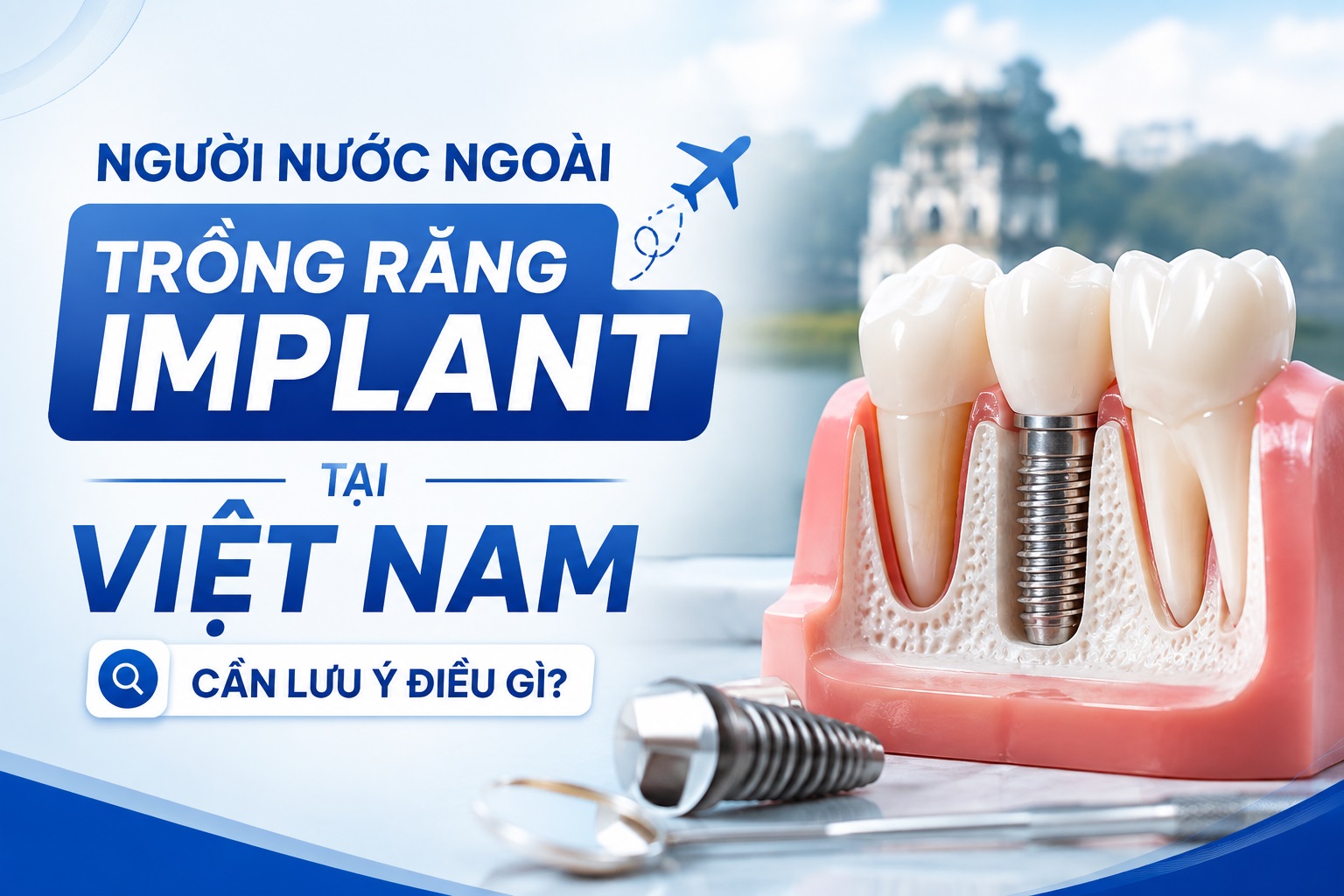
Although Vietnam is rapidly developing as a leading destination for dental implant treatment, choosing an unreliable clinic can still result in serious complications and treatment failures.
What makes this even more challenging is that international patients often face greater disadvantages if complications occur after returning home, as follow-up treatment and corrections can become far more difficult and expensive. That is why the most important factor when getting dental implants in Vietnam is not choosing the cheapest clinic, but choosing the right dentist and treatment center from the start.
In this article, we will explain why many patients choose Vietnam for implant treatment, the common risks to avoid, and the most important things to know before getting dental implants in Vietnam.
See more: Cheap Dental Implants in Vietnam: Are They Safe or Risky?
More than 100,000 overseas Vietnamese and international patients travel to Vietnam annually for dental care, with dental implants accounting for the largest share. This reflects not only a growing demand, but also the rapid development of Vietnam’s implant market.

Cost is one of the biggest reasons why Vietnam has become a popular destination for dental implants.
In countries such as the US, Australia, and Europe, a single complete dental implant typically costs between USD 4,000–6,000. In Vietnam, the average cost usually ranges from USD 600–2,500 depending on the implant system, bone condition, and treatment complexity.
However, lower prices do not necessarily mean lower quality. The more affordable cost of dental implants in Vietnam mainly comes from:
| Country | Average Dental Implant Cost | Compared to Vietnam |
|---|---|---|
| Vietnam | USD 600 – 2,500 | Baseline reference |
| Thailand | USD 1,800 – 3,500 | Around 1.5–2× higher |
| Singapore | USD 3,000 – 5,500 | Around 3–5× higher |
| South Korea | USD 2,000 – 4,000 | Around 2× higher |
| Australia | USD 4,000 – 6,500 | Around 5–7× higher |
| United States | USD 4,000 – 7,000 | Around 5–8× higher |
| Canada | USD 3,500 – 6,000 | Around 4–6× higher |
| Germany | USD 3,000 – 5,500 | Around 4–5× higher |
When comparing treatment quality with overall cost, Vietnam currently holds a significant advantage within the region for dental implant treatment.
Since 2010, dental implant treatment in Vietnam has developed rapidly in both clinical expertise and technology. Today, many of the world’s most advanced implant technologies are already widely used in Vietnam, including:
Many leading implant centers in Vietnam are no longer focused only on “replacing missing teeth,” but on delivering more precise, minimally invasive, and biologically optimized treatment outcomes.

In particular, personalized implant restorations are becoming increasingly common in Vietnam — an approach that was once mainly associated with major clinics in the US and Europe.
Another major advantage of Vietnam is its flexibility in treatment planning and scheduling.
In many developed countries, patients often face long waiting times due to doctor availability, insurance approvals, and complex healthcare procedures. In Vietnam, however:
This is especially beneficial for overseas Vietnamese and international patients with limited time in Vietnam.
However, this is also where patients need to be cautious.
Some clinics promote “fast treatment” or “teeth in just a few days” primarily as a sales strategy, even though dental implants are fundamentally a biological treatment that requires proper healing time and careful clinical assessment.
When treatment is rushed without proper indications, the risk of implant failure and long-term complications increases significantly.
Although Vietnam is one of the fastest-growing countries for dental implant treatment in the region, there are still certain risks patients should be aware of. Most complications do not come from the country itself, but from misunderstandings or a lack of proper knowledge about implant treatment.
Getting dental implants in Vietnam can still be an excellent choice — as long as patients have the right knowledge to avoid costly and unfortunate mistakes.
Today, many clinics promote “same-day implants” or “full treatment in just a few days.” In reality, however, only a small number of patients are truly suitable for this type of treatment.
The reason implant treatment takes time is biological.
After implant placement, the implant must fuse naturally with the jawbone before the final crown can be attached. This healing phase is critical to the long-term stability and success of the implant, and it cannot be rushed arbitrarily. Only patients with ideal bone quality, good bone density, and favorable bite conditions may qualify for early restoration.
For overseas Vietnamese and international patients, post-operative monitoring is also extremely important. After surgery, dentists need time to evaluate healing, monitor osseointegration, and detect early signs of infection or excessive biting forces before patients return abroad.
So, how long does dental implant treatment in Vietnam usually take?
According to Dr. Hiep, a complete implant treatment typically requires at least 2.5 months, depending on bone condition and the overall treatment plan.
The process is usually divided into two stages:
Stage 1 – Implant Placement
Patients are generally advised to stay in Vietnam for at least 10 days, ideally 15–20 days, so the dentist can monitor healing and minimize risks before international travel.
Stage 2 – Final Crown Placement
This stage is usually performed at least 2.5 months later, once the implant has fully integrated with the bone. It typically requires around 5 days for impressions, crown fabrication, fitting, and bite adjustments.
Many international patients are unfamiliar with Vietnam’s healthcare system, face language barriers, and rely heavily on online advertising. Unfortunately, some clinics take advantage of this by exaggerating qualifications, using inexperienced dentists, or even misrepresenting their expertise.
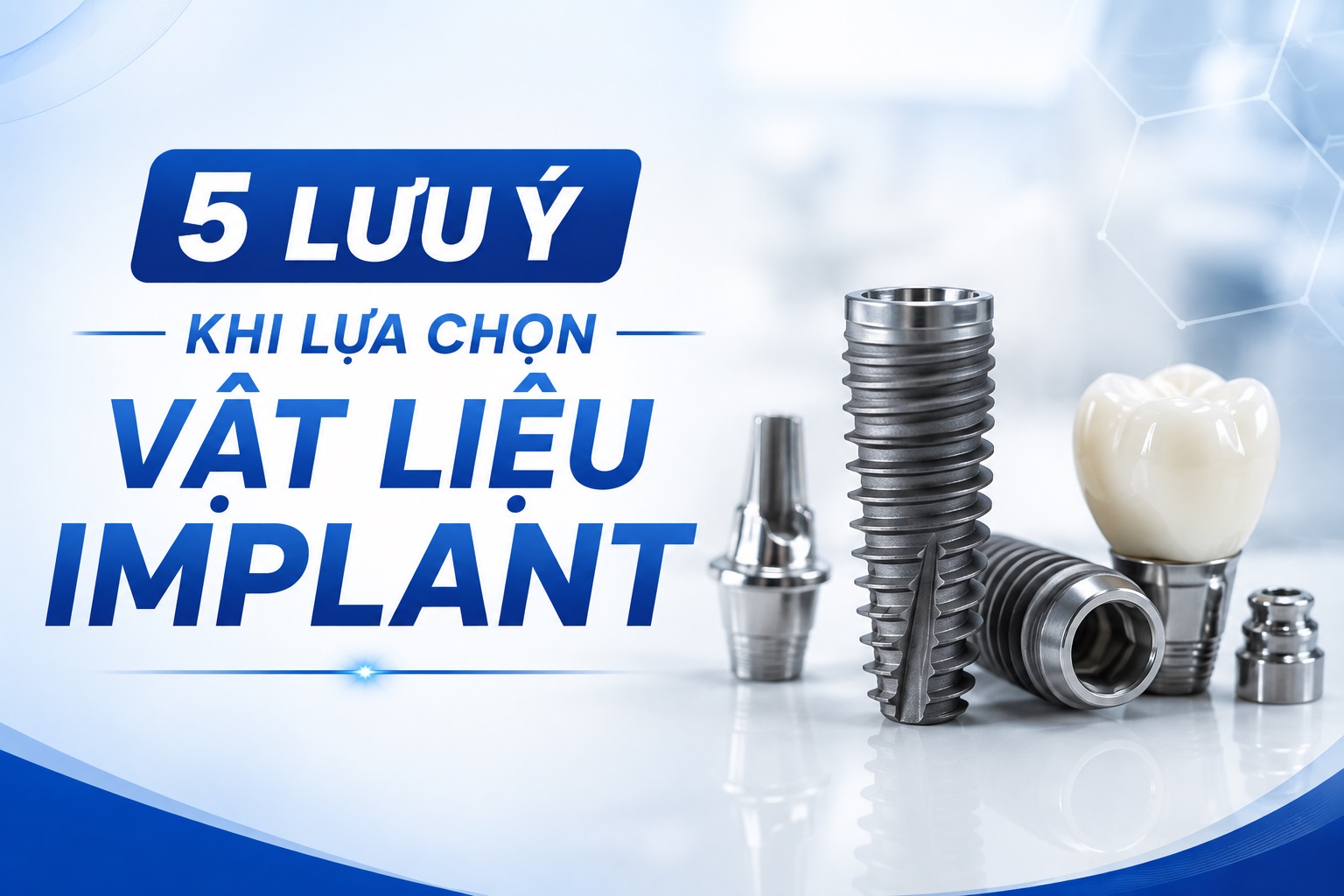
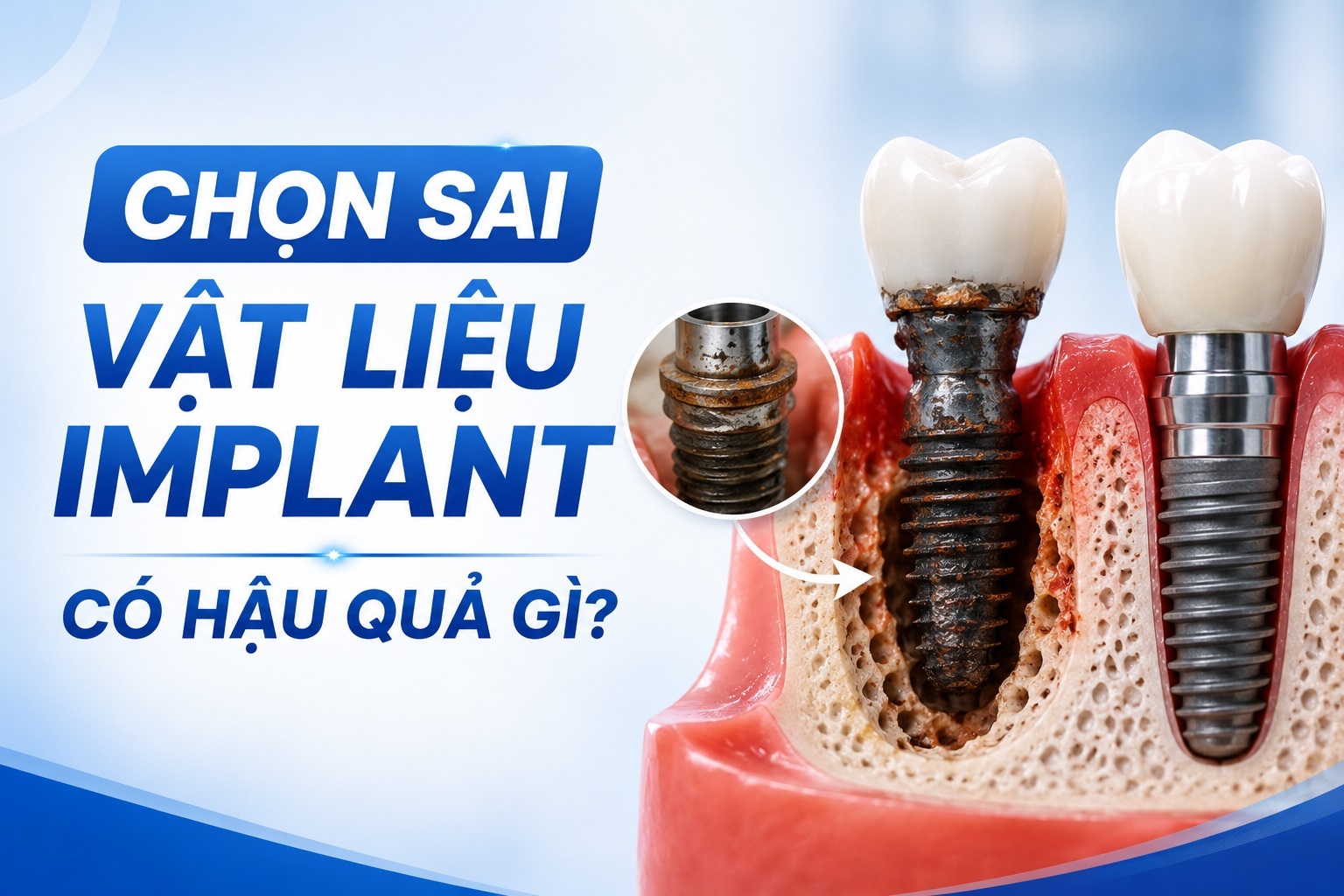
More concerning is the use of low-quality implant materials with unclear origins or without official certification. While these products are often much cheaper, they may increase the risk of implant rejection, infection, poor bone integration, and serious long-term complications.
This is why lower pricing should never be the only factor when choosing implant treatment in Vietnam.
The most important questions patients should ask are:
For international patients, choosing a transparent and reputable implant center is far more important than simply choosing the lowest price.

All implant materials should be fully transparent and clearly traceable, allowing patients to verify their origin, authenticity, and quality standards.
One of the biggest misconceptions among patients — including overseas Vietnamese, international patients, and even local patients — is focusing only on the implant fixture itself.
Yes, the implant fixture is important.
But the long-term success of a dental implant is never determined by the fixture alone.
A complete implant restoration also includes the abutment, the dental crown, and the entire surgical and prosthetic technique behind it. If the abutment is inaccurate, or the crown is poorly designed and not customized to the patient’s bite and jaw structure, even the most expensive implant system may fail to deliver long-term stability.
Dental implants are much like building a house. A strong foundation is essential, but if the structure above it is poorly constructed or not properly integrated, problems will still develop over time.
More importantly, even when all materials are high quality, that alone is still not enough.
Because implants involve placing artificial materials into the human body, the most critical factor is still the dentist’s technique and clinical experience.
The implant must be placed at the correct position, depth, and angle to avoid damaging nerves or the sinus cavity, while also ensuring proper bite force distribution. Even a small deviation can affect chewing function, long-term implant durability, and overall aesthetics in the future.

From implant positioning and abutment design to the final dental crown, every component must work together as one complete system.
That is why, when getting dental implants in Vietnam, patients should not focus only on “which implant brand is being used.”
More important questions include:
Ultimately, the success of a dental implant treatment is not determined solely by the implant brand itself, but by the entire clinical system and expertise behind it.

While some technologies genuinely improve treatment accuracy and safety, others are promoted mainly through impressive branding rather than meaningful clinical benefits. In many cases, the goal is not necessarily better treatment outcomes, but creating a perception of being more “premium” or “high-tech” in order to justify higher pricing.
That is why patients should clearly understand:
A technology only has real value when it helps make treatment safer, more accurate, and more predictable in the long term. Otherwise, no matter how modern the name sounds, it may ultimately be more about marketing than clinical necessity.
Doctor Vỹ shared that:
“No single technology is suitable for every case. The most important responsibility of the dentist is to accurately evaluate each patient’s condition and choose the most appropriate solution and technology.”
In some cases, advanced technology can dramatically improve precision and treatment outcomes. But in other situations, if a technology does not create a meaningful clinical difference, a responsible dentist should honestly advise the patient not to spend unnecessarily.
Technology alone does not determine treatment quality. The deciding factor is still the dentist — knowing when technology should be used, and when it is not truly needed.
See more: The Most Advanced Dental Implant Technologies Today: Why They Improve Accuracy and Safety
Many patients researching dental implants in Vietnam focus only on the price of the implant fixture itself. In reality, however, the implant fixture is only one part of the total treatment cost.
A large portion of the final expense often comes from additional procedures and supporting components — commonly referred to as “hidden costs.”
This is why some clinics advertise implants at extremely low prices, only for the total treatment cost to increase significantly later.
Dental implant treatment is a comprehensive medical process. Beyond the implant fixture, additional costs may include:
For overseas Vietnamese and international patients, extra costs may also arise from multiple return visits if the initial treatment plan is not carefully designed from the beginning.
More concerning is that some clinics intentionally advertise very low starting prices to attract patients, but fail to explain the full treatment plan upfront. Once treatment begins, patients often discover many additional procedures and fees with little room for alternative choices.
That is why the most important factor is not the starting price of the implant, but whether the total treatment cost and treatment plan are transparent from the beginning.
A proper treatment plan should clearly explain:
Ultimately, dental implants are not about finding the cheapest price — they are about transparency, safety, and long-term treatment value.
Tin cùng chủ đề

Câu hỏi liên quan
Tin tức nổi bật
Đăng ký tư vấn
Đối tác của Nha khoa lạc việt intech












 In Vietnam, Lac Viet Intech is known for specializing in difficult and complex dental cases and serves as a trusted destination for oral care among medical professionals and celebrities.