Construct the most complete and accurate braces tools

Quản trị viên
20/10/2026
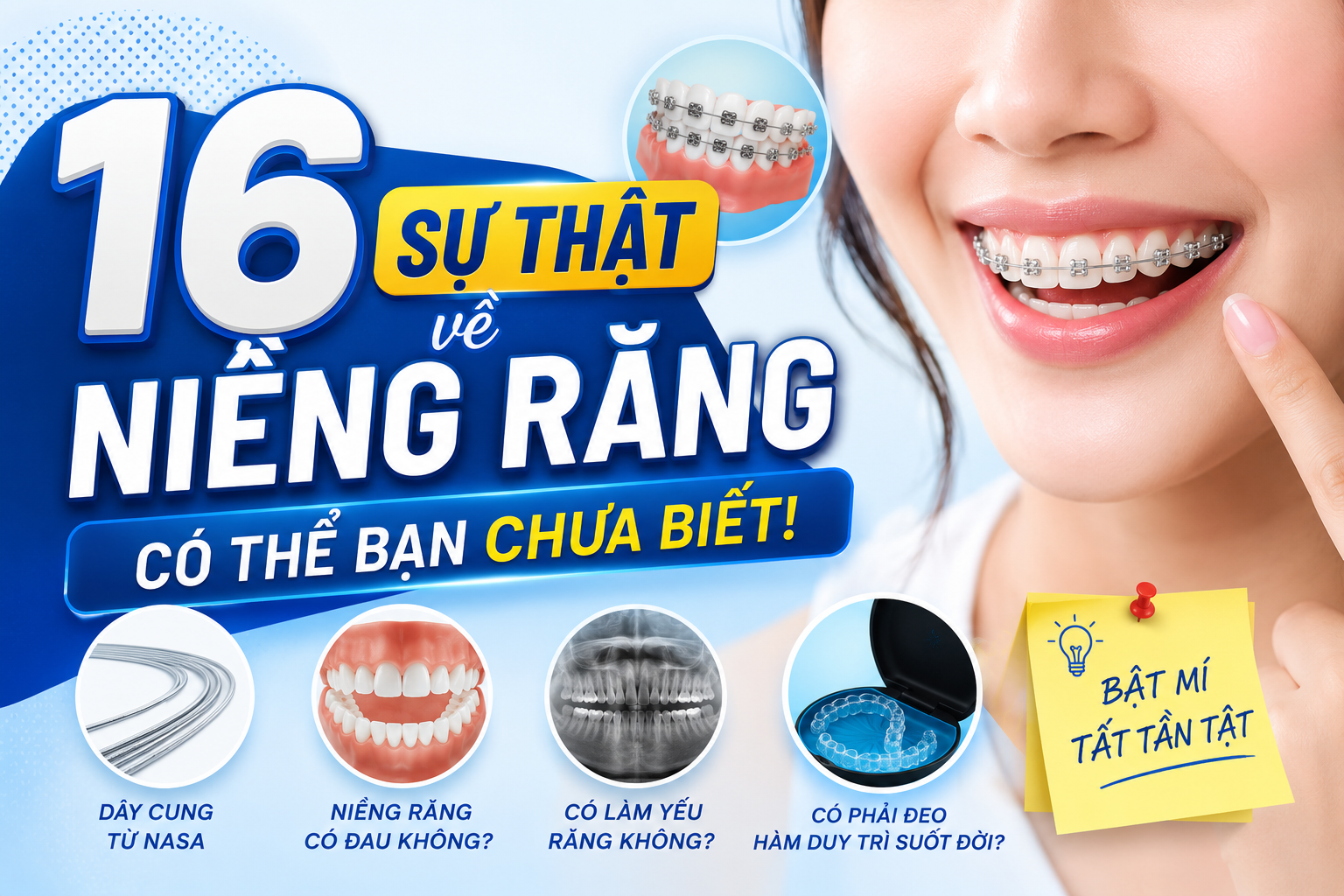
The success of a braces case depends on many factors such as the expertise of the orthodontist, the cooperation of the patient and especially the orthodontic appliances. In this article, we will clarify the structure of braces and the functions of brackets, wires, springs, intermaxillary elastics, etc.

Braces

null

Braces structure

Brackets are small particles attached to the tooth enamel surface (outer surface with external braces or inner surface with lingual braces). Braces can be made of different materials: metal, porcelain, crystal. 

The basic structure of braces includes: base, wings and grooves in the middle of the bracket (slot) for the wire to enter and exert force on:

Bracket base (base):

On the bracket base, notches are created to increase the retention of the bracket on the tooth surface, this is also an advantage of 3M and Ormco braces. Besides, in this part, the manufacturer can add torque (torque in base) thanks to the thickness, thinness and bevel of the bracket base. This is a point worth noting when choosing braces to aim for a perfect, personalized treatment for each patient. Each case is different, we need to choose braces with different torque on the base. 

Bracket wings:

Consists of 4 wings located on the bracket base. This part has the function of storing the archwire on the braces with local elastic or ligature (steel thread in place) in the elastic-tied bracket system (with the automatic brace system, there will be locking levers to automatically tie the archwire). Besides, the bracket wings will be used for other purposes such as anchorage, chain elastics or intermaxillary elastics to close the space. This part is the same in most types of braces on the market. 

Slot:

Is the horizontal groove between the wings of the braces. This is the space for the orthodontic wire to enter and exert force on the teeth and is also the most important part of the braces. Depending on the system, the bracket slots have different sizes (slot 18 or slot 22). Here, the manufacturer also integrates tip and torque, varying from the incisors to the molars. Doctors need to flexibly use these parameters on each tooth and each different case to get good and stable treatment results. 

Other components:

  • Hook: is a part attached to the distal and gingival grooves of canine braces, first and second premolars and molars, to support elastic pulling
  • Tube: used on molar braces to increase the ability to retain archwires instead of bracket wings. 

Archewire

null

Archewire in braces

Archewire plays a very important role in tooth movements during orthodontics. We can classify archwires based on shape, size, and manufacturing materials.

  • According to material
  • NiTi, NiTiCu archwires: have high elasticity, often used in the early stages of orthodontic treatment. The characteristic of the archwire is that it returns to its original shape when deformed, has the function of spreading the teeth evenly and flattening the dental arch.
  • Stainless steel archwire (Stainless Steel - SS): A wire with high hardness, often used in the period of closing the space to avoid side effects (unwanted effects) such as protrusion of the incisor group, subsidence of the molar group, increased deep bite, loss of control of tooth root torque. 
  • Blue Egyloy arch wire, TMA: Has the characteristics of Niti wire as SS wire, creating light, physiological forces
  • According to size
  • The wire has a circular cross section of sizes 12,14, 16, 18
  • Wires with square/rectangular cross sections: 16×16, 16×22, ​​17×25, 19×25, 18×25
  • According to shape
  • The shape of the archwire greatly affects the success of orthodontic treatment. The reason is that the change in dental arch shape after treatment compared to the original can increase the risk of recurrence after treatment. Therefore, choosing a personalized archwire - suitable for the shape of the dental arch of each case is very important.
  • According to statistics, there are 3 main types of archwires corresponding to the popular dental arch shapes of the population: U-shaped archwires, Oval-shaped archwires, and triangular archwires.  

Springs and elastics:

null

Elastic scissors in orthodontics
  • These are devices that generate force and exert additional force during treatment
  • Traction springs have more physiological force than traction elastics because they do not require strict patient cooperation and have a more stable impact force. 

Above is information about the structure of braces to help customers grasp accurate information. If customers need further attention or need support to answer questions about the service dental implants. Please contact: 096.192.0606

Share

News on the same topic

Partner of Lac Viet Intech Dental Clinic

dentsplysirona
Ecligner
Straunman
Straunman
Invisalign
Swiss Dental Care
test1
Osstem Implant
Hotline Chat ngay Messenger Contact Zalo