Language
Language
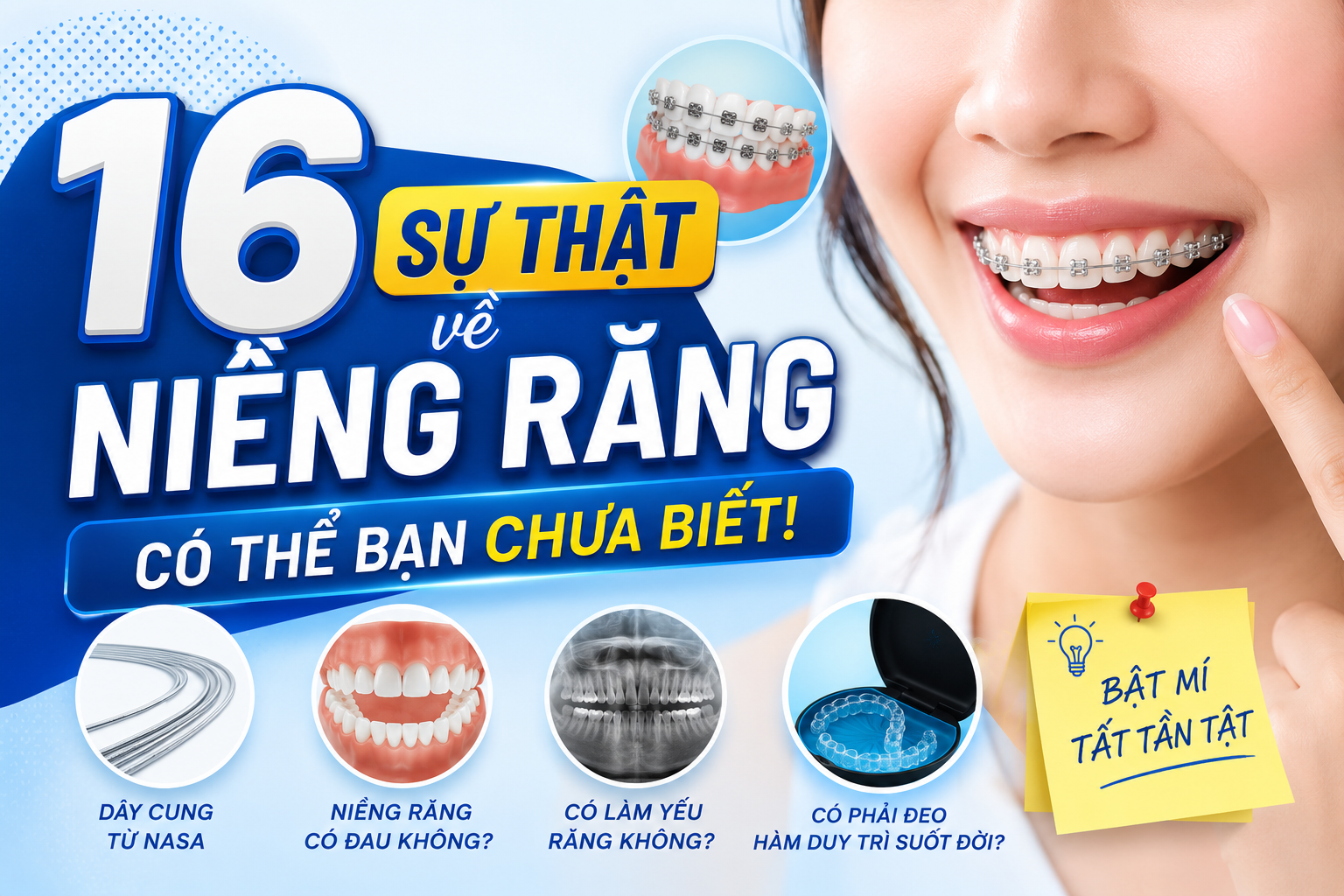
The brace wire is one of the two most important tools that directly affect the customer's orthodontic process. In the article below, we will learn interesting information about this type of appliance!
During the braces process, the archwire will take on the following roles:
 The orthodontic archwire is one of the two most important appliances that directly affect the orthodontic process
It can be seen that the braces wire brings many effects in adjusting the position and shape of the teeth and the mouth, helping Improves both the appearance and oral function of people with braces.
Braces wires come in many different sizes and types depending on the stage and purpose of the doctor. Some commonly used archwire sizes are:
Changing the size of the arch wire in stages can also make customers feel uncomfortable in the first few hours. Then, when the customer gets used to the new arch wire, there will be no more pain or discomfort. These archwires also do not affect aesthetics much.
Depending on the doctor's purpose and the customer's needs, the following types of orthodontic archwires are commonly used during treatment:
In 1887, precious metal archwires such as gold, silver and platinum were widely used in the field of dentistry thanks to the work of scientist Edward Angle. The main components of this type of bowstring include about 55-65% gold, 5-10% platinum, 5-10% palladium, 11-18% copper and 1-2% nickel.
The outstanding advantage of this type of bowstring is its high elasticity and ductility, along with excellent corrosion resistance. However, the cost of producing and using them is very expensive, so it is often not suitable for the majority of users in the dental field.
Stainless Steel bowstrings appeared in 1929 to replace precious alloy bowstrings. This type of bowstring is characterized by its elasticity and strong corrosion resistance. The composition of Stainless Steel archwires is Austenitic “18-8,” with chromium percentages from 17 to 25%, nickel from 8 to 25%, and carbon from 1 to 2%.
Currently, there are three types of stainless steel archwires suitable for many different cases in tooth correction:
Stainless steel archwire has a relatively low price, suitable for the economic conditions of many customers but still ensures functionality when used, so it is often commonly used.
Cobalt-Chromium archwires, although present in the braces field since 1950, are often not popular in complicated braces cases due to their weak elasticity. Their main composition includes about 40% cobalt, 20% chromium, 16% iron and 15% nickel.
Because of its lower hardness compared to other types of archwires, Cobalt-Chromium archwires are often not suitable for highly complex braces cases. Instead, they are often used in simpler cases of tooth correction.
Niti archwire is an invention of scientist William F. Buehler in 1960. The main composition of this type of archwire includes 55% nickel and 45% titanium, creating a unique combination. Tini arch wire stands out with its high elasticity and low stiffness, allowing it to be widely used in most braces cases. With these advantages, Tini archwires are always considered a popular and popular choice in the field of orthodontics.
The most popular type of Niti archwire is the heat-activated Niti archwire (Niti HA). This wire has been heat treated, has the characteristic of deforming according to temperature. When cooled, the wire is pliable and easily placed into the braces. The wire is flexible under cold temperatures and when in the mouth (37 degrees Celsius) will cool and return to its original shape. Niti HA archwire is suitable for adjusting torque on teeth, providing continuous light force with little orthodontic discomfort.
Titan-Beta archwire contains 79% titanium, 11% molybdenum, 6% zirconium and 4% tin in its composition. The strength of this type of wire is the ability to flexibly customize the length during the orthodontic process, helping to optimize the performance of the orthodontic process in a relatively impressive way.
Ceramic braces archwire is a special type of archwire, made of stainless steel inside, coated with high-quality ceramic on the outside. This ceramic layer not only creates an aesthetically pleasing white color, but also keeps the bowstring healthy because the ceramic does not degrade during use.
This type of bowstring provides significant tensile strength and stability, although its durability may not be as high as some other types of strings. However, the advantages of aesthetics and benign nature make ceramic braces a suitable choice for those interested in hiding braces wires.
Sectional archwires, often called square archwires, are often used during tooth correction to close spaces, correct bite, and maintain post-orthodontic results. This type of archwire comes in many different sizes and customizations to suit each specific situation during the tooth correction process.
See more: Why Need to Replace the Archwire for Dental Braces?
The archwire is a device used frequently and throughout the braces process, so many problems will occur during this process. The most common ones are:
When first worn, the bowstring tip will pierce both cheeks, causing pain and discomfort. The best way now is to apply dental wax and contact your doctor to fix it. Absolutely do not arbitrarily bend the ends of the arch wire with your hands, this can cause the wire to become misaligned and directly affect the results of braces later.
The average time to change the arch wire for braces is from 1 - 2 months/time depending on each person's dental condition. Besides, the degree of misalignment of the teeth, the age of the braces and the skill of the doctor will cause the time to replace the archwire to be sooner or later. At the same time, the archwire will also be replaced in different stages, at each stage a different type of archwire will be used.
Slipped archwire is a fairly common condition and is often seen in the early stages of orthodontics. Because at this time, the speed of tooth movement is quite fast, leading to the wire slipping or loosening. At this time, you can use dental wax to fix the arch wire and then go to the doctor to tighten it.
Bursting, breaking and bending of the arch wire during braces is a quite common condition that occurs due to chewing or being impacted by a large force. Chewing hard, chewy foods in the early stages of orthodontics has a lot of impact, so you need to be careful. If you encounter the above situation, you need to go to the dentist immediately to fix it as soon as possible, to avoid affecting the time and results of braces.
Swallowing the bowstring is a very rare condition. Because it is made from metal, breaking and swallowing the bowstring is very difficult to happen. However, if the bowstring is swallowed, it can directly affect the throat, causing a tear in the throat or worse, a perforation of the intestines. Therefore, if you accidentally swallow it, you need to contact your dentist immediately.
Is it painful to replace the braces arch wire?
The process of changing the braces arch wire can cause pain and discomfort because the tightening force is now increased. However, this feeling will gradually disappear after 3-4 days from the date of replacement and the teeth will gradually get used to the new wire. Apply cold compresses and drink water continuously to reduce pain and discomfort. Currently, the implant solution is also being chosen by many people to beautify their teeth.
See more:4 "Mandatory" Stages of Replacement of Braces Archwires
Through the above article, it can be seen that braces archwires play an extremely important role in braces, supporting the adjustment of misaligned teeth to the correct position on the jaw, helping you have straight teeth and a confident smile. Customers can also refer to the types of arch wires to choose for themselves a quality appliance, ensuring effective braces.
News on the same topic

Related questions
Featured news

Sign up for consultation
Partner of Lac Viet Intech Dental Clinic