Language
Braces , also called orthodontic treatment (and in some places dental splints or dental clamps), are a dental treatment. This method uses a system of appliances such as brackets, archwires, elastics and aligners to straighten misaligned teeth, bring them into the correct position in the dental arch and arrange them in balance.

Braces straighten misaligned teeth
Orthodontic treatment is a specialized field of dentistry; not every dentist can perform it, as it requires in-depth orthodontic training.
It is also a demanding technique for effectively correcting crowded, crooked, protruding, underbite or gapped teeth and bite problems caused by the teeth. At the same time, it improves chewing function, makes oral hygiene easier and prevents oral diseases.
It is no accident that orthodontic treatment is so popular with young people. Below are the benefits of braces .
Better appearance is what most people think about before deciding on braces. This technique can completely correct misalignments such as gaps, protrusion, underbite, crooked teeth, crowding and bite problems, from simple to complex.
At the end of treatment, you will have even teeth, an attractive dental arch, a radiant smile and a more balanced face.

Braces significantly improve appearance
Misaligned teeth also make the face look unbalanced, which can make us feel self-conscious when talking to people or being in public.
So after braces, with evenly aligned teeth, balanced arches and a clearly improved facial appearance, we feel more confident with the people around us. You will also feel more at ease and smile more brightly, which can even open up more opportunities at work.
Some cases of bite misalignment or severely crooked teeth make eating difficult, and chewing food thoroughly before it reaches the stomach becomes almost impossible. This makes the digestive system and stomach work harder, leading to a risk of disease.
After braces, the teeth are evenly aligned and the bite is corrected, so chewing and grinding food becomes easier; the digestive system is no longer overloaded and digestive health improves markedly.
Crowded, crooked teeth make brushing much harder, and food easily gets stuck on the teeth when chewing, allowing bacteria to accumulate and form plaque and tartar. This causes bad breath and oral diseases such as gingivitis, periodontitis and tooth decay.
However, after orthodontic treatment, with evenly aligned teeth, oral hygiene becomes easier. As long as you clean your mouth properly with a toothbrush, floss and mouthwash, leftover food has no chance to stick and harm your mouth.
The teeth, tongue and lips directly affect the sounds we make. So crooked, crowded teeth can make communication difficult. Braces align the teeth, and with an even set of teeth, pronunciation becomes clearer, without lisping or distorted sounds. So this method clearly improves speech.
If you unfortunately lose a tooth in an accident or have to have a tooth extracted due to disease, you may have many difficulties eating and in daily life, and even bone loss or headaches that affect the neighboring teeth.
Some people choose false teeth, but this can be expensive, so instead we can use braces to close the gap left by the missing tooth without invasive treatment. At the same time, it fully resolves bone loss and oral disease and restores normal chewing.

Orthodontic treatment closes gaps without false teeth
Most oral diseases are caused by improper cleaning. As we know, badly misaligned teeth make oral hygiene much harder, so solving this problem also prevents gingivitis, periodontitis and more.
In addition, when the mouth is kept clean, harmful bacteria have no conditions to grow and cause disease. They cannot attack the enamel and cause decay or other conditions.
When the teeth are evenly aligned, cleaning is simpler and more thorough, removing food and plaque that harm the teeth. This not only prevents disease but can also extend the life of the teeth.
Few people pay attention to this, but orthodontic treatment can effectively prevent jawbone loss, especially when teeth are broken or lost. If not corrected in time, the bone at the site of the lost root resorbs over the years, and the neighboring teeth shift, loosen and become weaker.
At the same time, the gap left by the missing tooth lets bacteria invade and attack the gums and jawbone, gradually wearing the jawbone away. Misaligned teeth also prevent proper chewing, meaning the chewing force on the jawbone is greater than normal. This is another cause of jawbone loss.
So after braces, when the teeth and bone work normally as they should, the jawbone is better protected. Closing spaces during treatment also brings the teeth together and eliminates gaps from missing teeth, so the jawbone does not wear away.
Unattractive teeth greatly affect appearance, oral health and everyday confidence. That is why many people turn to braces to solve the problem. So which teeth should be treated with braces? Below are some cases where dentists recommend treatment.
Crooked teethand teeth rotated in the arch are common problems. Crooked teeth not only cause trouble when chewing but also make us feel self-conscious about overly "crowded" teeth.
The forces from braces rotate the teeth in the right direction and move them into the correct position in the arch, ensuring chewing function and significantly improving appearance for a brighter smile.

Braces align crooked teeth
An underbite is when the lower teeth protrude and overlap the upper teeth. An underbite causes many difficulties in chewing and speaking and seriously affects facial appearance.
Whether viewed from the front or the side, people with an underbite have an unbalanced face with a chin jutting forward; from the side especially, the face takes on a "plow blade" shape. This makes people with an underbite feel self-conscious and shy about talking to others. Braces are the top choice to correct this condition.
Similar to an underbite, protruding teeth are when the upper teeth stick out too far in front of the lower teeth, seriously affecting appearance and chewing. In particular, protruding teeth misalign the bite, so the teeth of both jaws cannot interlock well, food cannot be chewed thoroughly and overall health is affected.
Braces retract the protruding teeth and align the dental arch, so we can eat and clean our teeth better.
Misaligned teeth grow in a disorderly way, without a fixed order or position in the arch. Such teeth are extremely hard to clean and almost impossible to clean with an ordinary toothbrush. A lot of food gets stuck on them, allowing bacteria to attack and cause disease.
Braces bring the teeth into the correct, even position in the arch, making daily activities easier and ensuring oral health.
Bite problems caused by the teeth prevent the teeth from chewing properly, and a misaligned bite also makes the face asymmetrical. So braces are necessary to correct the bite and rebalance the face.
There are many different orthodontic methods to choose from today, the most typical being bracket braces and clear aligners (without brackets). Depending on your budget and aesthetic needs during treatment, you can choose the right method.

Orthodontic methods available today
This method appeared very early and is still widely used today. Based on the material of the brackets, there are 2 main types
As the name suggests, the brackets are made of metal. Metal brackets use appliances to create force that moves the teeth effectively according to the dentist's treatment plan. This is also the cheapest orthodontic method today. However, because they are made of metal, the brackets are clearly visible during treatment, which affects appearance.
Similar to metal brackets, but the brackets are made of special ceramic. The ceramic color is similar to the teeth, so it is more aesthetic than metal brackets, and naturally the cost of ceramic bracket braces is higher than metal brackets.
Clear aligners do not need brackets or archwires; instead, clear aligner trays are used to straighten the teeth. The aligners are made of special flexible, transparent plastic that fits snugly over the teeth, so they straighten teeth effectively while keeping perfect aesthetics during treatment.
What's more, clear aligners can shorten treatment by 4–6 months compared with bracket braces. However, this is also the most expensive orthodontic method today.
As mentioned above, each orthodontic method has a different price. The cost also depends on many factors such as the degree of misalignment, the method chosen, the clinic and the technology used.
Typically, metal bracket braces cost around 19–32 million VND, with a difference of about 5–10 million VND between conventional and self-ligating brackets. Ceramic bracket braces cost from 36–48 million VND. Clear aligners cost from 60–96 million VND.
See also: The most affordable orthodontic price list at Lac Viet Dental
To ensure your orthodontic treatment has the best and longest-lasting result, keep the following 5 points in mind:
To know exactly how your teeth are misaligned, you need to visit a clinic for an examination and X-rays. Only with this data can the dentist accurately diagnose your condition and propose a suitable treatment plan.

Determine your oral condition before getting braces
Make sure you research the clinic carefully: whether it is licensed, whether the dentists have practicing licenses and what equipment it has. All of these can affect your final result, so pay special attention.
This is essential to keep your treatment on track. Use a water flosser and dental floss to clean your teeth and prevent bacteria from building up and causing oral disease.
In the first period after the brackets are placed, you may feel a little sore. At this time, do not return to your normal diet right away; eat soft, easy foods such as eggs, porridge and soup to avoid putting too much force on the brackets.
In addition, during treatment you should limit chewy or hard foods to avoid loosening or detaching the brackets. If you have clear aligners, remove them when eating to protect them.
You need to return to the clinic on schedule so the dentist can check the progress of tooth movement and make any necessary adjustments to keep the teeth moving in the right direction.
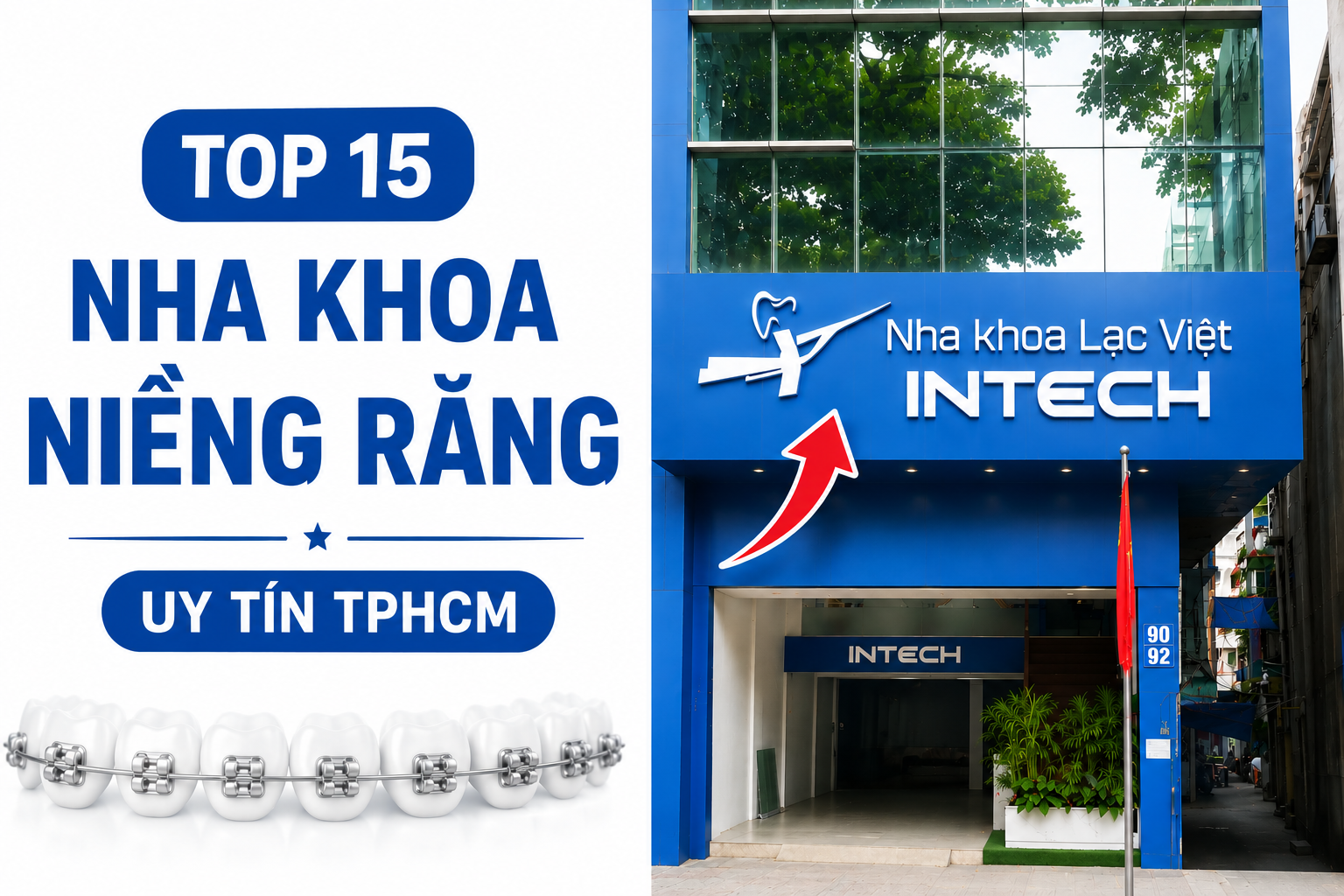
Orthodontic treatment is a demanding technique that should be performed by an orthodontist with high expertise at a fully equipped clinic, and Lac Viet Intech Dental is a wise choice. Established and developed over more than 15 years, Lac Viet Intech Dental is increasingly asserting its leading position, creating more than 10,000 successful smiles every year.
Lac Viet Intech is licensed by the Department of Health, and all dentists working at the clinic have practicing licenses and in-depth orthodontic training. So you can fully trust the clinic for your orthodontic treatment.
In addition, Lac Viet Intech Dental is fully equipped with the modern equipment needed for orthodontics, such as X-ray machines and jaw scanners. Patients can have a detailed examination on site without having X-rays taken elsewhere.
In particular, with bracket braces at the clinic, our dentists use the exclusive X-Matrix technology to shorten treatment by 4–6 months compared with the usual time, preview the result before treatment and personalize the brackets. X-Matrix is considered a breakthrough in 21st-century orthodontic technology. In addition, if you want dental implants , Lac Viet Intech is a reputable clinic you should choose.
See now: The orthodontic procedure at Lac Viet Dental
Above is what the orthodontists at Lac Viet Intech Dental have shared about braces. If you have any other questions, you can visit the clinic or call 19006421 for free advice.
News on the same topic
Related questions
Featured news
Sign up for consultation
Partner of Lac Viet Intech Dental Clinic