Language
Language

Professional Consulting
MD. Nguyễn Thị Thu Trang
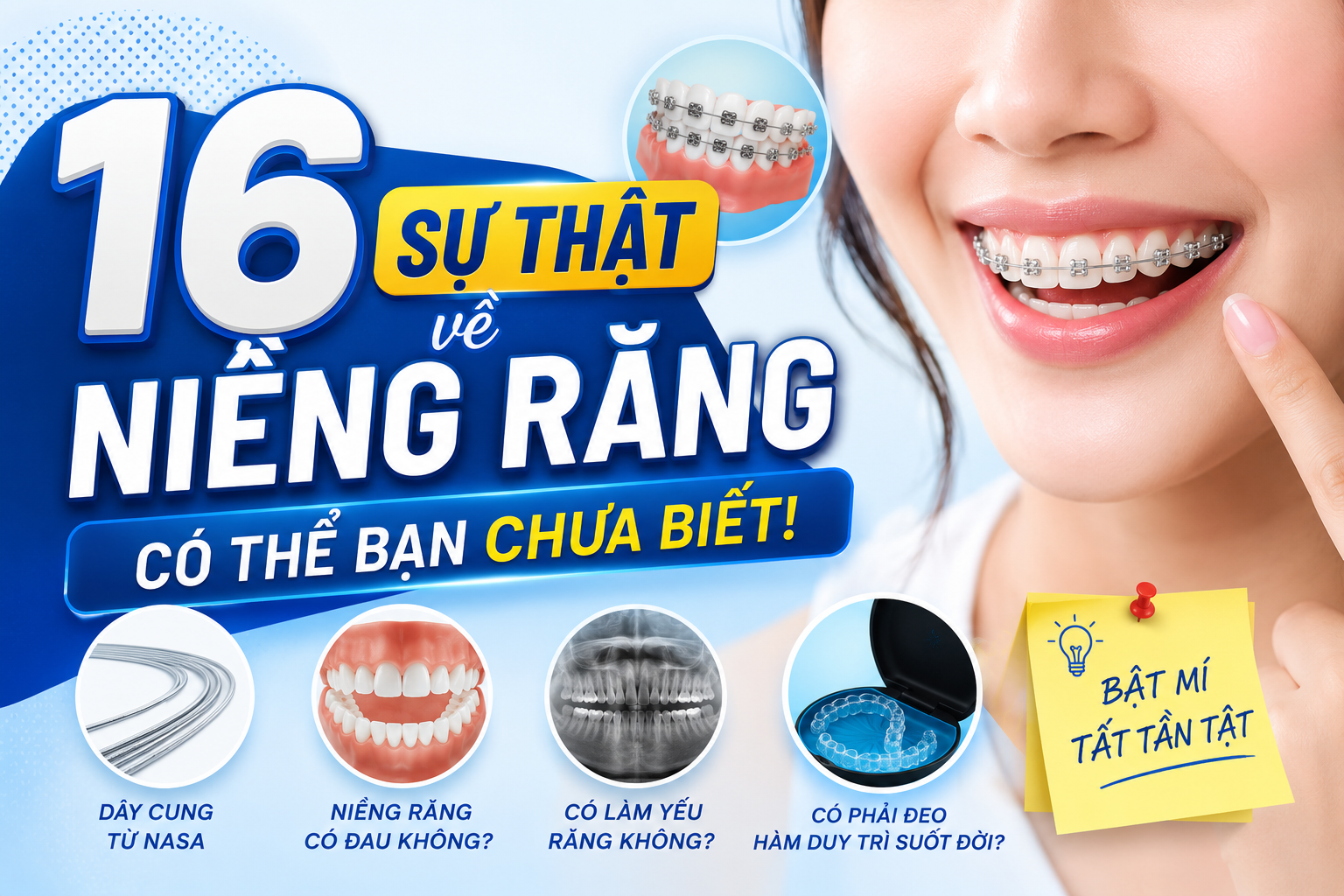
Metal bracket braces are the most classic orthodontic method today, yet they still deliver excellent results. With this method, the dentist attaches brackets to the teeth and then threads an archwire through the bracket slots. This creates force that gradually moves the teeth into the correct position in the arch.
The metal used for brackets is a special material that has been researched, tested as safe and approved for dental use. Both the brackets and archwire are strong, highly durable and do not oxidize even in the oral environment. As a result, they deliver excellent orthodontic results even in difficult, complex cases.
The ideal age for metal braces is 7–12 years. At this age, the jawbone is still developing and soft, so teeth move more easily and faster than when the bone has fully hardened in adulthood.

Metal bracket braces are highly effective
Metal braces consist of two main components: brackets and an archwire. Brackets are made of stainless steel or precious metals such as silver or gold. They are attached to the tooth surface to provide anchor points for the force that moves the teeth.
The archwire is a thin metal wire that can be made of nickel, gold, silver or other safe metals. The orthodontic archwire fits into the bracket slots and connects the brackets (the teeth) so they move together continuously and steadily.
In addition, metal brackets tied with elastics use another component: elastic ties.
Although they have the longest history of all orthodontic methods, metal brackets are the lowest-cost and highly effective orthodontic method, suitable for the following types of misalignment
This is one of the typical cases of misalignment that needs metal braces to correct. Protruding teeth not only affect appearance but also greatly affect chewing.
Protruding teeth push the upper teeth forward, making the person feel self-conscious when talking to others. They can even cause oral health problems because the teeth cannot be cleaned properly.
Braces are the optimal solution in this case.
Similar to protruding teeth, an underbite is when the lower jaw overgrows, protrudes and overlaps the upper jaw. From the side, an underbite gives the face a "plow blade" shape, making the person shy about talking to and meeting people.
An underbite also makes speech unclear, causes lisping and affects digestive health because food cannot be ground properly. So braces are needed to retract the lower teeth, correct the bite and rebalance the face.

Metal brackets are effective for all kinds of tooth misalignment
See now: Braces for an underbite at Lac Viet Dental
Misaligned teeth usually do not affect appearance from the outside but easily affect the bite, and they make the smile look less attractive. Metal bracket braces align and level the dental arch and rotate teeth back into the correct position.
Gapped teeth make eating especially difficult and food often gets stuck between them. If not cleaned after every meal, bacteria easily form and accumulate, harming the mouth and leading to oral diseases such as tooth decay, periodontitis and gingivitis.
Braces close the gaps so the teeth sit evenly together, food gets stuck less, eating improves and oral hygiene becomes easier.
If you have any of the 4 conditions above, treat it now to avoid problems later. For the most effective treatment, fill in your information in the form below and a Lac Viet Intech dentist will give you detailed advice.
Đăng ký tư vấn
Based on the mechanism, structure, bracket position and orthodontic appliances, metal bracket braces are divided into 3 main types: conventional (metal brackets tied with elastics), self-ligating, and lingual braces.
This was the first orthodontic method and is still chosen by many people because of the results metal brackets deliver.
Conventional metal braces include brackets, a metal archwire and elastic ties. The brackets are attached to the outer surface of the teeth, the archwire is placed in the bracket slots and elastic ties hold it in place and maintain the force that moves the teeth according to plan.
Self-ligating metal bracket braces are an improved version of conventional metal brackets with a similar system of appliances. But instead of elastic ties, self-ligating brackets have an automatic sliding clip that opens and closes so the archwire can move easily in the slot and create stable force.
Because of the sliding clip, self-ligating metal brackets are slightly larger than conventional ones, and the treatment also costs more.

There are 3 main types of metal brackets: conventional, self-ligating and lingual
Lingual metal braces have the same structure and mechanism as the two types above, but the metal brackets are attached to the inner (tongue) side of the teeth instead of the outer side.
This solution keeps your braces discreet throughout treatment but requires a highly skilled dentist. Oral hygiene is also harder because the brackets on the inside are very difficult to see. And because they are on the inside and in constant contact with the tongue, you need to be very careful not to scratch your tongue or soft tissue.
In addition, lingual metal braces are the most expensive type of metal braces.
Depending on your dental condition, aesthetic needs and budget, you can choose the most suitable method.
Metal bracket braces were the first method to appear and are still popular today because of their many outstanding advantages. Of course, this solution also has some limitations. Specifically:
Maximum orthodontic results: With strong and stable force, metal brackets can be used for every type of misalignment, from easy to difficult or complex. A huge body of data gives experts plenty to study and keep improving this orthodontic method.

Braces significantly improve the appearance of the teeth and face
The most stable and secure force of all bracket types: Brackets made of metal are extremely strong, minimizing the risk of cracking during treatment. As a result, the force is applied steadily and continuously, so the teeth align quickly as desired, safely and on schedule.
Reasonable cost: This is the lowest-cost orthodontic method today, affordable for almost everyone.
Besides the advantages above, metal bracket braces also have some drawbacks:
Less aesthetic: Because metal brackets stand out against the teeth, they are clearly visible when talking or smiling. This may make you feel somewhat self-conscious when talking to people in the early stage.
You may feel bulkiness and slight soreness for about 5–7 days after the brackets are placed, or scratches on your lips and cheeks because you are not used to them yet. After this period, you will get used to the brackets and feel normal again.
Each clinic has a different procedure. At Lac Viet Intech Dental, your metal bracket braces treatment follows these steps:

The medically standard orthodontic procedure at Lac Viet Intech
With this method, you will need an adjustment once a month. The dentist checks progress and adjusts the force to ensure the teeth move according to plan.
After the brackets are removed, you need to wear a retainer to stabilize the roots in their new position and maintain the results for the long term.
How much do metal bracket braces cost? Each clinic calculates costs differently. On the market today, this method costs around 19–32 million VND. Self-ligating metal brackets cost 5–10 million VND more than conventional metal brackets.
To optimize results and treatment time with metal braces, keep the following in mind:
Although it is not a new method, many people have questions before deciding on braces. Below are some frequently asked questions about metal bracket braces.
An average metal braces case takes about 18–24 months; more complex cases may take longer, about 30–36 months.
However, with braces at Lac Viet Intech you do not need to worry too much about treatment time because the X-Matrix technology used at the clinic can shorten treatment by 4–6 months.
In addition, SmileStream software screens the jawbone structure and detects cortical bone resistance so dentists can plan the best treatment; WebCeph software helps dentists adjust forces precisely; and AutoLign software lets you preview the result of your braces.
Metal and ceramic brackets each have their own pros and cons. You can choose the right method based on your needs and condition.
Metal brackets are cheaper and stronger but less aesthetic than ceramic brackets. Ceramic brackets look better but cost more and are more likely to crack than metal brackets.
So if you prioritize aesthetics, you can choose clear ceramic bracket braces , while if you want to save money, you can choose metal bracket braces.
Whether braces hurt also depends on many factors, such as the dentist and the technology used.
When the brackets are first placed, you may feel pain for about 3–5 days because you are not used to them. However, once you get used to the brackets, you will feel normal.
If separating elastics are needed to create space for orthodontic bands, you will also feel slight pain for the first 1–3 days. Once enough space has been created, the pain stops. Adjustments that tighten the braces may also make your teeth feel slightly sore.
In addition, if extractions are needed, you will feel pain for about a week afterwards.
A dentist shares how to reduce pain during orthodontic treatment
If you are looking for a good place for metal bracket braces , come to Lac Viet Intech Dental. It is not only a reputable clinic licensed by the Department of Health but was also voted one of the Top 10 Trusted Brands for Quality Products and Outstanding Services in 2021.
With a team of fully licensed dentists with in-depth training, we create effective treatment plans with suitable forces so the teeth move with minimal pain during treatment. Together with the exclusive X-Matrix orthodontic technology, your treatment will be safe, painless, highly effective and as short as possible.
In addition, many people are also researching what dental implants are. To learn more about this method, please contact Lac Viet Intech!
Above is what the orthodontic experts at Lac Viet Intech have shared about metal bracket braces. We hope this information has helped you better understand this orthodontic method and find the right solution. If you have any questions, call 19006421 or visit the clinic directly for a free clinical examination and consultation.
News on the same topic

Related questions
Featured news
Sign up for consultation
Partner of Lac Viet Intech Dental Clinic