Language
Language

Professional Consulting
D. Lê Thị Bích Phương
Dentist
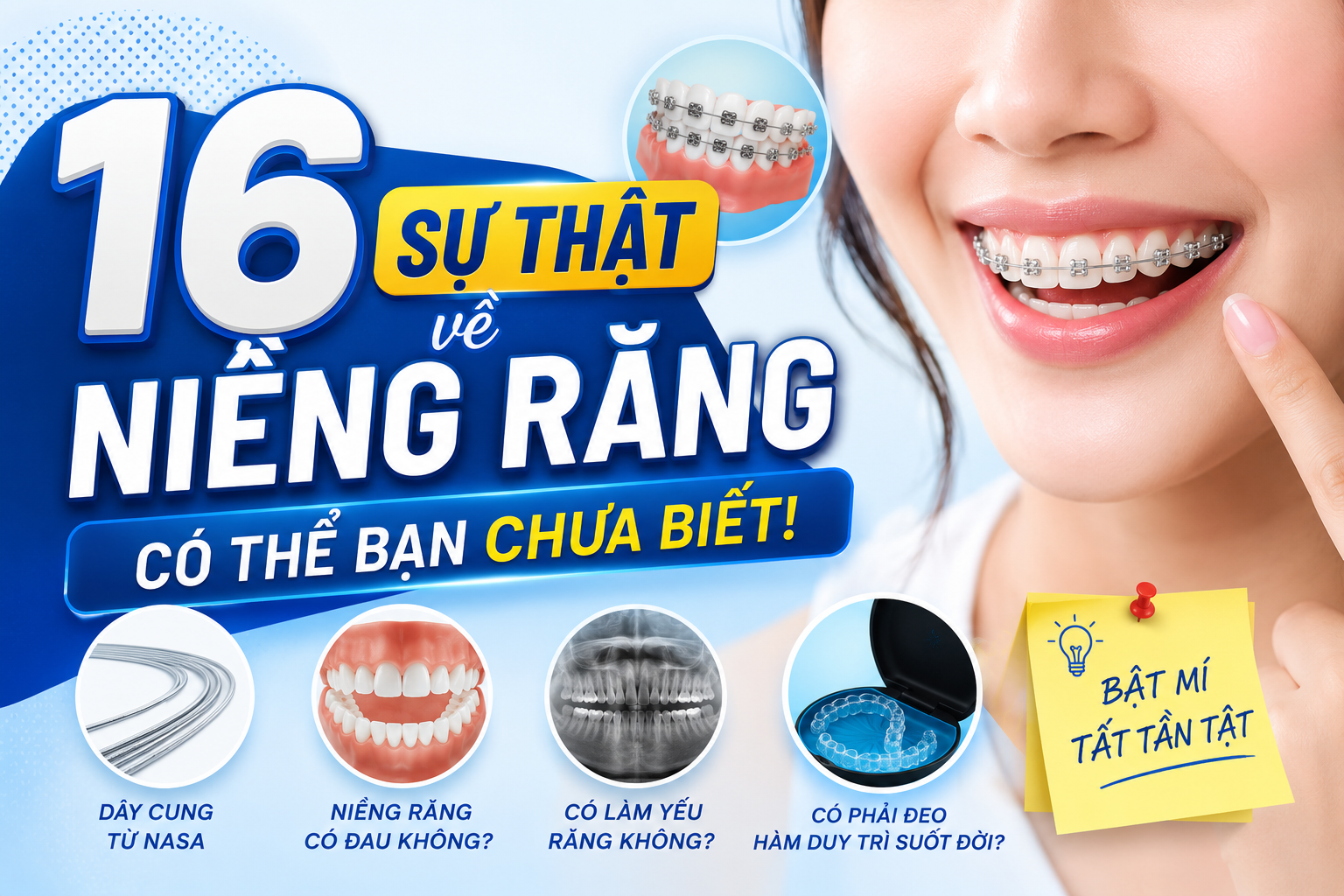
Dental braces wireis an essential orthodontic tool when wearing braces. Without the bowstring it is impossiblebracesOkay. In order for teeth to move in the right direction and route, brackets and wires are indispensable.
The archwire is designed to have a long and thin shape to be fixed in the bracket groove. Responsible for connecting the brackets and creating traction so the teeth can move. For braces to be effective, the doctor will tighten the force by applying pressure to the archwire periodically every 6 - 8 weeks (depending on the type of braces you choose).
In addition, if you choose traditional braces, the doctor will use elastic bands to fix the wire to the braces. When choosing automatic braces, there is no need to use rubber bands, the braces are designed with an automatic sliding cover so that the arch wire can automatically stabilize in the bracket groove. The close combination of wires and brackets will help effectively correct any tooth misalignments.

Archwires are essential orthodontic tools when using braces
As mentioned above,braces wireconsidered one of the most important braces devices, its main effect is to create force and bring misaligned teeth back to the standard position on the jaw. At each different stage, the bowstring will bring different effects.
The archwire used during this stage must be of good elasticity and not too hard. Usually the best type of archwire to use during this stage is a Niti archwire. And to help teeth spread evenly quickly and most effectively, wire sizes of 0.014 and 0.016 are most commonly used by doctors during this period.
To have space for the teeth to move, in some cases tooth extraction will be necessary. After the teeth are spread evenly, it will enter the space closing stage. You will see a clear change on your face.
At this stage, the doctor will use an arch wire from stainless steel (Stainless Steel) to open the space behind and adjust the space in front and balance the difference between the two jaws. This stage lasts from 4 to 6 months and the appropriate wire sizes are 0.016 x 0.025 and 0.019 x 0.025.
This is the final phase of braces. Normally it will only take you 2 - 8 weeks to adjust your bite. The suitable arch wire for this stage is the Niti arch wire size 0.019 x 0.025.

Each different stage the arch wire will have a different role
See more:Stages of braces
There are many different types of bowstrings for use in different stages, they are made from various alloys. Among them, the most popular are stainless steel, nickel-titanium alloy (NiTi) and Titanium-Beta alloy. Depending on the composition, we can classify 5 types of archwires with the following sizes.

Nickel archwire is commonly used in orthodontics
There are many types of archwires being used such as stainless steel wire, Tungsten wire, titanium wire and NITI wire, of which the best type is the heat-activated NITI wire being used at Lac Viet Intech Dental.
Thermal-activated NITI is created by combining two semi-precious metals, Titanium and Nickel, and smelting. The metal is 79.68% titanium, 20.04% is nickel, a small amount of metallurgical and activating catalysts.
Sequential heat activated wire with different sizes suitable for each stage and is heat treated. NITI heat activates in a pliable state under cold temperatures and when in the mouth (37 degrees Celsius) will return to its original shape. One of the most outstanding features of this type of archwire is its ability to change shape according to temperature.
Outstanding advantages:
Some alloys from precious metals such as gold, silver, platinum... have been used in dentistry by scientist Edward Angle since 1887. Archwires made from these alloys have good abrasion resistance and high elasticity, however, the cost to use this type of archwire is greater than other types of archwires.
The main component of wires made of precious metals will be: Platinum (5 – 10%), Palladium (5 – 10%), Nickel (1 – 2%), Gold (55% – 65%), and Copper(11 – 18%).
Stainless Steel archwire was first used on the market in 1929. This was the first type of archwire that could replace precious alloy archwires to reduce the cost of braces. Stainless steel archwires are much cheaper than precious metal archwires mentioned above.
Stainless steel archwires are also sturdy and do not oxidize in the oral cavity environment, and have high elasticity, so they can work effectively during the braces process. The main components of stainless steel bowstring include: 17 – 25% Chromium, 8 – 25% Nickel and 1 – 2% Carbon.
This type of archwire was first used in 1950 with main ingredients including: 40% cobalt, 20% chromium, 16% iron, 15% nickel. Cobalt - Chromium archwires have the advantage of creating strong pulling force, but are not as sturdy as other types of archwires, so they cannot be used for severe and complicated cases of misaligned teeth. Therefore, today very few dentists use this type of wire to brace customers' teeth.
Titanium - Beta archwire has components including: 79% Titanium, 11% Molybdenum, 6% Zirconium and 4% Tin. This type of wire can increase or decrease the length during the patient's braces process and brings relatively good orthodontic results.
Currently, many people are using the service of dental implants to improve the aesthetics of teeth. Come immediately to Lac Viet Intech for detailed examination and consultation!
Above are the shares oforthodontistsat Lac Viet Intech dental clinic about the types ofbracescommonly used in orthodontics and their uses at each stage. If you need further information or advice about your dental condition, please contact hotline 19006421 or come directly to the dentist for a free examination.
News on the same topic

Related questions
Featured news

Sign up for consultation
Partner of Lac Viet Intech Dental Clinic