Language
Language
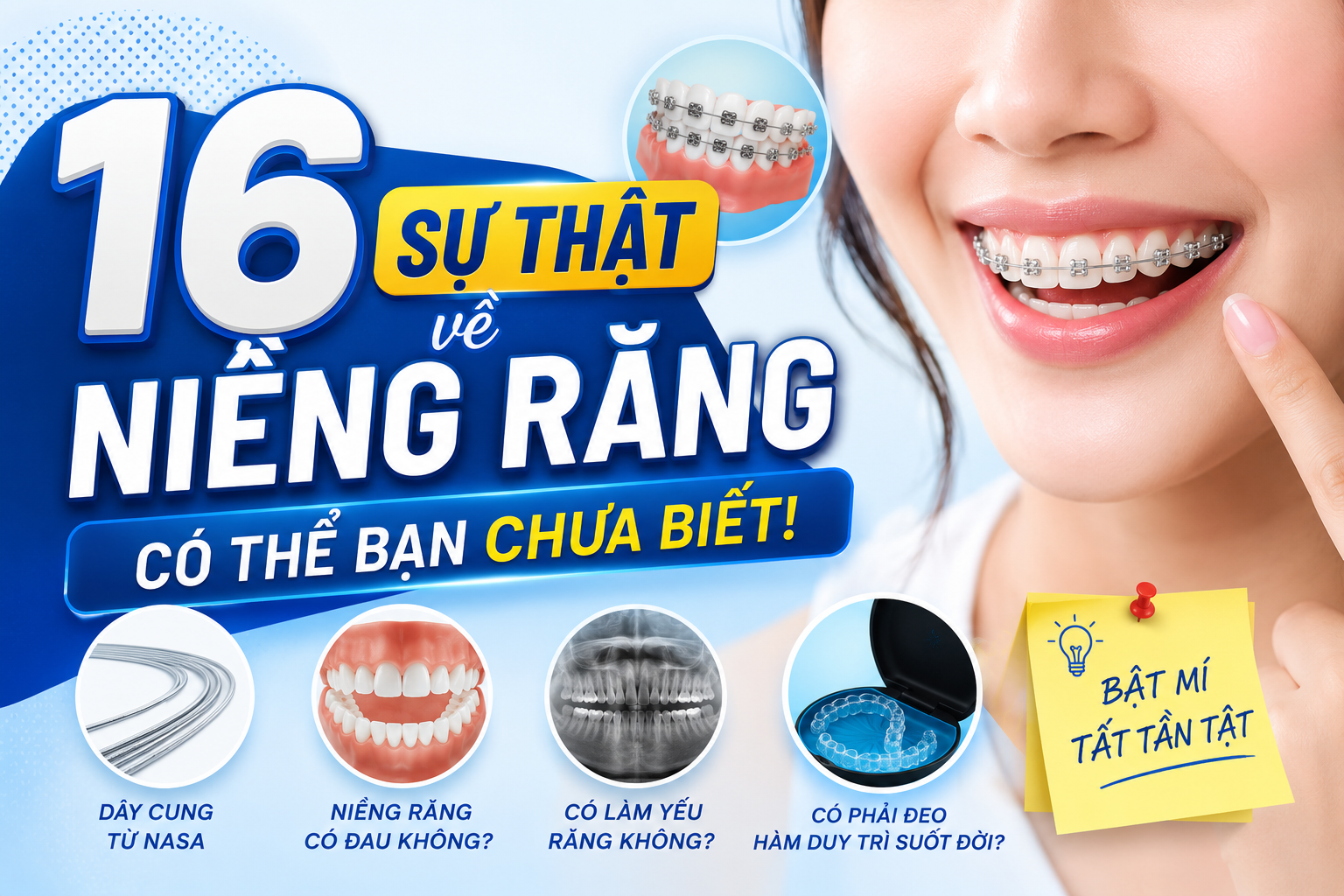
A tooth is normally held in the jawbone thanks to a retention system called the Periodontal Ligament (PDL). It is this system of ligaments around the teeth that helps the teeth not get stuck in the jawbone but can move.

The mechanism of action of braces:
When a slight physiological force is applied to the teeth, the ligaments around the teeth on the affected side will stretch, while the opposite side has the ligaments around the teeth compressed. At compressed locations, there are many reactions that take place depending on the time and intensity of the impact force, attracting osteoclasts (cells responsible for destroying bone cells) to cause bone loss in the compressed area. Conversely, on the side of the stretched ligament, the reactions will help the bone build up. It is this parallel process of bone resorption and resorption that helps teeth move towards the resorbed bone. In addition, if you are also wondering Is dental implant placement painful please ask your dentist for advice!

Thus, we can understand that braces are a method of using specialized instruments to apply light, physiological force to the tooth crown, taking advantage of the bone resorption mechanism mentioned above to move teeth to the desired position.
Bracket is one of the main appliances used in braces. So what is the role of braces?
The braces are attached tightly to the tooth crown in a precise position predetermined by the doctor, acting as the force point. This means that braces are not devices that cause force. If you just attach the braces to the teeth, the teeth will not move.

To create force, the doctor needs to insert the wire into the grooves of the braces. Archwires are made of different materials and designed with different shapes to suit each case, helping the doctor achieve the desired tooth movement. In addition, supporting devices such as elastics, springs, etc. also play a role in creating force on the tooth crown. In addition, if you are wondering can dental implants be used for braces please ask your doctor for in-depth advice!
Currently there are many different types of braces, but they all basically perform the same function mechanically. The difference between them will bring about other effects of braces, specifically:
During use, for each different tooth characteristic, the doctor will choose a brace design with different parameters. These parameters include the tip, torque, and in/out degree of the braces, which have the effect of adjusting the tooth axis during movement, helping to simplify the braces process as well as limit unwanted movements.
Metal braces, crystal braces or Ceramic braces are the names of different types of braces in terms of manufacturing materials. Their purpose is to meet the patient's aesthetic needs. Ceramic and crystal braces are similar in color to the teeth, so they are more aesthetically pleasing than metal braces.

As mentioned before, to create force to move teeth, the doctor needs to fix the wire into the groove of the bracket. For regular braces, the archwire is tied tightly to the braces with elastic bands. However, this elastic has the disadvantage of creating great friction and the force generated is unstable, so the automatic braces line was born to overcome those disadvantages. With the automatic locking cap design, the doctor does not need to use elastic to fix the arch wire, but just close the cap, immediately, the arch wire is kept stable inside the bracket.
Many people also choose dental implants To improve teeth effectively. Come to Lac Viet Intech Dental Clinic now to get the best advice and treatment! Lac Viet Intech will help you understand clearly dental implant structure help you easily make the decision to have your teeth done.
News on the same topic

Related questions
Featured news

Sign up for consultation
Partner of Lac Viet Intech Dental Clinic