Porcelain crowns and porcelain veneers have emerged as two "shining stars" in the field of cosmetic dentistry. Both of these methods offer incredible transformation capabilities, helping to overcome many defects in tooth shape and color. This article will take you deep into the nature of each method, comparing in detail the pros and cons, cases where it should and should not be applied to help you make the wisest decision for your smile.
Distinguish between porcelain crowns and porcelain veneers
With teeth defects such as yellowing, discoloration, chips, or irregular shapes, many people seek cosmetic dentistry solutions. Among them, porcelain crowns and porcelain veneers are the two most popular techniques, but are also the cause of much confusion.
Simply put, both porcelain crowns and porcelain veneers use high-quality dental ceramic materials to reshape teeth. However, the way they are performed, the degree of invasiveness, and their indications are clearly different.
- Porcelain Crown:Also known as a porcelain crown, it is a porcelain "cap" that is placed over the entire ground-up real tooth pulp. It completely covers the tooth from all sides.

Porcelain crowns with porcelain crowns crafted according to the desired shape and size of the tooth will be fixed onto the ground tooth base.
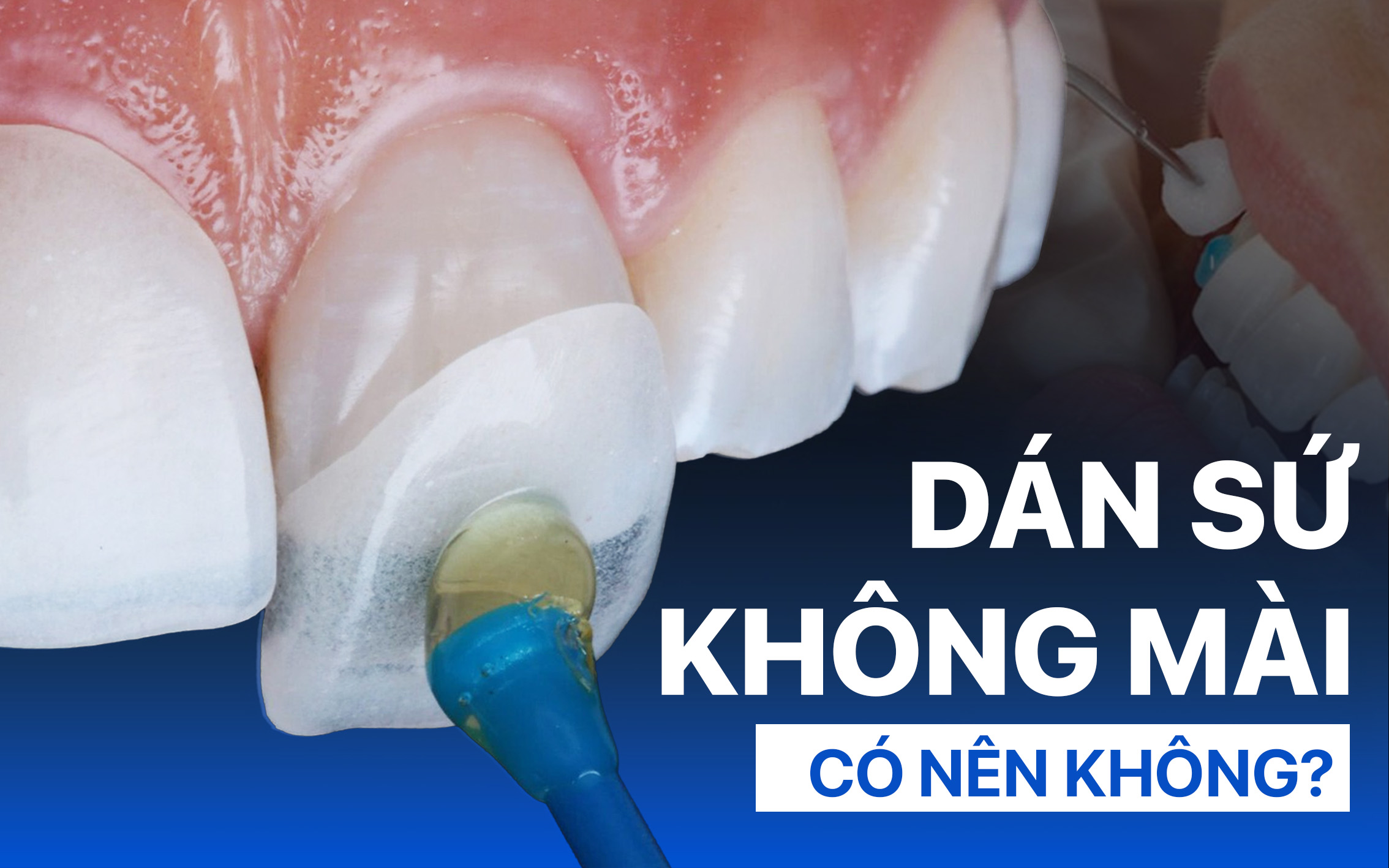
- Porcelain Veneer:These are porcelain pieces as thin as silk, fixed to the outer surface of the teeth.

Porcelain veneers are an advanced cosmetic dentistry technique that focuses on maximum preservation of real tooth tissue
The nature of porcelain crowns and porcelain veneers
1. Porcelain crowns
Porcelain crowns are an aesthetic and functional tooth restoration method that has a long history and is considered a classic technique in dentistry. Basically, the doctor will proceedgrinding down real tooth pulp to 1-2mmon all sides (outer, inside, occlusal and two sides).

Real teeth are ground into small pieces when covered with porcelain
Then onePorcelain crowns (also known as porcelain crowns)Crafted according to the desired tooth shape and size, it will be fixed onto the ground tooth pulp. This porcelain crown has the same shape, color and translucency as a real tooth, helping to restore both aesthetics and chewing function.
Porcelain crowns are often prescribed in cases where teeth have more serious problems, requiring comprehensive recovery and good bearing capacity:
- Severely stained teeth that cannot be whitened:Cases of discoloration caused by Tetracycline, severe Fluorosis or congenitally dull teeth where whitening methods are ineffective. Porcelain crowns will completely cover the color of old teeth.
- Large gap between teeth:When the gap between teeth is too large and braces are not feasible or the patient does not want braces. Porcelain crowns can help close these gaps.
- Large broken or severely chipped teeth:When too much natural tooth tissue is lost due to an accident, tooth decay, or impact, porcelain crowns help reshape and protect the remaining teeth.
- Severely worn teeth:Due to long-term habit of grinding teeth, chewing with the wrong bite, or due to age, the teeth become worn and shortened. Porcelain crowns help restore tooth height and shape.
- Tooth with large cavities and root canal treatment:Teeth after root canal treatment often become brittle, weak and break easily. The porcelain crown will fit tightly, protect the tooth from chewing forces, and improve the color change after root canal treatment.
- Teeth with irregular shapes and many deviations:When the tooth shape is too small, too large, or too short compared to other teeth, the entire shape needs to be reconstructed.
- Making porcelain bridges or crowns on Implant:When one or more teeth are lost, porcelain crowns are used to make bridges (connecting real teeth that have been ground) or placed on implants to restore lost teeth.
Porcelain crowns are the methodRestores both chewing function and aesthetics. It offers high durability, good bearing capacity and can last for many years if properly cared for. However, its limitation is that it requires more tooth grinding than veneering.
2. Porcelain veneers
Porcelain veneers are an advanced cosmetic dentistry technique that focuses onMaximum preservation of real tooth tissue. Instead of grinding down the entire tooth, the doctor just proceedsgrinding a very thin layer of tooth enamel (about 0.3mm to 0.8mm)on the outside of the tooth.
In some cases where teeth have the right shape, tooth grinding may not even be needed (uncut veneers). Then, a piece of porcelain as thin as silk, delicately crafted with natural color and clarity, will be permanently glued to the tooth surface with specialized dental glue.
Porcelain veneers are an advanced cosmetic dentistry technique that focuses onMaximum preservation of real tooth tissue.
 Porcelain veneers grind teeth very small, even without grinding
Porcelain veneers are ideal for cases where you want to improve aesthetics without invading too much on real teeth, especially when tooth function is still good.
- Lightly discolored teeth, light stains, cannot be whitened:Teeth are stained yellow due to food, drinks, or mildly stained and whitening is ineffective. Veneer will cover color defects, bringing a naturally bright white smile.
- Small chipped teeth, slight chips at the biting edge:Small lesions at the edge of the tooth or tooth corner can be covered and restored with veneer.
- Teeth with irregular shape, unbalanced size:Teeth that are too short, too long, or have an unharmonious shape compared to other teeth. Veneers can slightly adjust the shape to create balance.
- Teeth with small gaps:Small gaps between the front teeth can be closed with veneers, creating more regular teeth.
- Teeth with an unsightly enamel surface:Have white spots, lightly pitted enamel or small veins.
- Want to improve the overall aesthetic of your smile:When you want to have teeth that are evenly colored, bright white and more beautiful but the original teeth do not have too many serious defects.
Compare porcelain crowns and porcelain veneers
1. Similarities
- Materials:Both use high-quality dental ceramic materials, with durability, color and translucency similar to real teeth.
- Performance time:The process of completing both porcelain crowns and veneers usually takes about2-3 days(depending on the number of teeth and complexity of each case, including time for examination, grinding teeth, taking impressions, making ceramics at the lab and attaching them). porcelain).
- Purpose:All aimed at improving smile aesthetics and partly chewing function.
- Care requirements:Both require a thorough oral hygiene regimen and regular dental visits to maintain health and beauty.
2. Differences and clear indications
|
Criteria
|
Ceramic Crowns (Porcelain Crowns)
|
Porcelain Veneers
|
|
Extent of tooth grinding
|
More tooth grinding (1-2mm) on all tooth surfaces.
|
Very little tooth grinding (0.3-0.8mm) on the outer surface of the teeth, or no grinding at all.
|
|
Coverage
|
Covering the entire surface tooth.
|
Only covers the outer surface of the tooth.
|
|
Durability and bearing capacity
|
Higher, better chewing force due to covering the entire tooth.
|
Lower than porcelain crown, suitable for moderate chewing force.
|
|
Priority indications
|
Functional rehabilitation, increasing tooth size, regenerating bite, handling severely worn teeth, large cavities, root canal treatment.
|
Aesthetic priority, does not affect much bite.
|
|
Invasiveness
|
More invasive to real tooth structure.
|
Minimally invasive, maximum preservation of real tooth tissue.
|
|
Cost
|
Usually more diverse prices, depending on the type of porcelain and function.
|
Usually have a higher price per tooth unit due to high technical requirements and sophisticated aesthetics.
|
Some typical cases are prescribed porcelain crowns or porcelain veneers. veneer
1. Crooked teeth (mild to moderate misalignment)
-
Do not immediately get porcelain crowns.Porcelain crowns only cover the appearance but do not solve the root problem of bite misalignment.
-
Optimal solution: Brace (orthodontic)first to put the teeth in the correct position, creating a standard bite. After the teeth are straight, if there are still small defects in color or shape, they can be consideredPorcelain veneersto perfect your smile.
2. Teeth are even but not beautifully shaped (too short, have small gaps, or are unbalanced in shape)
- Porcelain veneers should be applied.In this case, the real tooth structure is quite good, there are no serious problems with function or bite. Veneers will help adjust the shape and size of teeth in a subtle way, creating harmony for the smile without needing too much tooth grinding.
3. Small/large broken teeth
-
Small broken teeth, chipped at the biting edge or tooth corner: Should be covered with porcelain veneer.Veneers can restore lost tooth enamel, protect teeth and restore aesthetics.
-
Large broken teeth, lose a lot of real tooth tissue, affect the pulp or crown: Should be covered with porcelain.Porcelain crowns will cover and protect the entire remaining tooth, completely restoring shape and eating function. chew.
4. Slight discoloration of teeth (yellowing due to food and drinks)
- Porcelain veneers are recommended.For cases of mild discoloration, veneers are a great choice to have naturally bright white teeth without needing much tooth grinding
Cost of porcelain crowns and porcelain veneers
Cost is always an important factor when considering cosmetic dental services. The price of porcelain crowns and porcelain veneers can fluctuate significantly depending on many factors such as: type of ceramic material, manufacturing technology, doctor's skills, dentistry's reputation and warranty policy.
1. Cost of porcelain crowns
The price of porcelain crowns is usually calculated by tooth unit and there is a big difference between materials:
- Metal porcelain crowns:
- Price:Usually ranges from1,000,000 VND to 2,000,000 VND/tooth.
- Features:The rib core is made of metal (Chromium-Nickel alloy, Chromium-Cobalt...), the outside is coated with ceramic. The advantage is low cost and relative durability.
- Limitations:Easily causes blackening of the gum line after a period of use (due to the oxidation of the metal), does not have the same natural clarity as real teeth, and can cause irritation to some sensitive people. Currently, it is rarely recommended for use on front teeth.
- All-ceramic teeth (Zirconia, Cercon HT, Nacera, Lava Plus, Emax...):
- Price range:Popular from4,000,000 VND to 8,000,000 VND/tooth, or higher for exclusively imported high-end porcelain lines.
- Specialties Points:Made entirely from pure porcelain, containing no metal.
- Advantages:High aesthetics (natural color, translucent like real teeth, does not cause black gums), excellent biological compatibility with the body, does not cause irritation, very good durability and bearing capacity. This is the ideal choice for both incisors and molars.
2. The cost of porcelain veneers
Porcelain veneers usually cost a little more than regular all-ceramic teeth, due to the technical requirements for making and attaching porcelain requiring higher sophistication:
- Price:Usually ranges from6,000,000 VND to 10,000,000 VND/tooth, depending on the brand of porcelain and complexity of each case.
- The Popular types of veneer porcelain:
- LC Nano porcelain:A type of high-quality porcelain, usually with translucency and very natural color, suitable for cases requiring high aesthetics.
- Lithium Disilicate (IPS Emax):Very popular ceramic type in veneers, outstanding with high durability, good bearing capacity and natural, transparent beauty.
- Nano Zirconia:Although Zirconia is often used for porcelain coating, Nano Zirconia technology is also applied to create thin, durable and aesthetically pleasing veneers.
- IPS Nano (IPS Empress Nano):A number of other Nano ceramic lines are also used, bringing outstanding durability and aesthetics.
Finally, whether it isporcelain crownsorporcelain veneers, both methods are outstanding advances in cosmetic dentistry, providing the ability to create your dream smile. However, the key thing to remember is:There is no method that is absolutely "reverting" or "not grinding teeth" (except for non-grinding veneers in the case of very small teeth).Both have a certain level of invasion to the real tooth structure.
The choice of which method depends entirely onyour current dental condition, aesthetic wishes, financial ability and most importantly, advice from a qualified dentist. expertise and ethics.
In case you want implant treatment please contact Lac Viet Intech immediately!
For detailed examination and advice on your dental condition, make an appointment with the team of experienced experts at Lac Viet Intech Dental today!
- Hotline:0866.38.0033 (or 1900.6421)