Language
Language

Professional Consulting
D. Nguyễn Ngọc Bảo
Dentist
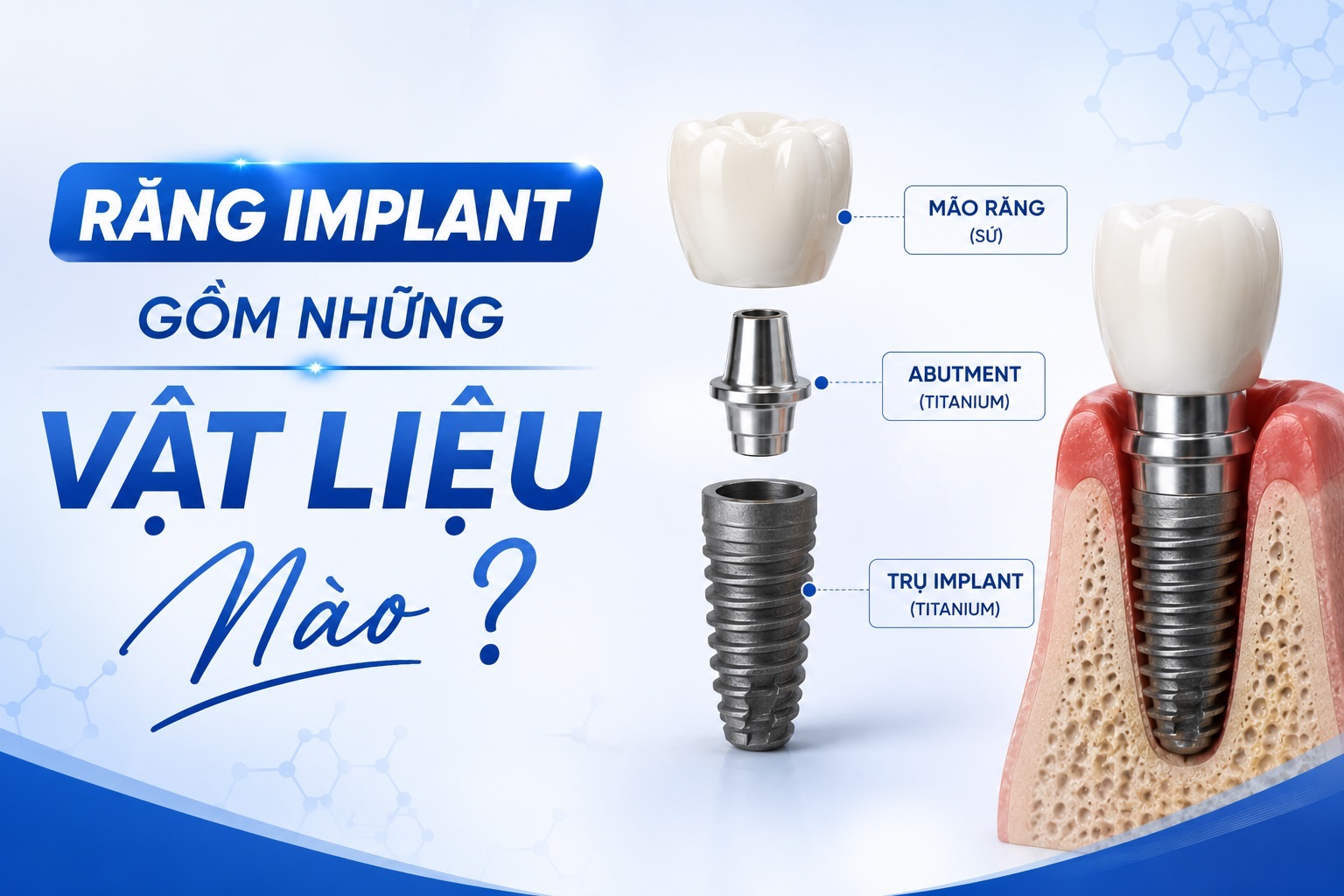
Dental implantationis a fixed method of restoring missing teeth, done by drilling into the jawbone, then placing the implant inside the jawbone to replace the lost tooth root. The jawbone contains many complex anatomical structures, so if the surgeon lacks professional knowledge, it can cause the following risks of Implant complications:
The first complication is prolonged bleeding after Implant surgery. Bleeding after dental implants can come from two main causes: the patient has hemophilia but the doctor does not detect it or the doctor uses too rough movements during surgery.

The first complication of implant placement is prolonged bleeding
After implant placement, the patient will see bleeding at the surgical site. Most of the above cases are the result of dental implants, however, bleeding after implant placement is usually less severe and can be easily stopped after the first 1-2 days. However, if the bleeding lasts more than 3 days or cannot be stopped, the patient needs to contact a doctor for timely examination and treatment.
In the mouth there are anatomical structures that are dangerous blood vessels. If the surgeon is not knowledgeable or inexperienced, he or she may damage blood vessels during surgery. This will lead to prolonged bleeding complications after implant placement.
Infectious complications after implant placement can occur as early as 5-7 days after implant placement or can appear later after about 20 days to 1 month. Infection after implant placement can be as mild as local inflammation, or more severe, leading to diffuse bone inflammation.
TheDental Implanttechnique requires intervention into the jaw bone marrow, breaking the body's protective barrier. Therefore, the dental implant process carries a high risk of infection. Under mandatory conditions, implant facilities must invest in a separate operating room system with a strict aseptic system to avoid the risk of cross-infection.

Consequences of dental implants - Infection
When infected, at a mild level, the patient only experiences implant rejection, leading to failed surgery. In more severe cases, the infection can invade deeply, leading to bone inflammation and jaw bone necrosis. This is one of the serious complications and treatment is very persistent and costly.
When post-implant infection occurs, the only treatment is to remove the implant and scrape out infected cells to avoid inflammation and necrosis of the jaw bone. The doctor will then perform bone grafting to regenerate bone and then replant the dental implant.
One of the complications often encountered when implants are placed incorrectly is damage to neighboring teeth. This complication of implant placement is due to the doctor's lack of clinical experience, so he did not control operations well during surgery or due to subjectivity when examining and surveying the bone, leading to incorrect determination of the implant placement position.

The Implant is inserted crookedly into the root of the adjacent tooth.
The Implant is inserted incorrectly, crooked or invading the root of the adjacent tooth, which can lead to the risk of damage or death of the tooth pulp. In addition, a misaligned implant also causes the upper restoration to not fit tightly, easily shaking and causing food to fall off the restoration. Even worse is the implant neck breaking and then having to cut out the bone to get the implant out.
Implant rejection can be due to many reasons. The most common cause is infection after surgery or the patient's body has some underlying disease that prevents the implant from integrating with the jawbone and rejecting it.
During the examination and diagnosis process, if the doctor does not detect the patient's underlying diseases and still prescribes an implant, it will lead to the risk of implant rejection after implantation. Some underlying diseases such as diabetes, blood pressure or the patient has a smoking habit will prevent the implant from integrating with the jawbone.
Symptoms of implant rejection are: prolonged bleeding, inflammation at the implant site... After a period of time, the implant will weaken, shake and lose the ability to chew. When taking an X-ray, it can be clearly seen that the Implant does not adhere tightly to the jawbone.
Another dangerous complication of implant placement that is also very common is perforation of the maxillary sinus. The upper jaw has a hollow anatomical structure, corresponding to the tips of tooth roots 4,5,6,7,8 in the upper jaw. The maxillary sinus plays the role of ventilation, pronunciation resonance and dust filtering. When losing upper teeth for a long time, the jaw bone will disappear and the bottom of the sinus will fall low, leading to insufficient density and height to place the dental implant.

The implant falls into the maxillary sinus
During the examination, if the doctor does not diagnose correctly or lacks knowledge of anatomy and imaging, the bottom of the sinus will not be able to be detected. Therefore, when drilling, it will puncture the sinus floor, causing damage and chronic sinusitis.
One of the symptoms of sinusitis is persistent pain, migraine or pain under the eye socket that does not go away for more than 7 days after implant placement. In more severe cases, pus or bleeding from the nose to the throat may appear after surgery.
This is one of the most dangerous complications of implant placement and is a common complication in non-specialized doctors. The lower jaw has an anatomical structure called the mandibular canal. It includes blood vessels and nerve tubes that control the sensation of the lower teeth and lower lip.
Because the nerve runs close to the tooth roots in the lower jaw, if the surgeon places theImplanttoo close or violates the lower jaw nerve canal, it can cause complications of numbness and loss of feeling in the lips and cheeks. In particular, this is an irreversible complication and the patient will have to accept this injury throughout his or her life.
=> Learn in detail about the risks of complications that can occur when getting dental implants through the following video:
Complications when getting dental implants and how to fix them
>>> Do you want to know the cost of implants? Check outImplant pricestoday!
In addition to thecomplications of implant placementmentioned above, there are some late complications that occur after a period of using dental implants, including:
Implant placement is a safe technique with a high success rate (about 95-98% according to research by Pjetursson et al., 2014). However, there is still a risk of complications if the technique is not performed properly or the patient does not take good care after surgery.
Some complications that may occur:
However, these complications can be prevented if the doctor is experienced, uses modern technology and the patient complies with post-operative care.
To avoid the risk of complications when getting an Implant, it is best for you to choose a reputable dental address that specializes in Implants. At the same time, pay attention to clean oral care and hygiene to avoid the risk of infection and help increase the longevity of dental implants.
When choosing a reputable dental address, patients need to pay attention to 3 factors: Doctor's skills, modern equipment and standard sterile system
Implant doctors need to have full degrees and professional certificates in dental implants. In addition, doctors must have experience performing many clinical cases to be able to accurately diagnose and plan treatment, ensure safety and avoid any risk of possible complications.
Currently, Lac Viet Intech Dental Clinic is a reputable, specialized dental implant center, gathering a team of experienced experts in the field of implants. 100% of doctors at Lac Viet Intech have specialized in dental implants in many countries around the world, and have full qualifications and certificates in dental implants.
Each doctor has experience in performing over 500 clinical cases, and is currently a professional consultant for many famous Implant brands in Vietnam. In addition, doctors are also honored guests of dental knowledge sharing programs on national television.
=> VideoDoctor Vu Duc Duy- Implant specialist at Lac Viet Intech Dental in the program "For the health of Vietnamese people"
Doctor Vu Duc Duy in the program "For the health of Vietnamese people"
A reputable dental implant location needs to be fully equipped with a modern machinery system, applying advanced implant technology. Thereby assisting doctors in accurately diagnosing and understanding the jaw bone structure.
Important parameters such as the distance from the alveolar border to the lower dental canal and the path of the dental canal need to be measured accurately through the Cone Beam CT imaging device. Thanks to that, the doctor can choose the Implant with the appropriate diameter and length at each specific location.
At Lac Viet Intech Dental Clinic, Safe Tech dental implant technology is applied to help support doctors in creating safe treatment regimens with up to 99.8% success.

Safe Tech Dental Implant Technology
Data from the intraoral Scan system and CT Cone Beam are integrated based on Smart Tech technology to help process and create 3D simulated images. Thanks to that, the doctor can observe the overall jaw bone structure, bone density, maxillary sinus system, nerves... From there, come up with a safe treatment regimen, eliminating the risk of possible complications.
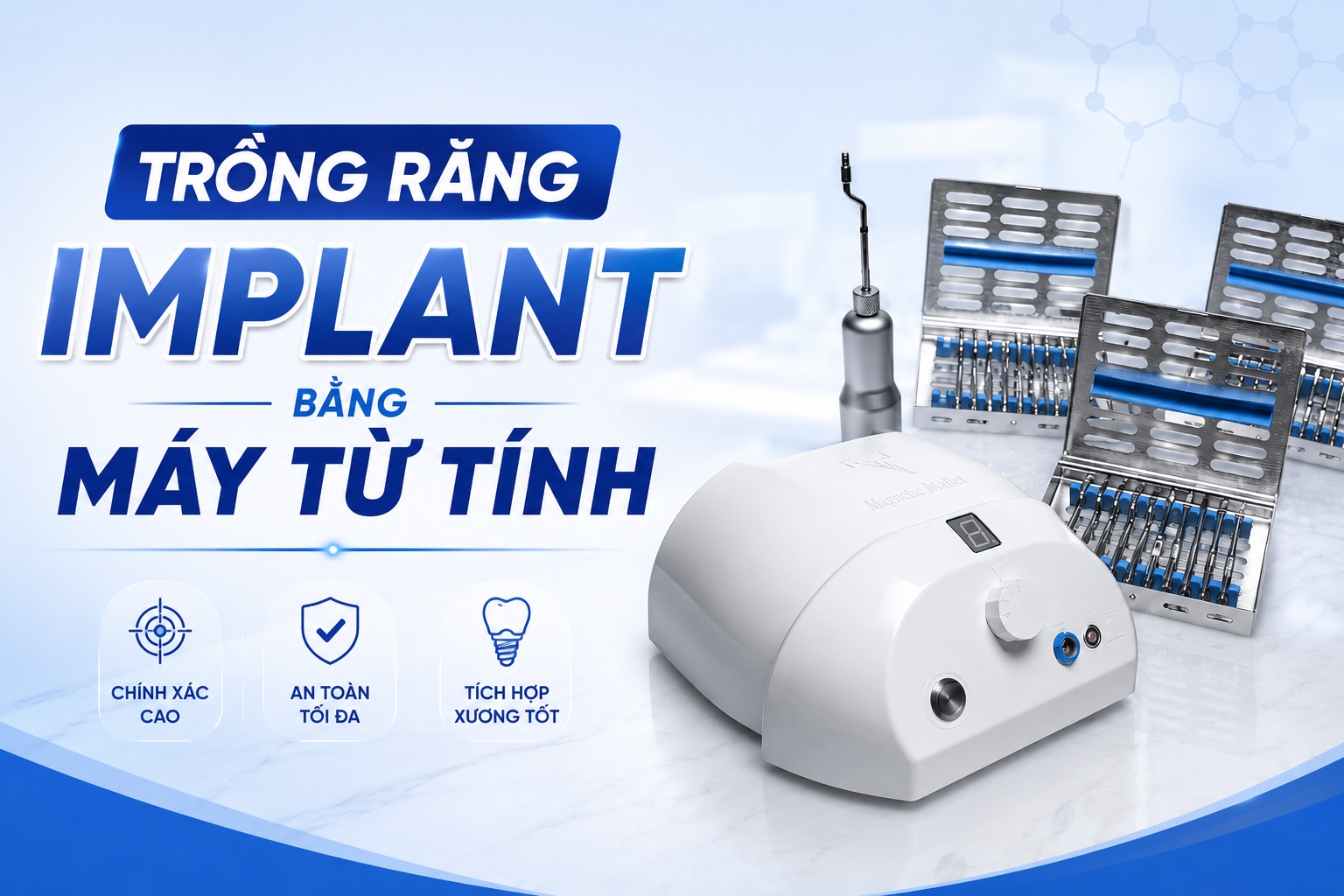
Stop Hurt technology uses high-frequency ultrasound waves to compress bone tissue, creating holes for implant placement in a gentle, minimally invasive way. With the support of Safe Tech technology, the Implant implant process will ensure accuracy, limit pain and swelling, prevent bleeding and increase bone integration rate almost absolutely.
In addition to the doctor's skills and modern equipment, ensuring sterility at the clinic is a very important criterion. At Lac Viet Intech Dental Clinic, we always ensure sterility with 3 standards:
With nearly 20 years of establishment and development,Lac Viet Intech Dentistryhas implemented Currently, more than 60,000 implant cases have been successfully performed. Become a reliable address and chosen by many customers.
In addition, patients also need to pay attention to diet and oral care after implant placement to limit the risk of future complications.
Above are the risks of complications that can occur when receiving implants. If you have any questions, please contact Hotline:19006421for expert answers!
News on the same topic

Related questions
Featured news

Sign up for consultation
Partner of Lac Viet Intech Dental Clinic