
Language
Language
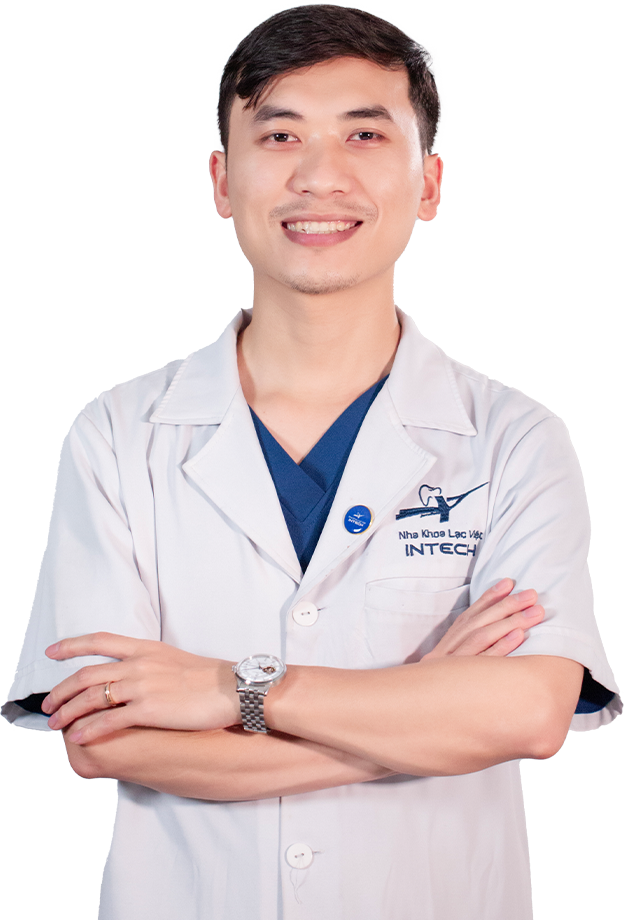
Professional Consulting
D. Nguyễn Văn Luyến
Dentist
What are porcelain veneers? According to Dr. Nguyen Van Luyen, a cosmetic restoration expert at Lac Viet Intech Dental, porcelain veneers are the best restorative solution available today, ensuring aesthetics while preserving as much natural tooth tissue as possible. However, some people remain skeptical about how effective this method is.
In the era of minimally invasive dentistry, porcelain veneers have become the gold standard for anyone who wants a radiant smile while respecting the body's natural structure as much as possible. Unlike porcelain crowns, which require removing 60–80% of the natural tooth tissue, veneers represent a new philosophy: beautiful, healthy and lasting, with only a very thin layer of tooth tissue prepared, and in some cases none at all.
Porcelain veneers are a cosmetic restoration that uses a very thin layer of porcelain bonded to the front surface of the teeth. This layer is usually 0.2 to 0.5 mm thick on average, about as thin as a contact lens. The dentist bonds the veneers permanently with a specialized adhesive system, ensuring they are secure and hard to break. Each veneer is custom-made for each patient to improve the color, shape, size and balance of the teeth in the dental arch.
 A close-up of a porcelain veneer
Unlike traditional porcelain crowns, which require removing about 60–80% of the tooth tissue, porcelain veneers aim to preserve as much of the natural tooth structure as possible, minimizing the risk of pulp damage, prolonged sensitivity and later biological complications. Porcelain veneers are classed as a selective cosmetic restoration technique, meaning they are not applied across the board; each patient's oral condition must be carefully assessed before they are recommended.
Read more: Porcelain crowns vs porcelain veneers: which is the perfect solution for your smile?
Today's aesthetic trend no longer favors an obviously artificial white. Instead, patients seek a natural look, translucency just like real enamel and, above all, no prolonged sensitivity from tooth preparation. Veneers are the perfect answer, allowing the shape, color and arch of the teeth to be changed in just 3–5 working days.
The effectiveness and durability of porcelain veneers rest on a close combination of three factors: enamel prepared with the correct technique, premium porcelain crafted with precision and a high-quality bonding system. Veneers work on the principle of chemical adhesion. Instead of relying on mechanical retention by grinding the tooth into a stump as with crowns, veneers bond tightly to the enamel through specialized adhesives. This creates a single unit, making the thin porcelain extremely strong once it is fixed to the tooth.
The specialized dental adhesive system acts as an intermediary, creating a durable bond between the inner surface of the veneer and the treated enamel surface. When the veneer procedure is carried out to medical standards, this bond can remain stable for many years without affecting chewing function or the health of the tooth tissue.
Porcelain veneers only require removing a very thin layer from the front of the tooth, and in some cases none if the teeth allow it. As a result, the natural tooth structure is almost entirely preserved, reducing the risk of sensitivity and pulpitis and keeping the teeth healthy for the long term. Because they are minimally invasive, porcelain veneers cause little damage to tooth tissue and minimize complications after treatment. This standout advantage is why many patients choose veneers instead of full porcelain crowns.
From a medical perspective, porcelain veneers are a safe method when done for the right indications with the right technique. The premium porcelain used in veneers is highly biocompatible, does not irritate the gums and does not harm the soft tissue around the teeth.
However, the safety of porcelain veneers depends greatly on the examination, diagnosis and the dentist's skill. If veneers are recommended for unsuitable cases or the procedure is not done properly, there is a risk of the veneers coming off, gingivitis or effects on the bite. So choosing a reputable clinic and a highly specialized dentist is key.
At Lac Viet Intech Dental, , porcelain veneers follow a strictly controlled process, from assessing the underlying teeth and analyzing the bite to choosing the right porcelain for each specific case. Specialist cosmetic restoration dentists examine patients personally and create personalized treatment plans, ensuring veneers are only recommended when all medical safety conditions are met.
Porcelain veneers only deliver optimal results when recommended for the right people. Clinically, this method usually suits the following four groups of cases.
Teeth discolored by antibiotics or fluorosis, or teeth that are naturally dark, usually do not respond well to whitening because the pigment lies deep within the tooth structure. Porcelain veneers completely cover the base color of the teeth, giving a bright, even white that stays stable for the long term because porcelain does not change color over time. However, veneers are only suitable for patients without complex misalignment and with a stable bite.

For slightly gapped teeth with a stable bite, porcelain veneers can close the gaps by naturally adjusting the shape of the teeth.
 Gapped teeth treated with porcelain veneers at Lac Viet Intech Dental
This method delivers quick aesthetic results without lengthy orthodontic treatment, but it is only suitable when the gaps are small and there is no significant bite misalignment.
Chipped teeth, mild enamel wear or unbalanced tooth shapes can be effectively improved with porcelain veneers.
 Results with porcelain veneers
The thin porcelain layer restores the shape of the teeth, masks flaws and protects the enamel surface while preserving far more of the natural tooth than full crowns, making it especially suitable for the front teeth.
For people who talk to others a lot or have high expectations of their appearance, what are porcelain veneers ? They are a solution that comprehensively improves the smile. Veneers allow the color and shape of the teeth to be personalized according to the smile design, harmonizing with the face and creating natural, refined beauty.
Despite their many advantages, porcelain veneers are not the right solution for everyone. Severely misaligned teeth, serious bite problems or teeth with large cavities and significant tissue loss are usually not recommended for veneers. In these situations, veneers can hardly guarantee durability and may chip or come off during use.
In addition, people who grind their teeth heavily or have untreated periodontal disease also need their oral condition brought under control before considering veneers. Recommending veneers for the right people not only determines the aesthetic result but also directly affects long-term oral health.
The durability of porcelain veneers depends on many factors, including the quality of the porcelain, the dentist's technique for preparing the teeth and bonding the veneers, the condition of the underlying teeth and the patient's daily habits. According to research and clinical experience, veneers can last 10 to 15 years, or even longer with proper care.
When veneers are bonded to healthy enamel with a stable bite, the chance of them coming off or breaking is very low. Regular check-ups and good oral hygiene play an important role in extending the life of veneers.
After porcelain veneers, proper oral care is essential to maintain their durability and appearance. Patients should brush at least twice a day, use dental floss to clean between their teeth and avoid harmful habits such as biting hard objects or grinding. Regular follow-up visits let the dentist check the veneers and deal with any unusual signs promptly.
This article has given you information about porcelain veneers. However, this is a technique that requires accurate indications, a medically standard procedure and a highly specialized dentist. When done properly, porcelain veneers not only improve aesthetics but also help maintain long-term oral health. For patients considering veneers, an examination and in-person consultation at a reputable clinic is an important step to choose the most suitable and safest option for their smile.

Related questions
Featured news

Sign up for consultation
Partner of Lac Viet Intech Dental Clinic













