Language
Language

Professional Consulting
D. Phạm Thị Thùy Dung
Dentist
In orthodontics, retracting the front teeth is one of the common mechanisms for treating dental protrusion. However, a common misconception is that teeth can be retracted as far as you like as long as enough space is created.
In reality, teeth do not move through empty space but within the alveolar bone, a biological structure with clear limits in shape and adaptability. Each root is surrounded by cortical and cancellous bone, and movement is only safe while it stays within this structure.
This leads to an important principle: Retraction is always limited by the bone, not by the space


The concept of the "envelope of discrepancy" in orthodontics shows that each tooth can only move within a certain limit of the alveolar bone without causing damage. When orthodontic force is applied, the bone remodels in the direction of tooth movement, but this only happens effectively within physiological limits.
If retraction exceeds that limit, the root moves close to or beyond the cortical plate. The bone can then no longer regenerate enough to cover the root, leading to complications such as alveolar bone loss, gum recession or root resorption.
The key point is that these complications are not caused by "poor technique" but by a treatment plan that exceeded the biological capacity of the bone from the start.


 Not every case of front tooth retraction is risky, but there are situations where the bone limits need special attention.
Common signs include:
In these cases, if the plan is not controlled, the roots can quickly move outside the safe bone zone.
This is why assessment before treatment is far more important than adjustments during treatment.


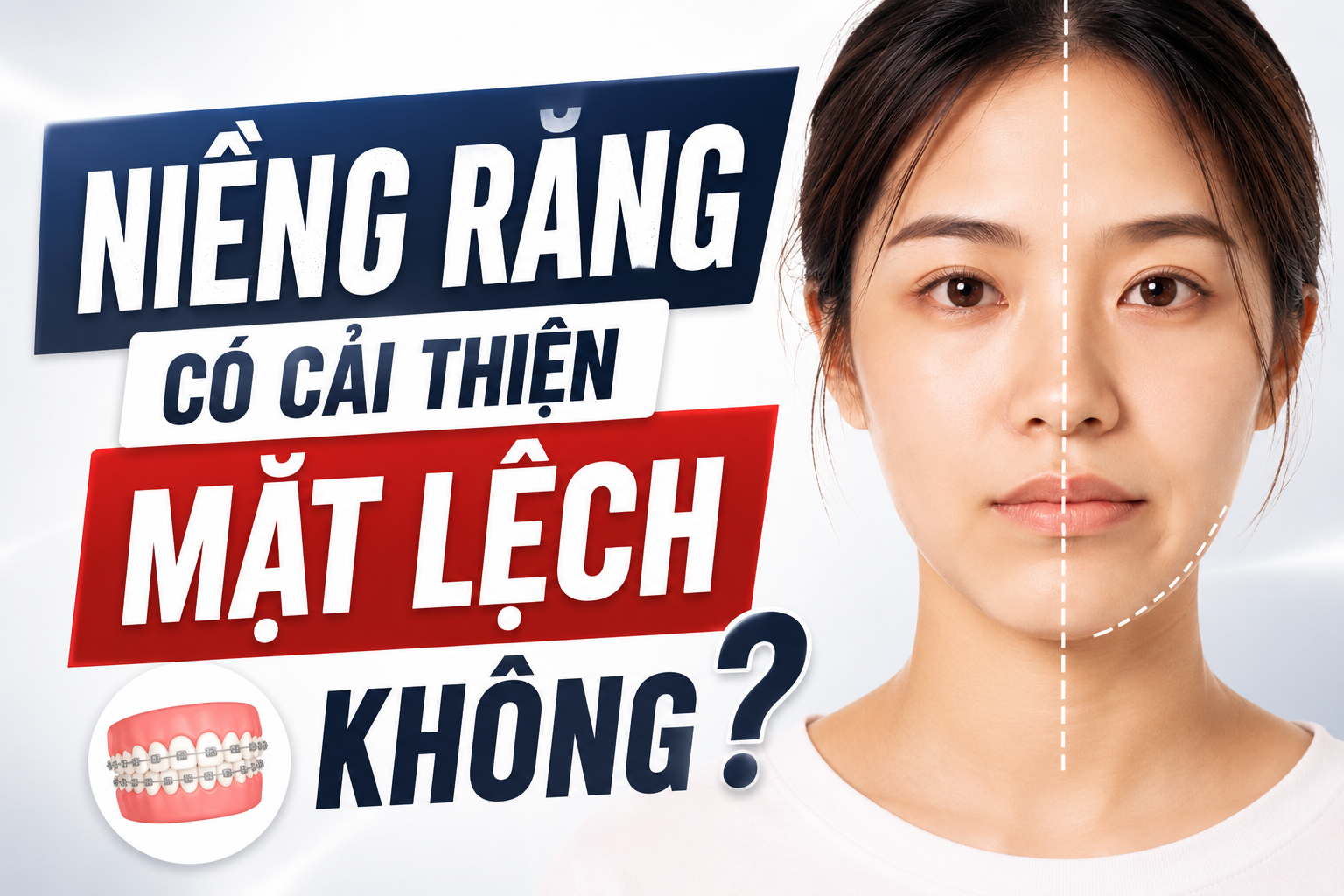
The front teeth are not only related to the bite but also support the lips. When the teeth are retracted, the lips change too, but the change is not exactly 1:1 with the movement of the teeth.
With dental protrusion, appropriate retraction can make the lips less protrusive and the face more harmonious. However, if the teeth are retracted too much, the lips can "lose support", resulting in a flat or concave profile.
This is especially important for patients with thin lips or an already fairly flat face. In that case, the treatment goal is not only to bring the teeth into the correct biological position but also to preserve the balance of the soft tissue.
So the limit of retraction is not only a limit of the bone but also a limit of facial aesthetics.


The limits of retraction cannot be assessed by external observation. Important factors such as the root position in the bone, the thickness of the alveolar bone and the relationship between the jaws must all be determined through diagnostic imaging.
Cephalometric X-rays help assess tooth axes and the relationship between the jaws. Meanwhile, 3D data (such as CBCT) shows the bone thickness and root positions in space clearly.
This is the basis for the orthodontist to determine:
In practice, assessing the limits of retraction does not stop at static analysis; it requires predicting how the teeth will move within the bone.
At Lac Viet Intech, the X-Matrix orthodontic solution lets the orthodontist simulate the path of the roots in advance for each treatment plan. Instead of only seeing the starting position, the orthodontist can see the expected position of the roots after retraction and assess whether they would go beyond the bone limits.
This helps answer important questions before treatment begins:
As a result, the treatment plan is adjusted from the start rather than dealing with complications after they occur.
Retracting the front teeth is an effective intervention for dental protrusion, but there are always clear biological and aesthetic limits.
These limits are determined by:
If these limits are exceeded, the risk of bone loss, gum recession or effects on the face is hard to avoid.
So what matters is not how far the teeth can be retracted, but: Retracting within safe limits that suit the face
News on the same topic

Related questions
Featured news

Sign up for consultation
Partner of Lac Viet Intech Dental Clinic