Tooth root canal still hurts: Causes and solutions

Tran Hoai Nam
19/10/2026
Hoàng Vũ Hiệp

Professional Consulting

D. Hoàng Vũ Hiệp

Dentist

Tooth has had a root canal but still hurts and feels uncomfortable? This is not a rare condition and often causes confusion for many patients. So why do root canal teeth still hurt and how to fix this situation? The article below will delve into the common reasons why root canal teeth still hurt and how to overcome this situation

If you want to learn more about the causes and ways to overcome the situation where a tooth has a root canal and still hurts, you can refer to the video where the doctor shares his knowledge here: 


1. Tooth root canal still hurts

Root canal treatment(also known as root canal treatment, root canal) is one of the most important dental procedures, helping to preserve teeth whenThe tooth pulp is infectedor necrosis due to severe tooth decay, trauma or other diseases. The goal of root canal treatment is to completely remove diseased pulp tissue, clean and disinfect the root canal system, and then seal it to prevent bacterial re-invasion.

However, clinical reality shows that root canal treatment is not always absolutely successful the first time. The condition of a tooth that has had a root canal still hurts is a common problem, affecting the patient's quality of life and posing many challenges for dentists. 

The condition of a tooth having a root canal still hurts is a common problem, affecting the patient's quality of life

2. Normal and abnormal signs after root canal removal

After root canal treatment, it is completely natural to feel some discomfort. The body needs time to recover after a medical intervention. However, if pain persists or unusual symptoms appear, it may be a sign of a problem that requires intervention.

Normal signs after bone marrow removal 

The feelings below often appear in the first few days after root canal treatment and usually decrease over time.

Mild pain or sensitivity when chewing

  • This is the most common feeling. Wounds in the root canal and surrounding tissues take time to heal. Chewing puts pressure on your teeth and can cause this feeling. The pain is usually not too severe and can be controlled with regular pain relievers.

Sensitivity to pressure

  • The teeth may be slightly sensitive to the touch or when biting lightly. This is also part of the initial inflammation and healing process.

Slight sensitivity when touching the gums around the tooth

  •  The gums around the treated tooth may be slightly swollen or sensitive when you brush or touch them. This is the body's natural inflammatory response.

Feeling "different" in the teeth

  • Because the teeth have just been treated, you may feel that your teeth are not quite the same as before. This feeling usually fades as you get used to your new tooth and the tissues heal.

Pain gradually reduces over time

  • The most important sign of a normal healing process is that the pain gradually decreases in intensity and frequency as each day passes. Normally, after 3-5 days, you will feel much more comfortable.

During this period, you should follow your dentist's instructions on using pain relievers and avoid eating foods that are too hard, too hot or too cold. Maintain gentle oral hygiene so as not to further damage the treatment area.

Abnormal signs after root canal treatment 

If you experience one of the following signs, it may be a sign of a complication after root canal removal and you should immediately contact your dentist:

Persistent severe pain

  • If the pain does not subside after a few days, or becomes even more intense, and does not improve even after using painkillers. This is a strong warning sign that there is a problem.

Swelling of the face or gums

  • Large swelling in the gum area around the treated tooth, or swelling spreading to the face. Swelling may be accompanied by a feeling of heat and pain.

Pust oozing from the tooth or gums

  • This is a clear sign of infection or abscess. You may see a small pus-filled pimple on the gum near the painful tooth.

Fever, chills, fatigue

  • These systemic symptoms indicate that the body is fighting a serious infection that has spread.

The tooth hurts when biting or chewing even after a long time after treatment

  • If after the initial recovery period (several weeks or months) the tooth still hurts or is very sensitive when eating and chewing, it may be due to a missing root canal or a poorly sealed root canal. or cracked tooth roots.

Swelling or discomfort in the jaw area that does not subside 

  • May be a sign of alveolar osteitis or widespread infection.

Changes in sensation in the lips, chin or tongue (numbness, tingling)

  • This is a rare but serious sign, indicating that nerve damage may have occurred during treatment.

Prolonged bad breath or a strange taste in the mouth

  • Can be caused by infection or contaminated food temporarily stuck in a hole in the tooth.

Loose teeth

  • Sign of advancedperiodontitisor damage to the bone around the tooth.

3. Why do root canal teeth still hurt?

Even though the root canal treatment process is performed properly, there are still cases where patients complain that the root canal still hurts. Below are common causes:

Tooth misdiagnosis

This is a serious mistake but not impossible. Sometimes, pulp pain is not obvious, especially in the upper and lower jaw, due to the spread of the jaw nerve.

  • Reason: Pain from a tooth in the upper jaw can be felt as pain in the lower jaw and vice versa.
  • Solution: To accurately diagnose a diseased tooth, the dentist needs to combine a thorough clinical examination, check the tooth's response to stimuli and especially use high-quality X-ray films such as CT Cone Beam films. Cone Beam CT films provide detailed 3D images of the tooth structure and jawbone, helping to determine the exact location and extent of damage to the dental pulp.

Idiopathic jaw neuralgia 

This is a rare cause and very difficult to diagnose. The pain does not come from infection or damage to the tooth but from the nerve itself.

  • Characteristics: Patients often have a history of long-term pain, have had teeth extracted or had root canal treatment many times but the cause is unknown, and the pain does not subside.
  • Note: This cause should be considered in patients with a history of multiple failed root canal treatments without finding a clear cause from the tooth. Diagnosis and treatment require coordination with a neurologist.

Loss of root canal

This is the most common reason why a root canal tooth still hurts after treatment. The root canal system of each tooth is very complex and it is not always easy to find all the root canals.

  • Teeth that are prone to missing root canals:
    • Upper tooth number 6: Usually has a MB2 (Mesiobuccal 2) root canal that is very small and difficult to find.
    • Lower tooth number 7: May have a C-shaped root canal or many complex secondary canals.
    • Lower incisor: Although small, it may have two canals. pulp.
    • Teeth with a complex root canal system: Many teeth have accessory canals, lateral canals, or pulp-periodontal junctions that are difficult to see with the naked eye.
  • Solution: The use of an endodontic microscope is extremely necessary to magnify, helping the dentist to clearly observe and find all root canals. Effective cleaning techniques with rotating file systems and ultrasonic irrigators also help ensure thorough cleaning.

Incorrect treatment technique

Manipulations during root canal treatment need to be done carefully and under control.

  • Push dentin debris and bacteria down to the apex of the tooth: If the dentist does not operate properly or does not control the working length of the instrument well, dentin debris and bacteria from the root canal can be pushed down to the periapical area, causing inflammation and pain.
  • Apical constriction point: This is the narrowest point at the end of the root canal, an important boundary that the dentist needs to accurately determine in order to clean and fill to this exact location. Going over or under the working length can cause complications.

Root canal filling is not airtight

After cleaning, sealing the root canal is the final step to prevent bacterial re-entry. If the root canal filling is not tightly sealed, bacteria will have the opportunity to grow again.

  • Underfilling: The filling material does not fill the entire length of the root canal, creating space for bacteria to grow in the apical area.
  • Overapical filling: The filling material goes too far beyond the tip of the tooth, irritating the periapical tissues and causing inflammation.
  • Complicated root canal shape: As mentioned, the shape of the root canal is not always simple, causing difficulties. for complete sealing.
  • Solution: Use modern heat sealing techniques and high-quality sealing materials (such as gutta-percha combined with sealer) to ensure maximum tightness.

4. Solution when a root canal is still painful

If you have had a root canal and still feel lingering pain, absolutely do not be subjective or arbitrarily use medicine at home. Pain can be a sign that root canal treatment is not complete or that there are complications after treatment. What is necessary is to immediately go to a reputable dental facility for an in-depth examination and appropriate treatment.

Take a film to check the tooth condition

  • Purpose:Determine the cause of pain, evaluate the quality of previous root canal treatment.

  • Tools used:

    • Digital X-ray:Gives 2-dimensional images, helps check the filling status, detect open apexes, missing root canals.

    • CT Cone Beam (CBCT):Provides clear 3-dimensional images, helping to observe the entire root canal system, including complex accessory canals and periapical lesions.

  • Benefit:Provides important data to make an accurate diagnosis and appropriate treatment, especially in cases where treatment has occurred but persistent pain or inflammation persists.

Cone Beam 3D CT scan provides clear 3-dimensional images, helping to observe the entire root canal system, including complex accessory canals and periapical lesions.

 Root canal treatment again 

  • When to do:When the radiograph shows signs of remaining pulp, the root canal filling is not tight or bacteria still exist in the root canal system.

  • Implementation process:

    • Remove old filling material and restoration (if any) to re-access the root canal system.

    • UseEndodontic microscopeto detect and treat accessory canals, missed canals or irregularly shaped canals.

    • CombineHand files and modern machine filesto clean the entire root canal system more thoroughly, removing remaining pulp tissue and bacteria.

    • Disinfect with specialized solutions andultrasonic irrigation techniqueto increase cleaning efficiency.

    • Finally, the entire root canal system is sealed with specialized materials, ensuring absolute 3-dimensional tightness.

Tooth tip surgery

  • When to do:When the tooth has been re-treated but still has periapical inflammation, cysts or persistent bone damage that does not heal.

  • Implementation process:

    • Make an incision in the gum and open the bone to access the tip of the tooth.

    • Removal of infected tooth apex and periapical inflammatory tissue.

    • Clean the root canal tip and fill from the apex to prevent reinfection.

  • Advantage:Helps retain real teeth, no need to extract teeth. This is the last conservative option when endodontic treatment fails.

Tooth extraction and restoration with dentures

  • When is it necessary to extract:Teeth are seriously damaged such as cracks along the root, severe bone loss, inflammation cannot be controlled even after treatment.

  • Restorative solutions:

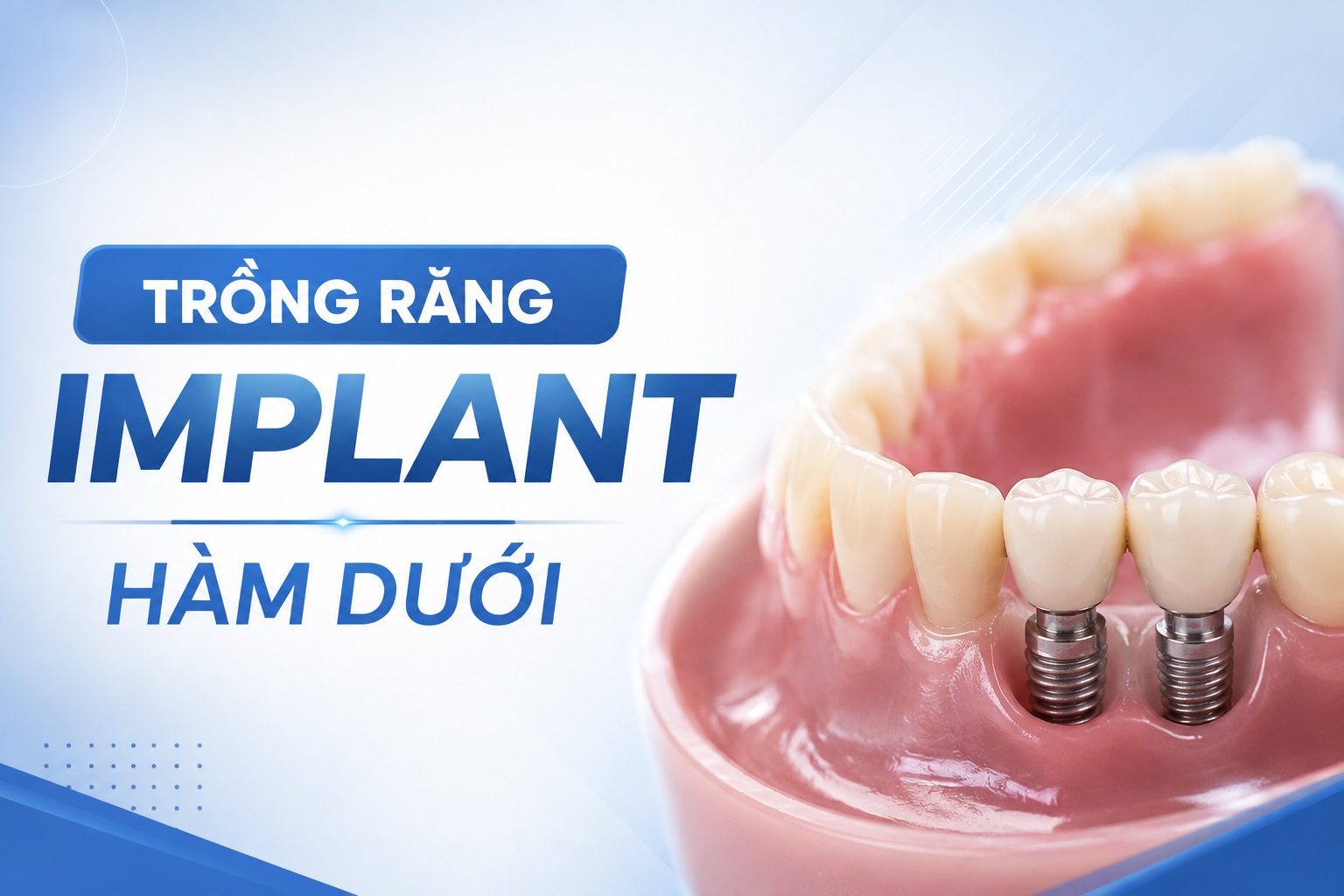
    • Dental Implant:Replace lost tooth roots with titanium posts and restore tooth crowns, providing high durability, real chewing feeling and aesthetics good.

    • Ceramic dental bridge making:Making fixed dentures based on 2 adjacent teeth, applied when implants cannot be placed or due to limited cost.

Choose a reputable dentist and highly specialized doctor

  • Experience and expertise: An experienced endodontist, with extensive training in root canal treatment, will have solid knowledge of dental anatomy, treatment techniques and the ability to handle complex situations.

  • Dedicated attitude: A dedicated doctor will listen, examine thoroughly and clearly explain the condition as well as the treatment plan.

Dental equipment is equipped with modern equipment

In modern root canal treatment, equipment such as endodontic microscope, root canal length measuring machine, CT Cone Beam and machine file help accurately and comprehensively clean the root canal system. Digital X-ray machines assist in monitoring the treatment process. Biological sealing materials such as MTA or Biodentine provide effective sealing and promote healing. In case you are learning about dental implant method then come to Lac Viet Intech immediately for detailed advice!


If you are experiencing pain in your root canal toothor have any unusual signs, do not hesitate to contactLac Viet Intech Dentistryfor timely examination, consultation and treatment. time.

System Lac Viet Intech Dental Branch:

  • TP. HCM:No. 90 - 92 Ngo Gia Tu, Ward 9, District 10, City. HCM
  • Hanoi:
    • No. 91 Hue Street, Hai Ba Trung, Hanoi
    • No. 168 Lang Street, Dong Da District, Hanoi
    • No. 426 Minh Khai, Hai Ba Trung District, Hanoi
    • No. 27 Nguyen Van Huyen, Cau Giay District, Hanoi
  • Nghe An:No. 24 Cao Thang, Hong Son Ward, Vinh City, Nghe An An
  • Hai Phong:107 To Hieu, Le Chan, Hai Phong City
Share

News on the same topic

Partner of Lac Viet Intech Dental Clinic

dentsplysirona
Ecligner
Straunman
Straunman
Invisalign
Swiss Dental Care
test1
Osstem Implant
Hotline Chat ngay Messenger Contact Zalo