Language
Language

Professional Consulting
D. Nguyễn Gia Bảo
Dentist
Porcelain bridges and implants are two popular tooth replacement options today, helping to restore chewing ability and aesthetics similar to real teeth. However, each method has different implementation mechanisms, durability and indications:

Porcelain dental bridges need to grind 2 real teeth next to the missing tooth to make an abutment.
Porcelain dental bridges are a method of restoring missing teeth by taking advantage of two real teeth located on either side of the missing tooth space to act as supporting pillars. The doctor will grind these teeth into small pieces, then create a series of solid porcelain teeth and fix them on top.
Normally, a dental bridge consists of 3 teeth or more depending on the number of missing teeth, in which the tooth in the middle replaces the lost tooth, while the two teeth on both sides act as the main force-bearer. Thanks to being made from porcelain material with the same color as natural teeth, porcelain dental bridges help improve aesthetics and support chewing relatively effectively.

Implant teeth are just like real teeth. If you lose a tooth, you can get an implant.
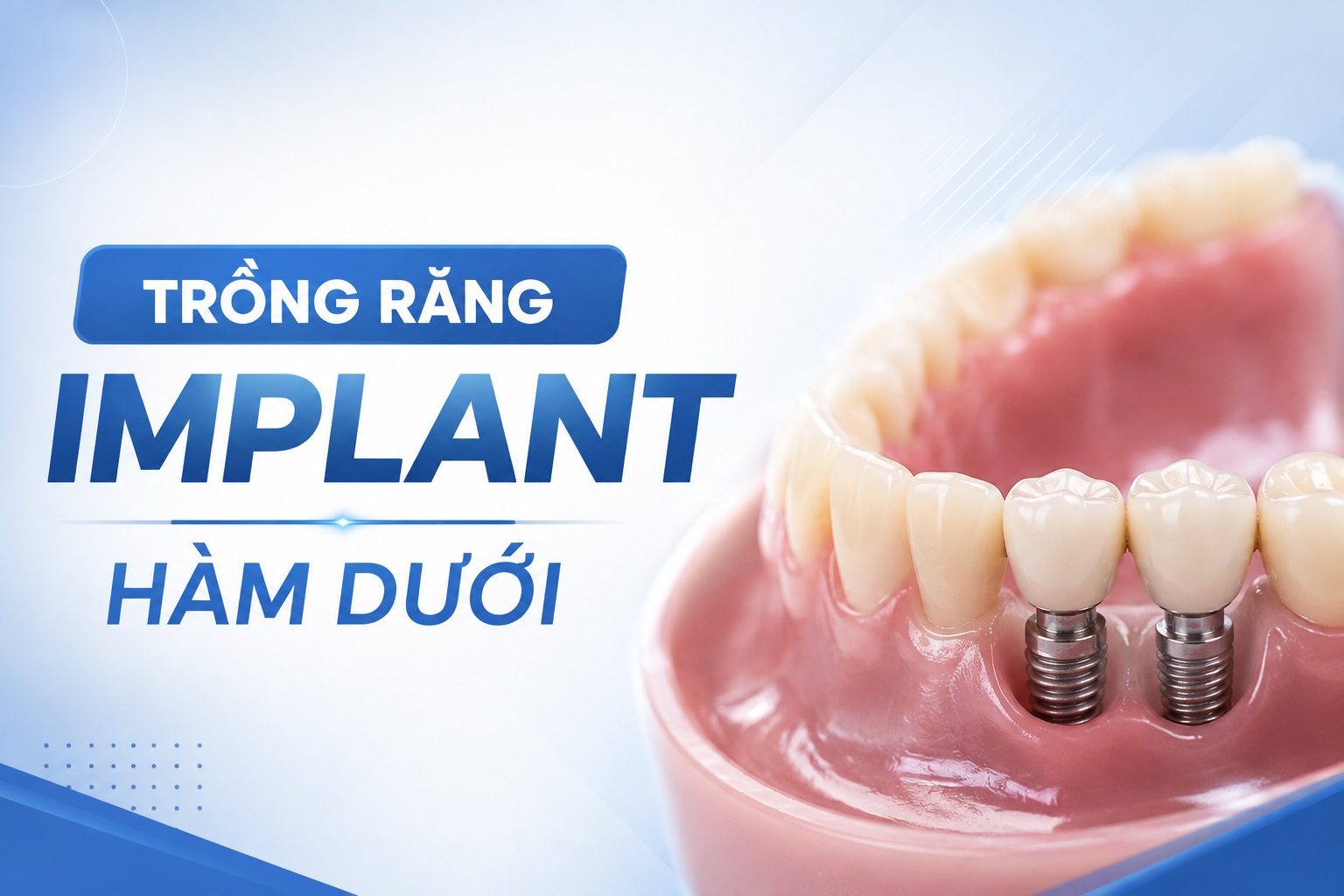
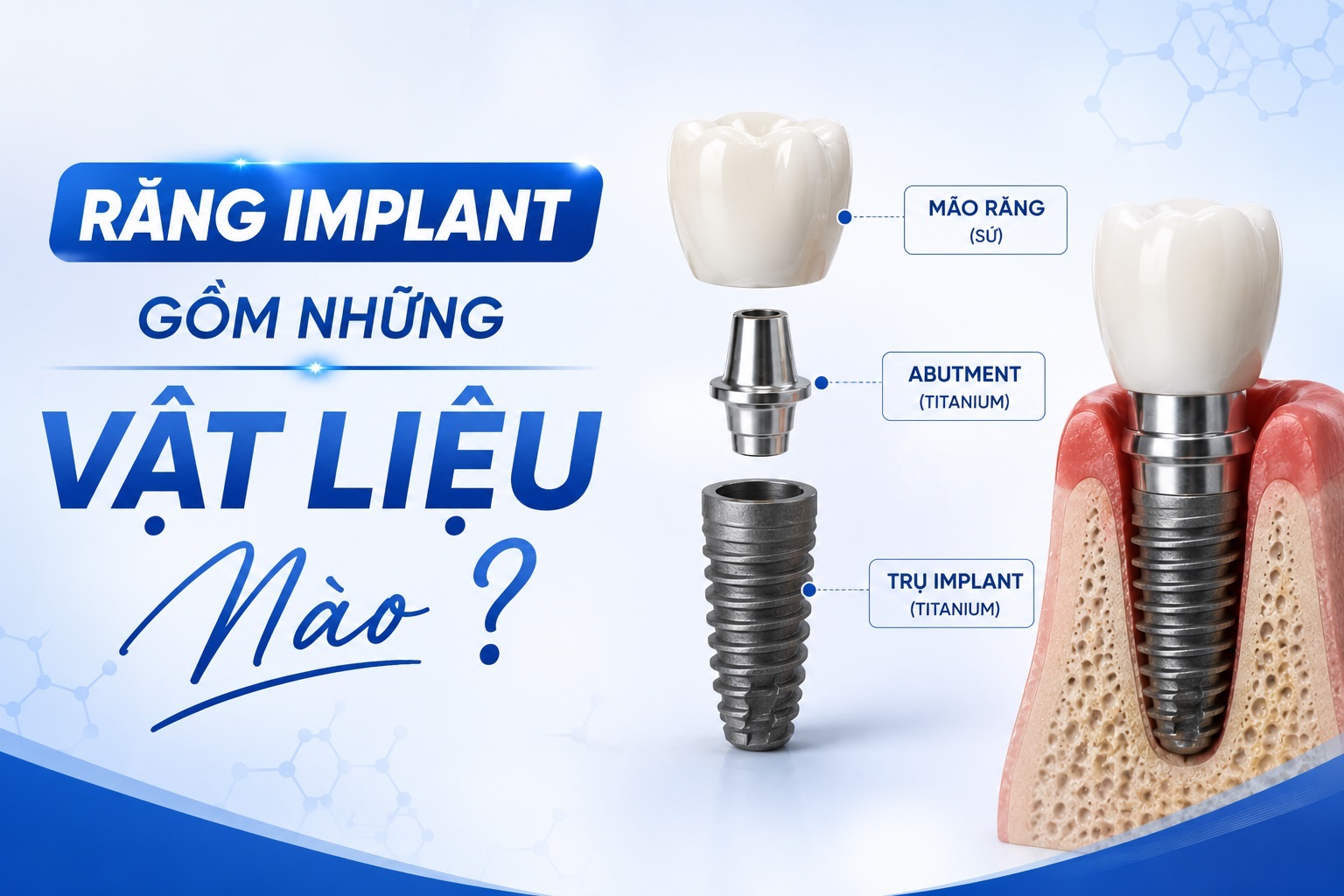
Dental Implant is a modern tooth restoration technique in which a biological Titanium post is implanted directly into the jawbone at the location of the lost tooth to replace the real tooth root. After the bone integration period, the doctor will install the restoration and porcelain tooth on top to complete the crown.
Thanks to almost complete reconstruction of the structure of a real tooth, dental implants provide high stability, stable chewing and do not affect adjacent teeth.
Both are used to restore missing teeth, but porcelain bridges and implants bring completely different effects in terms of durability, chewing ability and preservation of real teeth. Understanding the difference will help you make the right decision.
| Criteria | Ceramic tooth bridging | Dental implant |
| Image |  |
 |
| Structure | Including 2 porcelain crowns placed on real teeth on both sides (abutment teeth) and a false tooth in the middle, replacing missing teeth | Including Implant posts, prosthetic posts and porcelain crowns |
| Degree durable | About 5 - 10 years | Up to 40 years, even lifetime if properly cared for |
| Aesthetic | Restores temporary aesthetics but in the long term causes jaw bone loss, gum shrinkage, exposes adjacent tooth roots and can cause facial deformation | Restores pink aesthetics (natural bulge of gums) and white aesthetics (tooth enamel) long-term, sustainable Stimulates and maintains jaw bone development, avoiding bone loss, sunken cheeks, sunken temples |
| Feeling when chewing | About 70 - 80% compared to real teeth but easily peeling, causing inconvenience in daily life | Restores 95 - 98% of natural chewing ability like real teeth |
| Degree of impact on adjacent teeth | Requires grinding of 2 adjacent teeth. Chewing force placed on the abutment teeth can cause gingivitis, pulpitis or tooth fracture | Implants are implanted directly into the jawbone, preserving maximum bone and tooth structure |
| Implementation conditions | Cannot be applied to cases of complete tooth loss. Suitable for those who have healthy teeth, do not have pulpitis or periodontal disease or cannot have implants due to a history of systemic disease. | Applicable to a variety of tooth loss cases such as losing 1 tooth, multiple single teeth, entire jaw... People over 18 years old, without complicated systemic diseases that prevent surgery |
Based on the analyzed criteria, dental implants show many outstanding advantages compared to other restoration options. The most outstanding point is the ability to maintain jaw bone density thanks to the chewing force transmitted directly to the implant post, helping to stimulate the bone to function like real teeth. This is a special mechanism that only Implants can provide, while other solutions cannot effectively prevent jaw bone loss.
To choose the right tooth restoration method for your oral condition, you can refer to the following table summarizing the pros and cons of porcelain bridges and implants to decide. Should I get a bridge or implant?:
| Criteria | Porcelain dental bridge | Dental Implant |
| Advantage |
|
|
| Disadvantages |
|
|
From the comparison table above, it can be seen that porcelain dental bridges and dental implants differ mainly in long-term value and the level of preservation of real tooth structure.
Ceramic dental bridges are suitable in cases of single tooth loss, adjacent teeth that already have ceramic crowns or need quick restoration at a lower cost. However, this method still has limitations: it requires grinding healthy teeth and cannot prevent bone loss at the lost tooth site.
Meanwhile, dental implants are considered a more comprehensive restoration solution because they replace both tooth roots and crowns, help maintain jaw bone density, do not affect adjacent teeth and ensure long-term solid chewing ability. Although the cost and treatment time are higher, in terms of durability and long-term use value, Implant is often the optimal choice if jaw bone conditions allow.
Therefore, to decide whether to have a porcelain bridge or Implant, the patient needs to have a specific examination to assess the condition of the jaw bone, the health of adjacent teeth and the desire for long-term or short-term use. Making the right choice from the beginning will help limit future treatment problems and ensure sustainable restoration results.
According to Dr. Nguyen Hoang Duong's opinion, with more than 10 years working in the field of prosthetics and implants, he believes:
"In the treatment of tooth loss, the top priority is always to maximize the preservation of real teeth and maintain long-term jaw bone structure. If the adjacent teeth are healthy and bone conditions allow, dental implants are the optimal solution because they restore independently, do not invade neighboring teeth and help prevent bone loss.
Porcelain dental bridges are still a suitable choice in certain cases, especially when patients need quick restoration or have contraindications to Implant surgery. However, in terms of long-term use value, Implants often bring more sustainable results."
From clinical practice, the doctor also emphasized that each case of tooth loss has its own characteristics in terms of bone density, location of lost teeth and condition of abutment teeth. Therefore, instead of choosing based on trends or initial costs, patients should receive personalized examination and consultation to ensure the most suitable restoration plan.

Making dental implants and bridges Each has its own advantages and disadvantages, you should consider based on your needs and financial conditions
Lac Viet Intech Dental Clinic is a leading reputable dental implant unit with a team of highly specialized doctors and advanced technology, transparency in all information and dental implant procedures, and a commitment to treatment effectiveness in a legally valid document to each customer.
In particular, dentistry provides planting solutionsPersonalized implants, applying modern technology to design Implants to suit each person's anatomical structure, bringing high aesthetic restoration efficiency and chewing ability almost like real teeth.

Choosing a porcelain dental bridge or an implant will be based on the patient's condition and wishes.
In clinical practice, a porcelain dental bridge is often indicated when the patient is not eligible for an implant.
For example:
Patients who are undergoing or have just undergone chemotherapy or radiation therapy in the head and neck area
People with cardiovascular disease or uncontrolled blood pressure stable
People with blood clotting disorders or severe systemic diseases
In cases where health does not allow surgical intervention
In these situations, implant placement may pose potential risks in healing and complications after surgery. At this time, porcelain dental bridges play their role as a safer restoration solution, do not require surgery, are quick to perform and still ensure basic chewing function.
However, the doctor still needs to carefully evaluate the condition of the abutment teeth and jawbone before appointing, to ensure the bridge can function stably and does not cause overload to the adjacent teeth.
Dental implants are suitable when the patient wants to restore missing teeth. independently - long-term - without invading adjacent teeth. This method is especially preferred in cases of:
Losing a single tooth or many teeth but the adjacent teeth are still healthy
Long-term tooth loss with the risk of jaw bone loss
Desire to chew firmly and use sustainably for many years
Stable overall health, jaw bone qualified for implants

Restore smile aesthetics and chewing function thanks to dental implants.
According to many long-term clinical studies, the success rate of Implants can reach over 95% after 10 years if placed with correct techniques and good care. International dental implant associations also consider Implants to be the solution to replace missing teeth that is closest to natural physiology because it can regenerate both the tooth root and crown.
However, the final decision needs to be based on a specific examination of jaw bone density, underlying medical condition and individualized treatment plan.
For more in-depth knowledge about the two methods of porcelain tooth bridging and implant placement, we invite you to listen to the doctor's sharing. in the following short video:
How much does an Implant costis certainly a concern of many people. The cost of making Implant and dental bridgeincludes examination, treatment and warranty fees, excluding replacement fees, specifically:
Ceramic dental bridge: The average cost is about3 - 7 million VND/tooth, depending on the type of porcelain and the number of teeth needing restoration. In the case of losing 1 tooth, it is usually necessary to grind at least 2 adjacent teeth to make an abutment, which means the total cost is calculated on 3 teeth
Dental Implant: Cost ranges from7 - 50 million VND/tooth, depending on the type of implant, ceramic crown and the complexity of the treatment (whether bone grafting or sinus lift is needed or not). Implants are highly durable and only need to be done once if well taken care of. Although the initial cost of Implants is often higher, when calculated based on the total number of teeth that need to be restored and the long-term use value, the economic difference between porcelain dental bridges and Implants is not too large from a long-term perspective.
Ceramic dental bridges:Usually completed in2–5 days(2–3 appointments) because there is no need to intervene in the bone jaw.
Dental Implant:It takes about2–6 months, because you need to wait for the post to integrate firmly into the bone before attaching the porcelain tooth. In some cases, temporary teeth can be attached early to ensure aesthetics.
Depending on the condition of the jaw bone and oral health, the doctor will advise on a specific timeline.
Implants replace both tooth roots and crowns, helping to maintain jaw bone density and not affecting adjacent teeth. If placed with proper technique, good care and regular check-ups, Implants can be used for a very long time.
According to long-term clinical statistics, the success rate of Implants can reach over 95% after 10 years. In particular, the world's first implant was recorded to last more than 40 years and still function well until the patient passed away.
At Lac Viet Intech Dental Clinic, with nearly 20 years of operation, many customers who have had implants since the first years are still eating and chewing stably.
Meanwhile, the lifespan of a porcelain dental bridge depends largely on the durability of the two abutment teeth. If the abutment tooth is weak, has pulpitis or tooth decay, the bridge may have to be replaced sooner, with an average lifespan recorded of 10-15 years.
Thus, the above article has provided complete information about the most basic differences betweenceramic dental bridges and Implants. Through comparison results, it can be seen that the dental implant method brings superior benefits compared to porcelain bridges such as long life, ensuring aesthetics and helping to chew comfortably. Depending on each person's needs and conditions, you should consider carefully to choose the method that is right for you.
If you need more information and advice on personalized dental implant services that are painless, safe, sustainable, aesthetic and good for chewing, please contact Lac Viet Dental Clinic through the following channels for quick support. Quick:
Lưu ý : Mọi thông tin trên website Nha khoa Lạc Việt Intech chỉ mang tính tham khảo, không thay thế chẩn đoán hoặc điều trị y tế chuyên nghiệp. Kết quả điều trị thực tế phụ thuộc vào từng cá nhân và cần sự thăm khám trực tiếp của bác sĩ. Chúng tôi khuyến nghị bạn luôn tham khảo ý kiến chuyên gia cho mọi vấn đề sức khỏe.
News on the same topic
Related questions
Featured news

Sign up for consultation
Partner of Lac Viet Intech Dental Clinic