Language
Language

Professional Consulting
D. Hoàng Vũ Hiệp
Dentist
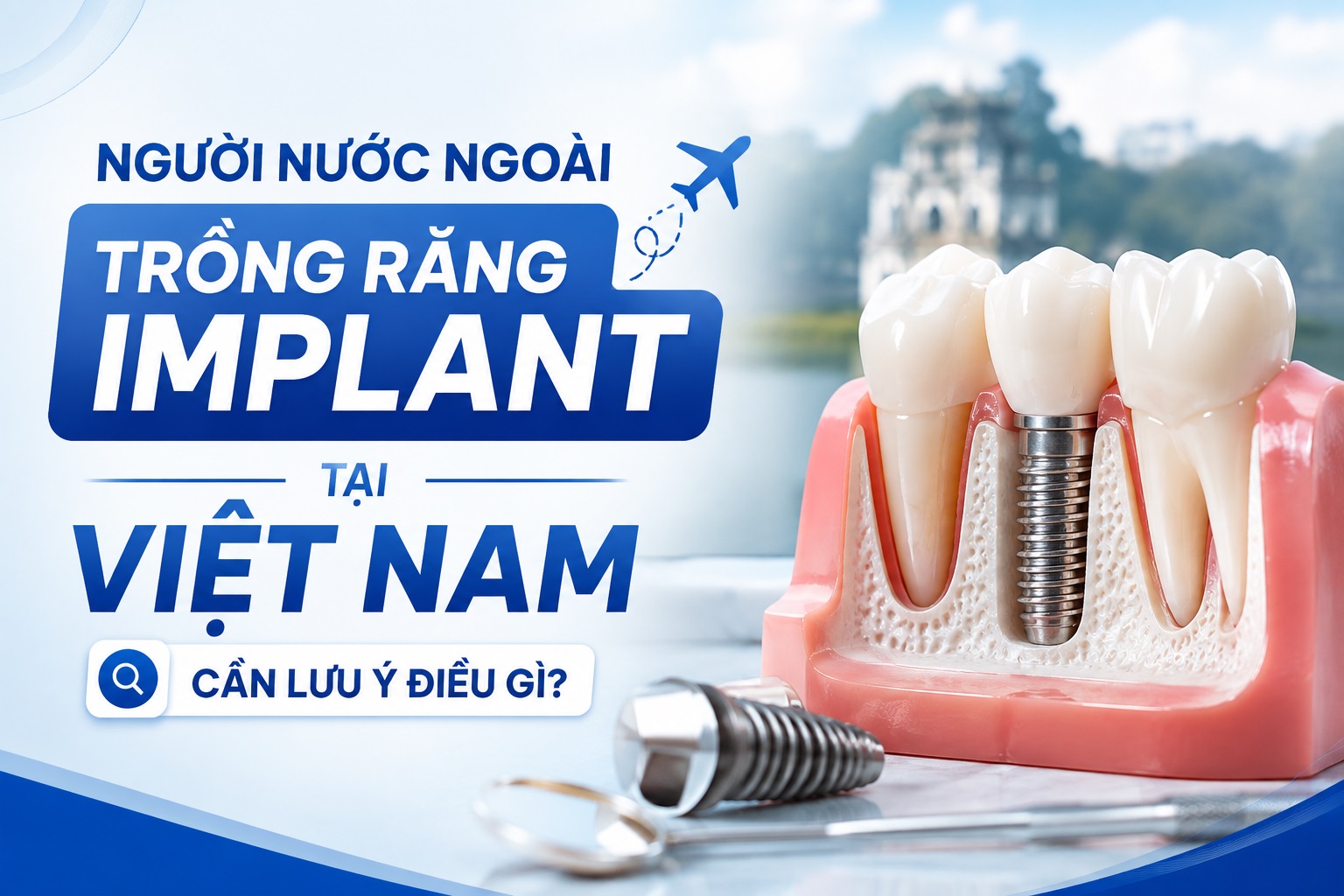
Coming back to Vietnam for dental treatment is an optimal choice for overseas Vietnamese in terms of cost and technology, but it requires a strict medical schedule to ensure safety on long-haul flights. Below are 2 specialized treatment options that let you plan your schedule while still achieving safe, lasting results.
For overseas Vietnamese patients, dental implants are not just a dental treatment but also a question of time, flight schedules and follow-up after treatment.
Unlike quick services, implants are a process that needs time for the bone to integrate with the post, so they cannot be done in a few days and finished right away. If you try to "take a shortcut", the risk of implant rejection or later complications is very high.
According to Dr. Hoang Vu Hiep, an implant expert, for overseas Vietnamese patients coming back to Vietnam for dental treatment, specifically dental implants, the process follows 2 options:
The concentrated treatment option applies to patients staying in Vietnam for 2.5 months or more; the whole process is carried out continuously and end-to-end under the doctor's direct supervision.
Concentrated treatment schedule:

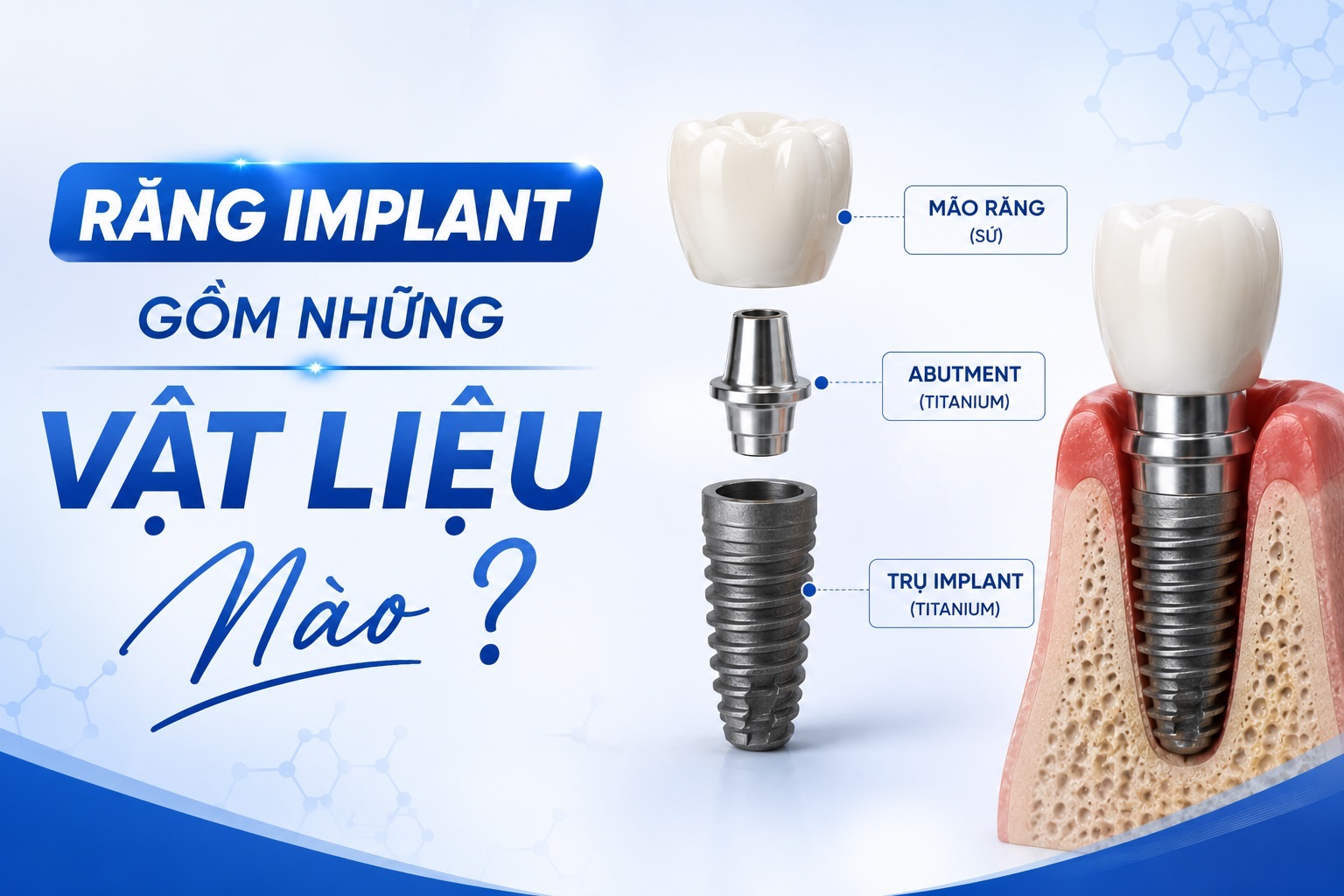
Placing implant posts with a surgical guide when an overseas Vietnamese patient comes home for dental implants.

A healing abutment is placed to shape the gums, followed by the abutment and porcelain crown.
After a few days to complete the porcelain crown, the patient has the fixed tooth fitted and the bite and chewing ability checked.
The biggest advantage of this option is that all the transition stages are tightly controlled. As a result, every technical parameter is confirmed to be stable before the patient returns to their country of residence, minimizing risk and giving lasting results.
With option 2, the staged schedule, this is the solution chosen by more than 80% of overseas Vietnamese patients to balance treatment with work abroad. Instead of staying in Vietnam for a long time, patients can split the process into two trips home, keeping treatment on track without disrupting their personal schedule.
Trip 1 (10–20 days recommended)
The patient comes back to Vietnam for implant placement surgery, with a recommended stay of 10–20 days. This period is not arbitrary but a professional requirement.
After placement, the doctor needs at least about 7–10 days to monitor healing, remove stitches and control the risk of complications such as infection or bleeding. Staying long enough ensures the wound is stable before the patient takes long flights, where pressure changes can affect the surgical site if it has not fully healed.
After the first trip, the patient can return abroad and live normally while waiting for the post to integrate with the bone.
Trip 2 (a stay of about 5 days)
The second trip usually takes place 3–6 months later or on the next visit to Vietnam, when the patient comes back to complete the porcelain restoration, staying about 5 days. In this stage, the doctor checks the stability of the implant post, then takes an impression or scans the dental arch to fabricate a personalized porcelain crown at the lab. When the crown is complete, the doctor fixes it in place, and the patient chews normally while the bite is adjusted several times over a few days to achieve the highest accuracy.
Setting aside a full 5 days for this stage is not just to fit the tooth but to ensure the new tooth works stably during real chewing, minimizing the need for adjustments after the patient has returned abroad.
A quick comparison of the 2 options:
|
Criterion |
Option 1: Concentrated treatment |
Option 2: Staged schedule |
|
Total length of stay |
More than 2.5 months (continuous) |
Trip 1: 10 – 20 days | Trip 2: 5 days |
|
Number of trips to Vietnam |
A single trip |
2 trips (3–6 months apart) |
|
Payment schedule |
Visit 1: 70% | Visit 3: the remaining 30% |
Trip 1: 70% | Trip 2: the remaining 30% |
|
Level of control |
The doctor closely monitors 100% of the osseointegration and healing process. |
Maximum control over the surgical stage and the final crown fitting stage. |
|
Flexibility |
Low (suitable for long holidays, family visits or retirees). |
High (suitable for working people who can only take short leave). |
|
Post-operative risk |
The lowest, thanks to long-term clinical follow-up in Vietnam. |
Safe if a minimum of 10 days of post-operative care is strictly followed before flying. |
|
Final result |
Porcelain crown completed and stable chewing before returning abroad. |
Porcelain crown completed and stable chewing on the second trip home. |
Below are 3 core reasons why patience with time is a prerequisite for successful treatment:

Overseas Vietnamese coming home for dental work need to respect the biological rules of jawbone osseointegration.
After an implant post is placed in the jawbone, it needs a certain amount of time (on average 2.5 to 6 months) for bone cells to grow and attach firmly to the post surface. This is a natural biological process that no subjective intervention can fully replace.
Rushing to fit the porcelain crown before the post is stable enough will overload it, leading to the risk of loosening and implant rejection right from the early stages.
Many patients would like to "have the post placed one day and fly home the next". However, according to the clinical experience of Dr. Thai Khac Vinh, MSc, the 10–20 days after surgery are the most "sensitive" period.
A "rushed" implant case usually comes without careful bite adjustment. Abroad, a single dental visit is very expensive. In addition, if you use implant systems that are not globally common or the procedure was not done to standard, local dentists may refuse to intervene due to a lack of compatible equipment or concerns about legal liability.
To ensure a "dental tourism" trip achieves the best results in both time and treatment quality, patients need a well-prepared strategy. Below are tips to make the dental trip home go smoothly:
Do not wait until you are home to start looking for a dental clinic. Preparing in advance will help you make 100% use of your time in Vietnam:

Overseas Vietnamese coming home for dental implants should choose posts from a global system.
This is the key factor in solving long-term maintenance while you live abroad.
In medicine, every body heals at a different speed. The secret to a stress-free trip is:
As a dental system specializing in implants, Lac Viet Intech Dental has built a strict set of standards to ensure implant teeth are not only beautiful but also meet the standards of: Safe – Durable - Good for chewing – Convenient to use.
For patients living far from home, we make specific commitments to optimize a treatment experience with "less swelling, less pain and less bleeding" through key factors:
Lac Viet Intech Dental completely eliminates freehand placement and commits to performing every case using a surgical guide or X-Guide navigation. This places the implant post in the optimal position, protects sensitive anatomical structures and speeds up healing for patients who need to fly home soon.

Guideline surgical guides are used routinely at Lac Viet Intech.
Unlike clinics that use stock abutments (prefabricated lines), Lac Viet Intech commits to:

Multilayer porcelain teeth look close to natural teeth.
To ensure durability and a natural look like real teeth, Lac Viet Intech commits to using only Multilayer all-ceramic teeth. We say no to metal-core porcelain teeth to avoid dark gum margins or irritation after many years of use.
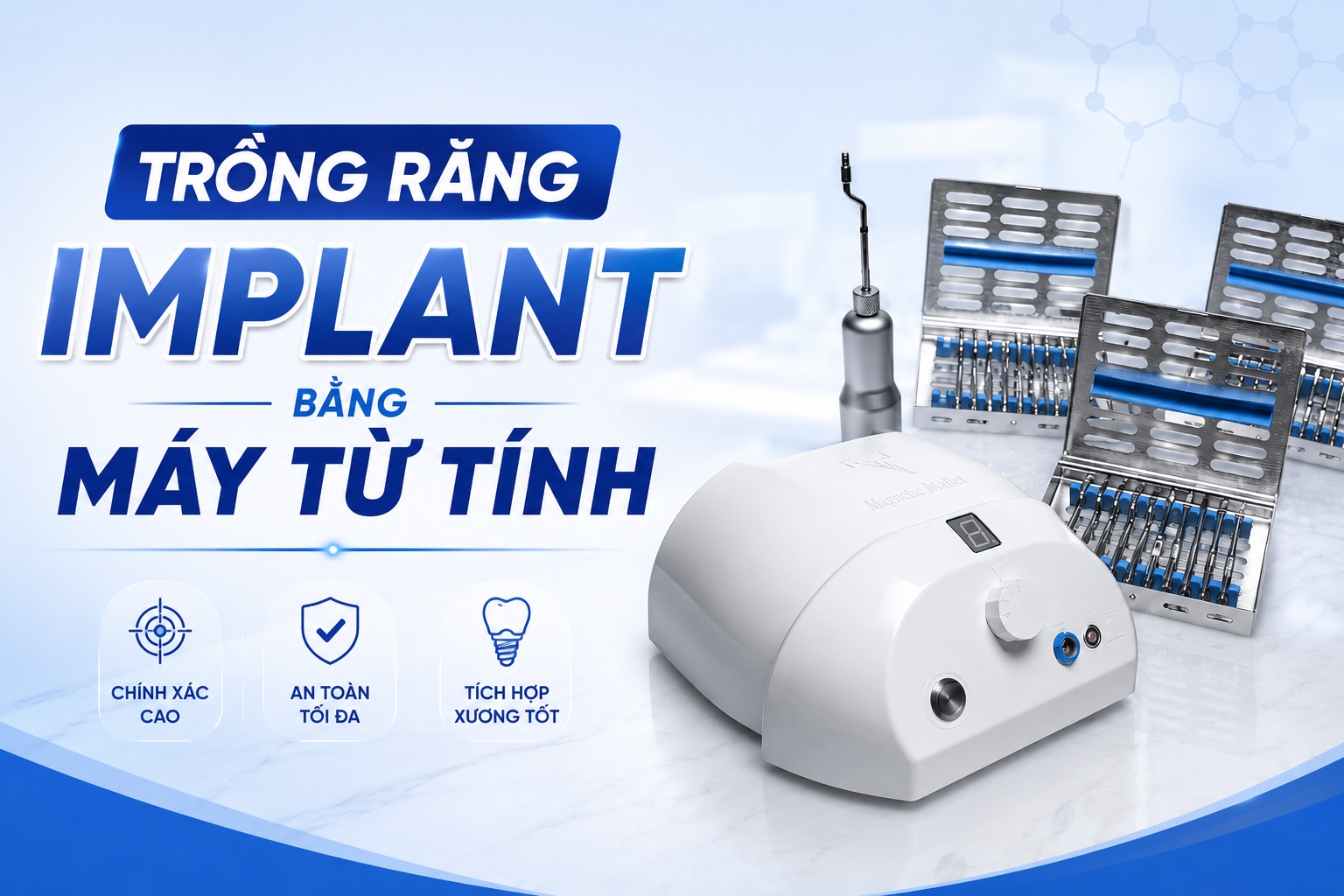
For difficult cases such as porous bone or the need for a sinus lift, we use magnetic or high-frequency ultrasonic surgery. These modern techniques reduce trauma and preserve as much bone as possible, helping patients recover quickly in time for their international flights.
Clarity is the core foundation for patients to choose us with confidence from afar:
Lac Viet Intech commits to long-term care, with no additional charges for any warranty, maintenance or regular servicing. In particular, with digitized electronic records, patients can look up information and receive professional support wherever they are.
Coming back to Vietnam for dental treatment is a worthwhile investment in health for overseas Vietnamese if it follows a scientific schedule with the necessary patience. At Lac Viet Intech Dental, we remove every risk of geographical distance through a combination of genuine, officially imported materials, specialist doctors, modern technology and a commitment to complete transparency. Contact us today for a free dental implant consultation:
Hotline: 0866380033
Website: https://lacvietdental.vn/
News on the same topic
Related questions
Featured news
Sign up for consultation
Partner of Lac Viet Intech Dental Clinic