Language
Language
This article will share details about 4 groups of patients who cannot receive implants. The content is consulted by Master, Doctor Thai Khac Vinh at Lac Viet Intech Dental system, ensuring to bring the most accurate and in-depth information.
The first group of patients who absolutely should not have implants are those who are treating cancer with chemotherapy or radiotherapy.
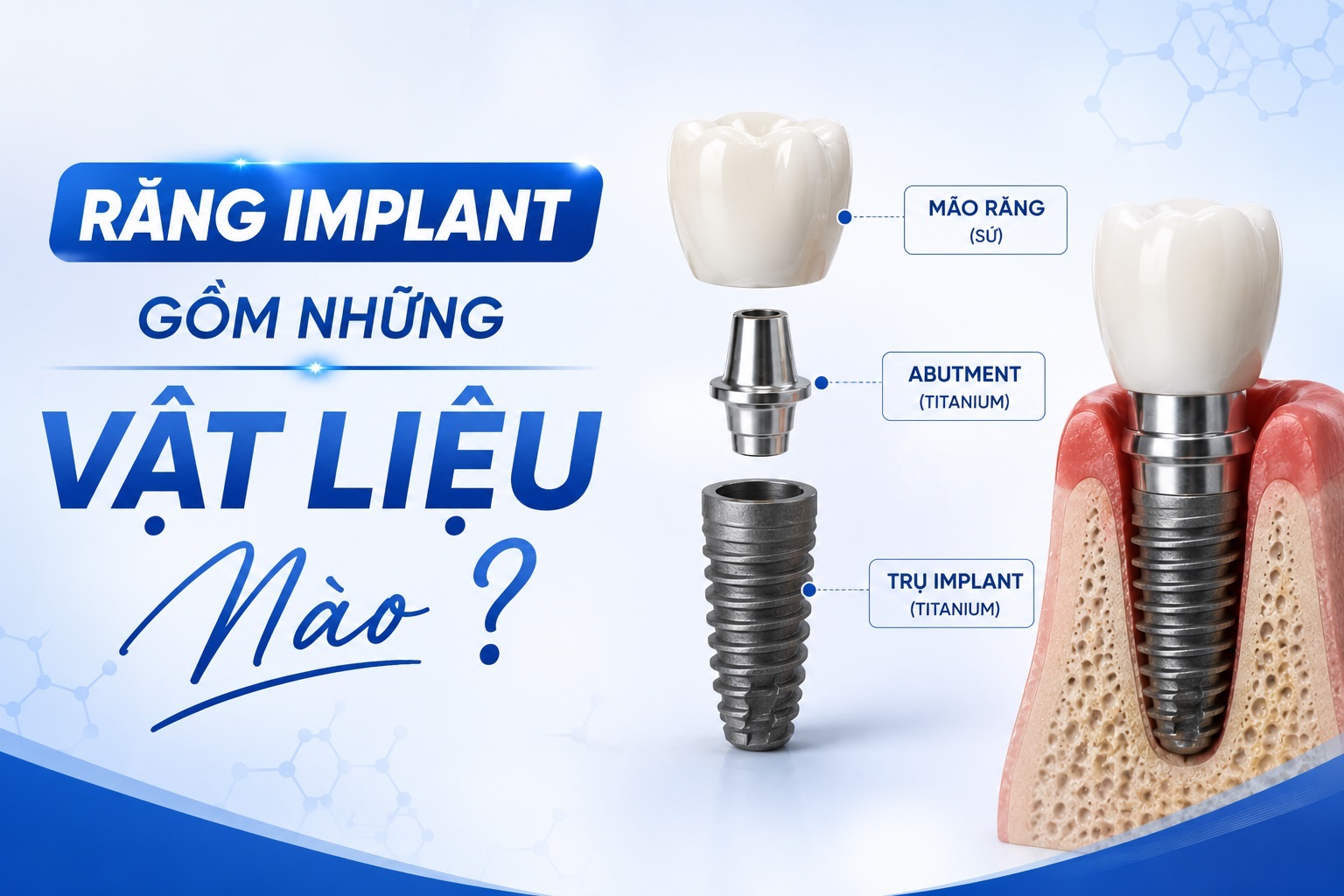
Mechanism of success of implants.Implantis the process ofosseointegration. When the Implant is placed in the jawbone, bone-forming cells (also known as pre-osteoblasts, young bone cells) will move to, reside on the Implant surface and create a solid biological bond between the bone and the Implant. The key to this integration lies in the jawbone's ability to create immature bone cells.
In cancer treatment with chemotherapy or radiotherapy, the main goal is to destroy immature cells, especially cancer cells that proliferate without limit. Although today's "targeted" treatment methods have helped localize radiation or chemicals to the tumor area, minimizing the effect on other benign structures, it cannot be 100% prevented. This process will inhibit the formation of young bone cells.
When implanting, osteoblast precursors are not produced enough, leading to failure of the bone integration process, the implant cannot stick to the bone, causing the phenomenon ofloss of integration.
 People who are receiving radiotherapy, chemotherapy, and implants may experience early rejection
Previously, the absolute contraindication period for cases of radiotherapy or chemotherapy was 10 years. That is, if you use chemotherapy/radiation, you will not be able to have an implant for the next 10 years. With current new treatment methods, this contraindication period is shortened5 years.
For cases that are undergoing or have used chemotherapy/radiation therapy, waiting is requiredat least 5 years. Then, the doctor will take X-rays to evaluate whether the density, volume and veins of the jawbone are normal or not, and whether or not they are eligible for implant placement. Only then can the decision to have a transplant be made.
In less than 5 years, we do not have indications for implants. Instead, you can choose to do itporcelain dental bridgeor useremovable jawto restore lost teeth.
>> See more:6 differences between porcelain dental bridges and implants.
The second group that cannot have dental implants are people who have systemic diseases or are too weak.
For people with high blood pressure that has not been well controlled by treatment, or whose blood pressure fluctuates, we cannot get dental implants.
High blood pressure is a condition in which blood pressure in the blood vessels is high. Any impact on the body that causes the secretion of adrenaline from the adrenal glands can increase blood pressure. This has the risk of rupturing blood vessels (usually cerebral blood vessels), leading to brain hemorrhage during surgery, seriously affecting life.
When implanting, there are two factors that increase the risk of high blood pressure:
People define high blood pressure into two types:
First, you must see an internist or cardiologist to stabilize your blood pressure, ensuring your blood pressure is below 140 mmHg (or at least below 160 mmHg in complicated cases).
 Only patients with low blood pressure below 140 mmHg or at least below 160 mmHg can have implants performed.
When performing minor surgery, there needs to be an emergency resuscitation team nearby to control them. blood pressure for patients. For complex interventions or patients with a history of high blood pressure, it should be performed under anesthesia. During anesthesia, the anesthesiologist can control heart rate, breathing rate and blood pressure with a monitoring system, ensuring maximum safety.
>> See more:Answers to 21 questions about implants
Diabetes that have not been stably treated is also a contraindication to implants.
There are two Main reasons:
 People with diabetes who have implants are at risk of infection.
If they still want dental implants, diabetics need to do two things:
During surgery, the doctor will chooseminimally invasivemethods to Limit exposure of the jaw bone, reducing the risk of infection. In cases of type 1 or type 2 diabetes that cannot be controlled, it is necessary to chooseceramic dental bridgeorremovable dentureinstead of trying to implant an implant.
Patients with blood clotting disorders (due to endogenous diseases or the use of anticoagulants) cannot have implants.
Doctor Vinh shared that to implant, the doctor needs to remove the gums and drill the bone, which will definitely cause damage to blood vessels. If the patient has a blood clotting disorder (due to medication or systemic illness), the blood will not be able to clot, leading to continuous bleeding after surgery. This condition is very dangerous and cannot be implanted. For example, patients with coronary stents must take anticoagulants for life or those with hemophilia cannot have it done.
 Image showing X-rays passing through organs
For women who are breastfeeding, especially when the baby is not yet on solid foods (usually the first 4-6 months after birth), implants should not be placed. The reason is that medication use, even if carefully chosen, and stress from surgery can causemilk lossormilk clogs. The infant's nutritional source at this time depends entirely on breast milk, any risk that affects the milk supply will affect the baby's health.
During pregnancy and breastfeeding (especially the first 4 months after giving birth), weshould not do anythingwith our teeth other than basic care. Aunts, uncles, brothers and sisters, please prioritize giving birth and raising children first, then deal with dental problems.
After 6 months, when the child has started eating solid foods and can use formula, implants can be considered. However, doctors still recommend waiting until the child is a little older (about 7-8 months after birth) to ensure absolute safety and avoid complications due to losing teeth for too long.
The final group of patients who are not allowed to have implants are those under 18 years of age for incisors and under 16 years of age for molars.
American Academy of Pediatric Dentistry (AAPD):This organization offers detailed guidelines on dental restoration for children and adolescents, including why Implants are not recommended at this age.
At the age of under 18, a child's jaw bone is still continuing to develop. Specifically, the lower jaw bone tends to grow from back to front, while the upper jaw bone grows vertically from top to bottom. When an implant is inserted into the jawbone, the implant will stay in that position and will not move. Meanwhile, the jawbone continues to develop.
This leads to a situation where after the jawbone is fully developed (over the age of 18), the initial Implant position may be distorted.

People under 18 years old still continue to develop their jaw bones, if implants are placed, it will lead to misalignment
Nowadays, for molars, children Under 16 years old with good physical development, to avoid complications due to early tooth loss, implant placement may be considered earlier. However, this must be predicted and calculated very carefully by the doctor to suit the development of the jaw bone. If tooth loss does not have too much of an impact, you should still wait until after age 18.
When children under 18 years old lose teeth, we will not make porcelain bridges (grinding real teeth) because this is absolutely not allowed. The main goals are:
If the child has a broken tooth due to an accident or tooth decay, the following point of view: is to try topreserve the remaining tooth rootin the jaw bone for as long as possible, as long as it does not cause infection. This helps avoid bone loss and gum recession, making it difficult to implant implants later. To control infection, the doctor will treat the pulp, clean and seal the tooth root so that bacteria do not reside.
In addition, some other cases cannot be implanted such as: too much bone loss due to an accident combined with advanced age, the patient uses stimulants that make anesthesia difficult, or some other special cardiovascular diseases. However, the four cases mentioned above are the most common and important contraindications.
See more:7 cases where the doctor advises absolutely not to have implants
Through the doctor's sharing session, I hope you have a clearer and more complete view of the 4 cases where you absolutely should not have implants. Mastering this information will help you make the right decisions for your oral health.
Thank you, ladies and gentlemen, for taking the time to follow and always trust our Lac Viet Intech Dental system. Please visitLac Viet Dental websiteto update in-depth knowledge about [Implant] and other dental issues. If you have any questions or concerns, pleaseask a questionto receive detailed answers from experts.
News on the same topic

Related questions
Featured news

Sign up for consultation
Partner of Lac Viet Intech Dental Clinic