Language
Language

Professional Consulting
D. Hoàng Duy Hùng
Dentist
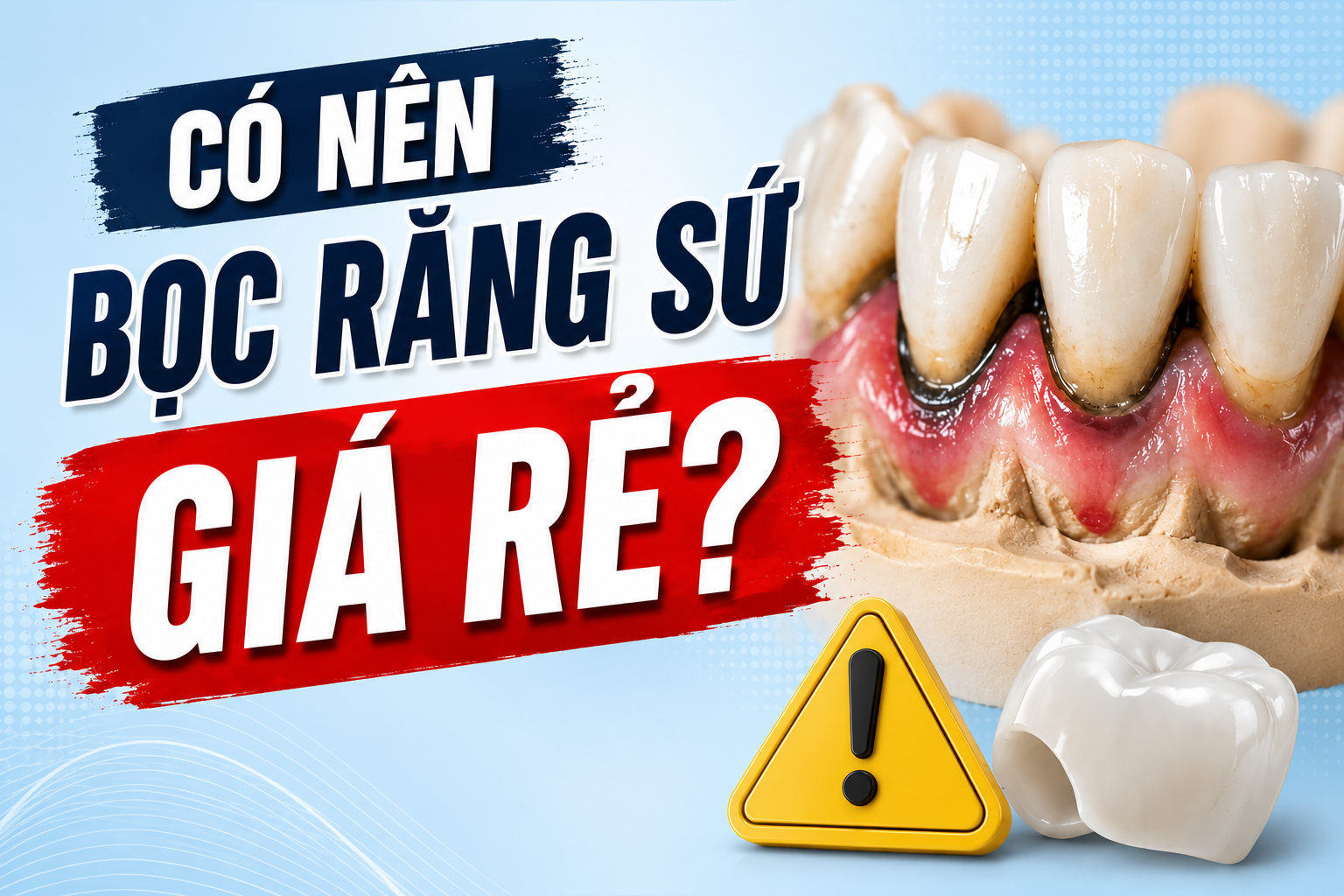
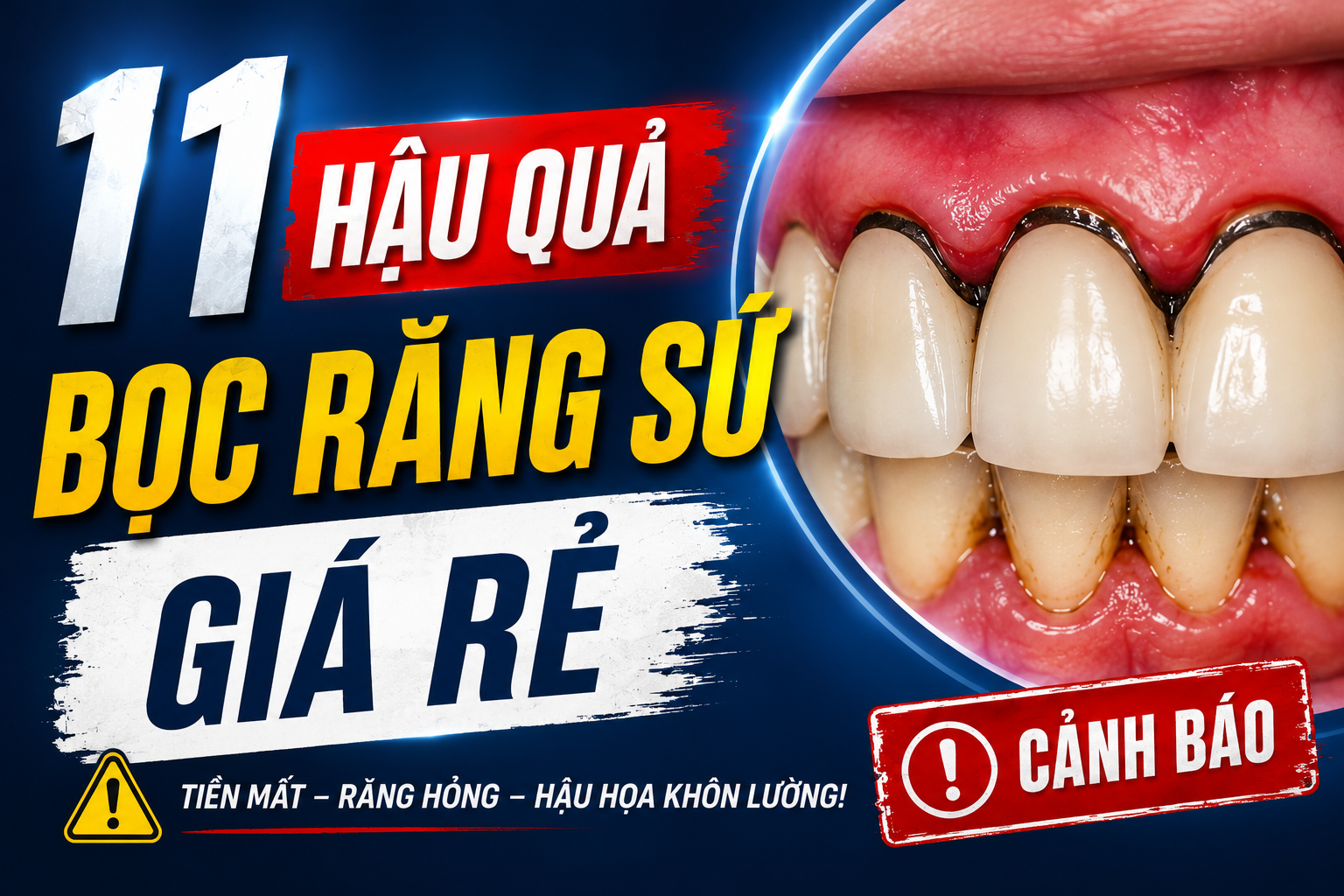
"Celebrity-perfect, dazzling white in 48 hours, lifetime warranty..." These are the glowing promises made about porcelain crowns. But behind those expensive smiles, many people's health ends up paying the price, as the natural teeth underneath decay after being ground down needlessly. That is why more and more groups of people who "regret getting porcelain crowns" are springing up.
 The truth behind "irresistible" smiles
Behind snow-white teeth may lie inflamed sores, bad odors and sharp pain that keeps people awake at night. All of these remind us of teeth that are being silently destroyed.
Anyone planning to get porcelain crowns should understand that wanting to look good is perfectly reasonable, but beautification without knowledge is extremely dangerous. Porcelain crowns are only truly a gift when they are placed in the right cases with the right technique. Conversely, if you put blind faith in cheap clinics, the price you pay is not just money but bitter regret over the remains of your own natural teeth. It is time to think clearly before it is too late!
Many people walk into a dental clinic dreaming of perfect beauty, but harsh reality turns those hopes into bitter regret as soon as the first consequences appear.
To fit a porcelain crown, the dentist has to grind away part of the natural tooth. The amount of reduction is specified as follows:
- Incisors and canines: 0.6–1 mm at the neck, 1–1.5 mm on the body and 1.2–2 mm at the incisal edge.
- Molars: about 0.8–1 mm at the neck, 1.5–2 mm on the body and 1.5–2 mm on the chewing surface.
Preparing the tooth requires absolute precision on all 5 surfaces according to strict golden proportions. The shaping must have the right taper and finish angle to create a solid foundation so the crown fits perfectly, increasing retention and preventing it from loosening or falling off later.
 If the dentist prepares the tooth with the correct technique, the risk of complications is limited
If these requirements are met, grinding a tooth for a porcelain crown is not much of a concern. But if the dentist does not use the correct technique and removes too much tooth structure, the patient may face prolonged sensitivity or even pulpitis and pulp death. In particular, many disreputable clinics "kill the nerve" indiscriminately, making teeth brittle and liable to break at any time.
Sensitivity results from violating the biological width, which exposes the dentinal tubules and makes them sensitive to other stimuli. About 20% of patients feel mild sensitivity in the first 24–48 hours. This is a natural reaction of the tooth tissue to the cement. However, if it lasts more than a week, it is a warning sign of a technical error that needs immediate medical attention.
 If sensitivity persists, go to the clinic right away so the dentist can check and treat it
Patients may also experience this for 2 reasons:
- A misaligned bite, which accounts for about 30% of cases of pain after porcelain crowns. If the crown is made even 0.1 mm higher than the natural tooth, chewing forces concentrate on that tooth, putting pressure on the periodontal ligament and causing sensitivity every time you chew.
- Using poor-quality cement or leaving the etching acid on too long can cause chemical irritation.
- Incorrect technique that leaves the margin open by even a few micrometers lets bacteria and food in, causing recurrent decay and chronic sensitivity.
That is why preparing teeth for the right indications with the right technique is the key to preventing sensitivity. Patients should choose reputable clinics so they are examined and treated directly by highly qualified dentists.
Gingivitis and gum discoloration after veneers also stem from violating the biological width. These complications cannot heal on their own without specialized intervention, such as crown lengthening surgery or remaking the restoration to relieve pressure on the biological width.
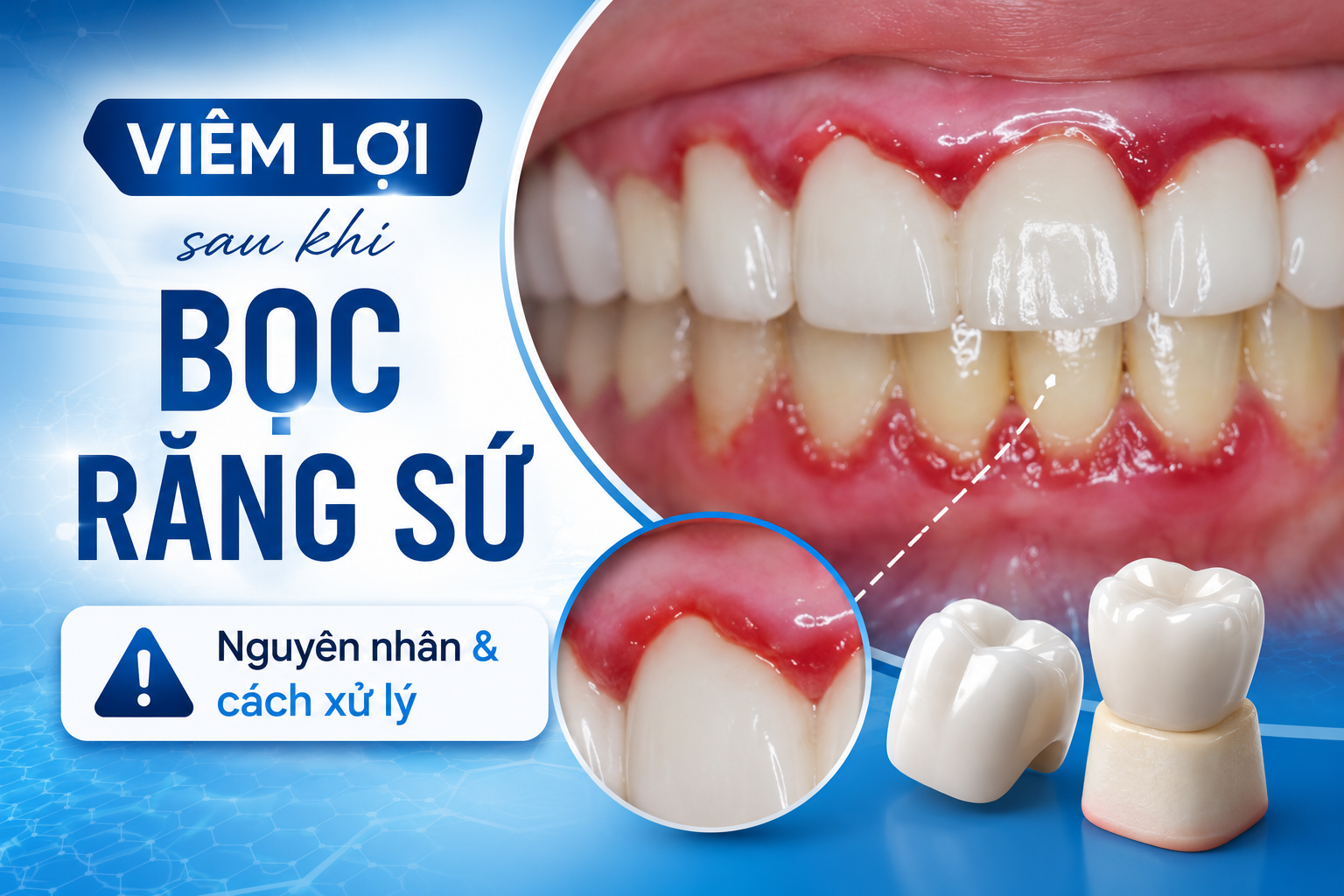
 Gingivitis is the most common problem people experience with porcelain crowns
When the dentist places the margin of a veneer too deep, the body triggers a chronic inflammatory response to try to re-establish its natural biological space. Inflammation dilates the capillaries and causes local congestion. Oxygen-poor blood accumulates in the venules, turning the gums from a healthy pink to dark red or purple.
This discoloration is also linked to red blood cells leaking out of the vessels and pigment being deposited in the connective tissue under the influence of anaerobic bacteria in gaps at the margin. If the gap at the margin exceeds 120 µm, the risk of gingivitis and gum recession rises significantly because plaque builds up where it cannot be cleaned by ordinary means.
Gums can also darken because of metal-core porcelain crowns or poor-quality porcelain. In medicine, this is called metal-induced gum pigmentation, and according to clinical statistics, more than 60% of people with porcelain-fused-to-metal crowns develop dark gum margins after 3 to 5 years.
Bad breath after porcelain crowns is actually the result of organic decomposition by anaerobic bacteria that accumulate in technical "blind spots". The most common cause is gaps at the margin or overhanging restorations.
 Open margins above or below the gum line can both cause bad breath
When a porcelain crown does not fit the prepared tooth perfectly, food debris and gum fluid get into the gap. Since bacteria are only about 1–10 µm in size, they easily get in and form colonies that ordinary toothbrushes and floss cannot reach. There, bacteria release volatile sulfur compounds that create a characteristic odor. Many people describe it as a metallic smell or the smell of rotting food.
In addition, a crown that is not shaped according to the tooth's anatomy disrupts the gums' natural self-cleaning mechanism, causing chronic food impaction. To solve the problem completely, the dentist needs to use an explorer or bitewing X-rays to check the fit and replace the restoration if a mechanical defect is found at the margin.
Regret over porcelain crowns sometimes comes from the very goal people started with: whiter, more attractive teeth. Quite a few people end up with teeth that are far too white for their skin tone, with large, coarse shapes that do not suit their facial structure and look "like false teeth".
 Opaque white porcelain crowns that look unnatural
In particular, cheap metal-containing porcelain quickly oxidizes, leaving an unsightly black line at the gum after only a short time. Once the initial glamour wears off, people realize their smile has lost its natural look and become stiff and forced.
If porcelain crowns are placed for the right indications with the right technique and premium materials, patients can eat comfortably. However, if they are placed for the wrong indications or with the wrong technique, eating can become a "nightmare".
No matter how expensive, porcelain teeth are just artificial material, with none of the sensory nerves of natural teeth. Patients often feel let down when they can no longer clearly sense the heat, cold, crunchiness or chewiness of their food. Eating becomes less enjoyable, and some even avoid all kinds of food for fear of chipping the porcelain or losing a crown. This everyday inconvenience makes many people feel restricted and unable to enjoy life to the fullest.
Porcelain crowns are not the end but often the beginning of a costly maintenance cycle. If they are done at a reputable clinic and well cared for, porcelain crowns can last 15–20 years or longer before they need to be redone. During that time, patients only need regular check-ups and to follow the dentist's instructions.
 Patients getting porcelain crowns should be prepared for the costs
But patients also need to accept that the crowns will need to be replaced in the future. On top of that, many people who get porcelain crowns at disreputable clinics have to have them redone several times or treat complications such as gingivitis and pulpitis, or even get implants to replace badly damaged teeth. The cost of maintaining such a smile can become a financial burden in the future.
To prevent complications and ensure patients do not regret their porcelain crowns, Lac Viet Intech Dental applies a strict quality control process focused on 4 main pillars to ensure durability and safety for patients.
Before any treatment, patients have X-rays, a jaw scan and a clinical examination with the dentist. This is the most important "filter" for eliminating risks. If the periodontal foundation, bite or space for the restoration is not adequate, the dentist is prepared to refuse veneers to protect the patient's long-term health.  Patients are examined and screened for oral problems by the dentist before
Patients then receive an accurate treatment plan in DSD software to ensure the tooth shape and color harmonize with their whole face, skin tone and other features. If the patient agrees with the treatment plan, the dentist proceeds with the next steps to create a mockup so the patient can preview the result.
Skilled dentists and correct technique are considered prerequisites for eliminating complications. All the dentists in charge of cosmetic restorations at Lac Viet Intech graduated in odonto-stomatology from prestigious medical universities in Vietnam and abroad, have in-depth training in cosmetic restorations and hold practicing licenses that meet Ministry of Health standards. So the dentists have the knowledge and experience to ensure safety and precision during treatment.
Clinical practice shows that up to 70% of the success of veneer cases depends on the dentist's clinical skill, ensuring the restoration is not only beautiful but also perfectly compatible with the body's biological system.
 Patients getting porcelain crowns at Lac Viet Intech are examined and treated directly by skilled dentists
For complications caused by failed porcelain crowns at other clinics, the dentist will also recommend appropriate treatment. First, problems such as gingivitis and periodontitis are treated thoroughly. The dentist then checks the condition of the remaining tooth structure. If it is still healthy and stable, the dentist designs a new crown or veneer and restores the tooth. If the tooth is badly damaged and can no longer be crowned or veneered, the dentist will recommend extracting it and replacing it with an implant.
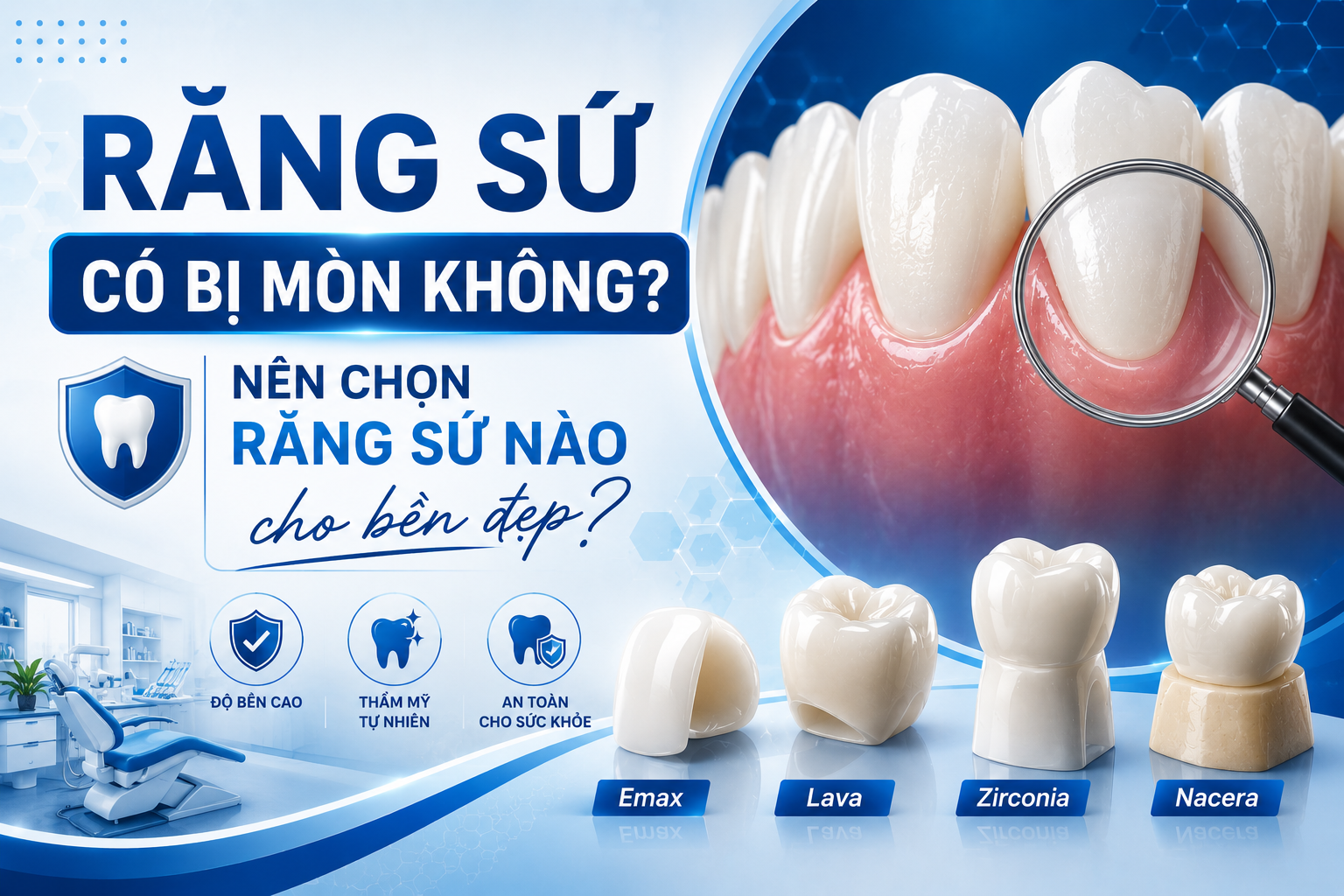
To make sure patients do not regret their porcelain crowns, Lac Viet Intech uses 100% genuine, high-quality all-ceramic materials (such as Emax and Lisi) that are highly biocompatible and inert in the mouth. This eliminates the risk of oxidation causing the dark gum margins often seen with metal porcelain. The performance of the materials is optimized with digital CAD/CAM technology.
 Lac Viet Intech uses genuine materials and modern technology
Instead of manual impressions, 3D and 5D scanning systems record the shape of the prepared tooth with complete accuracy, so the milling machine produces porcelain crowns with an extremely precise fit. This helps eliminate bacterial "traps" and prevents bad breath and gingivitis.
Before, during and after treatment, patients receive free imaging and examinations. After their porcelain restoration, patients also receive a specialized oral care kit from the clinic to make cleaning at home easier. Patients who attend follow-up visits and care for their teeth properly maintain the porcelain's shine and gum health at a rate of 99.5% after 5 years.
The long-term warranty at Lac Viet Intech is also a commitment to the quality of its porcelain crowns. It covers not only the durability of the materials but also the health of the soft tissue around the teeth. With close support from the dentists, any small change in the gums or bite is handled promptly, extending the life of the restoration and removing worries about late complications after porcelain crowns.
 Lac Viet Intech commits to a long-term warranty and ongoing support for patients
Lac Viet Intech's mission is to bring real value to every smile, where beauty always goes hand in hand with safety and lasting results. By strictly following technical standards, applying modern technology and choosing premium materials, the dentists help patients achieve strong, healthy teeth that look as natural as real ones. Investing in the right place from the start is the only way to feel confident in your decision, instead of suffering painful complications and regretting porcelain crowns from poor-quality clinics.
News on the same topic

Related questions
Featured news

Sign up for consultation
Partner of Lac Viet Intech Dental Clinic