Language
Language

Professional Consulting
D. Nguyễn Ngọc Bảo
Dentist
How much do porcelain veneers cost? What is a worthwhile price for a lasting, safe smile without complications?
Porcelain veneers on the market currently cost from 8,000,000 to 18,000,000 VND per tooth. The difference depends largely on the condition of your natural teeth, the restoration technology and the type of porcelain you choose. These are also the core factors that directly determine the long-term durability and aesthetics of your teeth. In reality, quite a few people who chased low prices or put their trust in the wrong place have ended up with bitter results: a stiff smile, obvious signs of false teeth, and even dangerous complications for their natural teeth.
On the other hand, paying a very high price at a large dental center does not guarantee you will get the beautiful smile you expect. The most important thing is to truly understand and break down the factors that make up the cost of veneers. Only with that accurate knowledge can you confidently choose the right type of porcelain and a truly reputable clinic.
This article was professionally reviewed by Dr. Ngoc Bao and colleagues at the Lac Viet Intech Dental system, bringing you the most accurate 2026 price list, a breakdown of the cost factors, an in-depth analysis of clinical technique and vital notes to avoid the "cheap price" trap and losing both money and your health.
To understand the price of porcelain veneers, patients first need to clearly distinguish this method from traditional porcelain crowns.
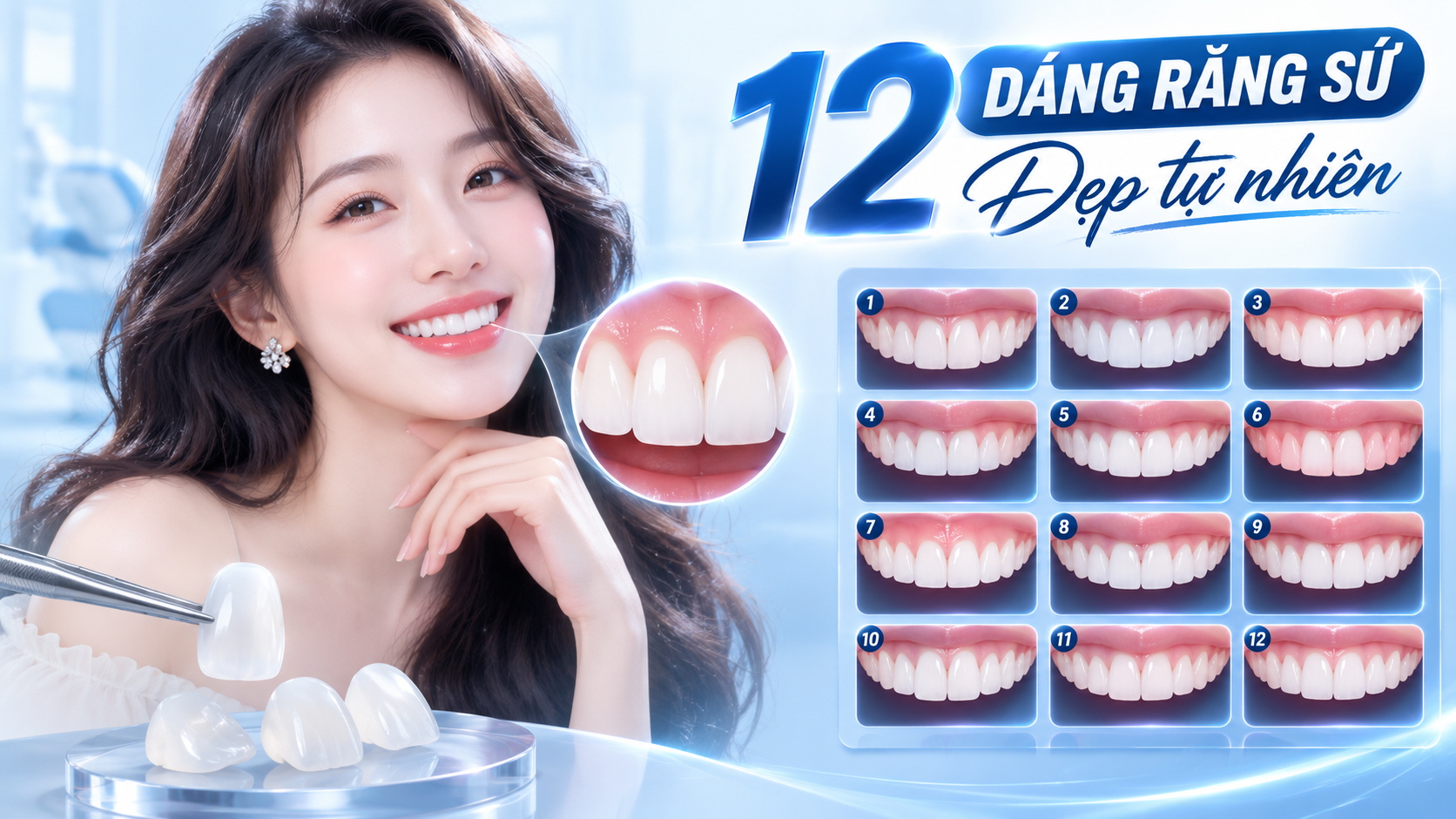
Porcelain veneers (also called porcelain laminates) are a conservative cosmetic restoration technique. The dentist uses an ultra-thin piece of porcelain 0.2–0.5 mm thick and permanently bonds it to the front surface of the tooth with a specialized, extremely adhesive dental cement.
The goal of this method is to completely change the shape, size and color of the teeth without damaging the inner structure of the natural tooth.
Dr. Ngoc Bao shares that many patients who come to Lac Viet Intech Dental ask "why does a thin veneer, which uses less porcelain than a full crown, cost more, sometimes one and a half or two times as much?". The answer lies in the technology and technique:
Tooth reduction: porcelain crowns require removing 0.1–0.5 mm of tooth tissue on all 5 surfaces of the tooth, losing the protective enamel and risking contact with the pulp. Meanwhile, porcelain veneers only require preparing an extremely thin layer on the front surface (0.2–0.5 mm), and some cases with gapped teeth need no preparation at all. This conservative approach requires the dentist's skill to reach a microsurgical level.
Complex fabrication: making a thick crown is much easier than shaping a piece of porcelain as thin as a rice leaf while still ensuring hardness, translucency and refined, symmetrical tooth textures. If the porcelain blank is not good or the CAD/CAM milling is not accurate to the micron, the veneer will easily break during pressing. This is one of the reasons why porcelain veneers usually cost more than crowns.
Bonding technique and materials: the cement used for crowns works through ordinary mechanical and chemical retention. With veneers, however, the bond is entirely chemical adhesion (bonding). The dentist must treat the enamel surface (etching) and the porcelain surface with specific acids for exactly the prescribed number of seconds before light-curing. An error of a single second can make the veneer come off after a few weeks.

Porcelain veneers cost 8–18 million VND, depending on the condition of the natural teeth and the method and material chosen. The cost of veneers is calculated using the following formula
Total cost of veneers = price per veneer * number of teeth to be veneered
Usually, for a smile in golden proportions, patients have 8 to 10 teeth veneered per arch (the teeth visible when smiling). Below is the price list for premium genuine porcelain veneers officially applied across the Lac Viet Intech system in 2026:
| Chủng loại | Nước sản xuất | Bảo hành | ĐƠN GIÁ (1 răng) |
Giá ngoại tệ |
|---|---|---|---|---|
| LAMINATE VENEER LISI | Nhật | 10 năm | 14.000.000 đ | 550 USD 475 EUR 778 USD Úc 966 NZD |
| LAMINATE VENEER Emax Press | Mỹ/ EU | 10 năm | 12.000.000 đ | 471 USD 407 EUR 667 USD Úc 828 NZD |
| LAMINATE VENEER Zir CAD | Mỹ/ EU | 10 năm | 9.000.000 đ | 354 USD 305 EUR 500 USD Úc 621 NZD |
| Chụp Bọc Sứ Bán Phần Overlay | Nhật | 3 năm | 4.000.000 đ | 157 USD 136 EUR 222 USD Úc 276 NZD |
| Chụp Bọc Sứ Bán Phần Inlay | Nhật | 3 năm | 4.000.000 đ | 157 USD 136 EUR 222 USD Úc 276 NZD |
| Chụp Bọc Sứ Bán Phần Onlay | Nhật | 3 năm | 4.000.000 đ | 157 USD 136 EUR 222 USD Úc 276 NZD |
Lac Viet Intech's commitment to transparency: the prices above are ALL-INCLUSIVE. Patients do not pay anything extra for the accompanying services, including a general examination, new-generation cone beam CT X-rays, 3D Smile Design and high-quality anesthetic during treatment (if needed)
See also: How much do porcelain veneers on 2 front teeth cost? Which veneers should you choose?
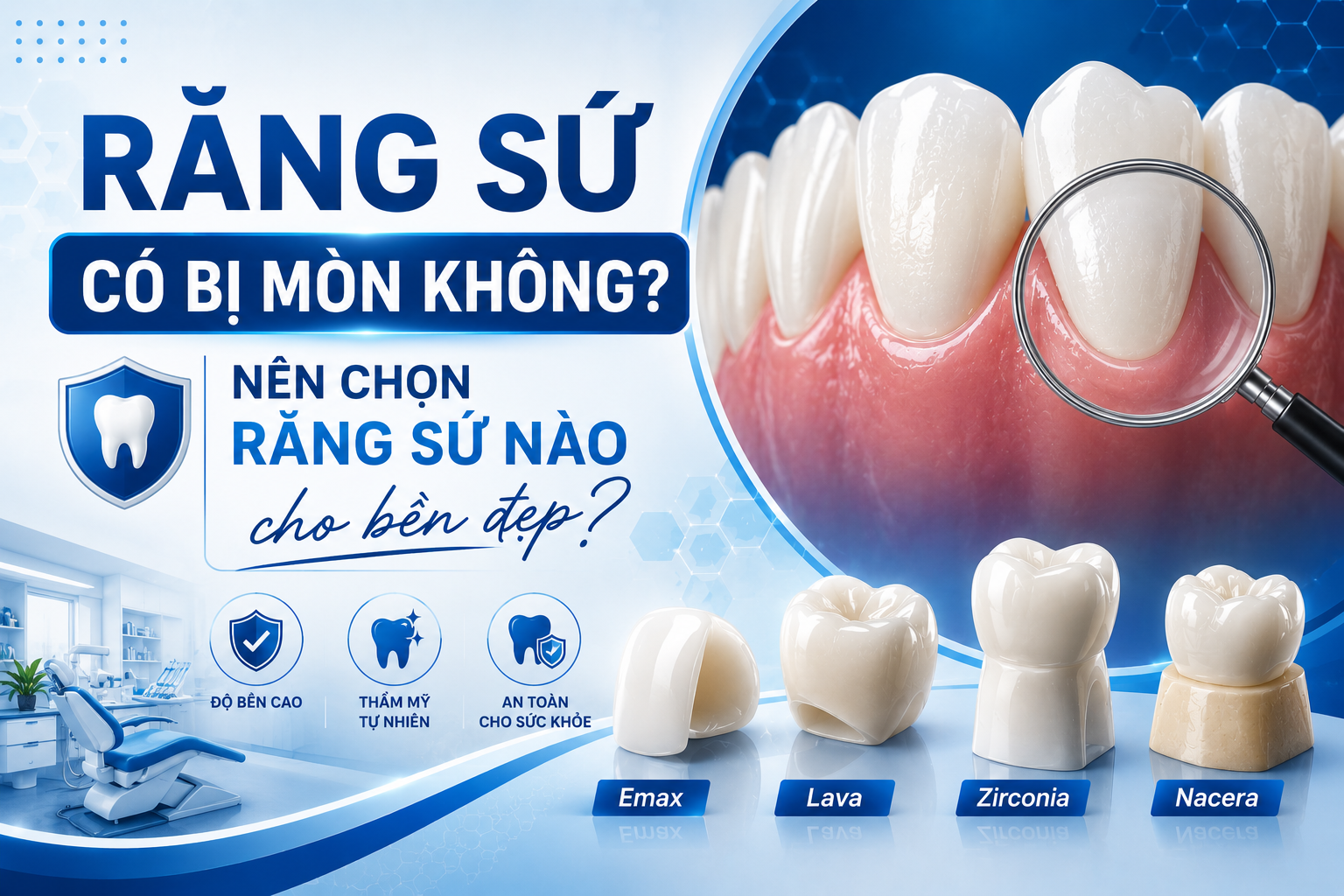
To help patients easily choose the porcelain that suits their budget and dental condition, Dr. Ngoc Bao and colleagues have analyzed the physicochemical properties of each type of porcelain in depth:
Emax Press veneers are a renowned lithium disilicate glass ceramic from Ivoclar Vivadent. It is a classic material in cosmetic dentistry worldwide.
Mechanical properties: with a strength of 400 MPa, Emax Press is 4 times stronger than natural teeth (natural enamel has a strength of 80–120 MPa). This lets patients chew ordinary food comfortably without fear of cracking.
Aesthetic properties: Emax has very high light transmission and translucency, creating depth like natural teeth. This porcelain is especially suitable for patients whose natural teeth are not too dark and who want a clear, natural white like movie stars.
From Japan's GC group, Lisi Press is a breakthrough in ultra-thin pressed porcelain technology.
Mechanical properties: thanks to added ultra-fine quartz crystals, Lisi Press raises strength to 500 MPa even when pressed to only 0.2–0.4 mm thick
Aesthetic properties: Lisi porcelain is extremely wear-resistant and reflects light beautifully in natural light or stage lighting. When bonded, the porcelain blends perfectly with the natural enamel, without looking like "false teeth" or making the lips look thick in profile.
Celtra Press is a premium porcelain with added zirconia (10% zirconium oxide) developed by Sirona (USA).
Mechanical properties: the zirconia increases the flexural strength of the veneers to 550 MPa. This porcelain completely overcomes the brittleness of older glass ceramics.
Aesthetic properties: Celtra Press has a unique opal effect (changing color with the light). From different angles, the teeth show subtle light and dark transitions, perfectly covering teeth with moderate tetracycline staining.
This is a top-tier product designed exclusively for the Lac Viet Intech system, made through a combination of AI design software and hand-layering artisans.
Mechanical properties: an absolute hardness of 600 MPa thanks to a multi-layer nano structure, allowing a record thinness of 0.1–0.2 mm (as thin as an ultra-fine slice of glass).
Aesthetic properties: each veneer is personalized to the patient's smile style: natural, professional or alluring. The incisal edge is given a translucent effect like morning dew, the surface has the soft sheen of young enamel, and the warranty lasts up to 20 years.
| Tiêu chí | Mặt dán sứ Emax Press | Mặt dán sứ Lisi Press | Mặt dán sứ Zirconia |
| Chất liệu | Sứ thủy tinh Lithium Disilicate | Sứ thủy tinh siêu mỏng | Sứ Zirconium Oxide cao cấp |
| Độ dày | 0.3mm - 0.5mm | Siêu mỏng (0.2mm - 0.4mm) | 0.5mm - 0.6mm (Dày hơn) |
| Độ chịu lực | ~400 - 500 MPa | ~400 - 450 MPa | 600 - 900 MPa |
| Độ thẩm mỹ | Rất cao, độ trong mờ tự nhiên | Xuất sắc, hiệu ứng ngọc trai, trong suốt | Trung bình, độ đục cao hơn, hơi trắng bệch |
| Khả năng che màu | Khá tốt | Tốt (phù hợp răng ít xỉn màu) | Tốt nhất (che được răng nhiễm Tetracycline nặng) |
| Độ bền | 15 - 20 năm | 15 - 20 năm | 10 - 15 năm (Dễ bong hơn sứ thủy tinh) |
| Giá tham khảo | 9.500.000 - 12.000.000 VNĐ | 11.700.000 - 14.000.000 VNĐ | 7.500.000 - 9.000.000 VNĐ |
See also: How many types of porcelain veneers are there? Which is best?
When searching for "how much do porcelain veneers cost", you will find some places quoting only 1–2 million VND, while large hospitals and clinics charge 10–15 million VND, and some even more than 20 million VND. This difference is not random; it reflects the whole operating process and the quality of care behind it.
Every premium veneer at Lac Viet Intech comes with a warranty card with an international ID code that can be checked. The porcelain blanks must be officially imported from Germany, the USA and Japan.
In addition, the cost of designing and milling porcelain in the lab is very high. To mill a piece of porcelain thinner than 0.3 mm, the CNC machine must use expensive ultra-fine diamond burs, and a high proportion of porcelain blanks is lost during fabrication. Cheap clinics can hardly afford this system, so they have to use unregulated, mass-molded porcelain, resulting in coarse, thick veneers.
Tooth preparation for porcelain veneers is like a work of microsurgical art. The dentist must have extremely steady hands and a keen eye to:
Prepare the tooth within the permitted limits of the enamel (from 0.2 mm to a maximum of 0.5 mm). If this boundary is exceeded and the dentin is reached, the chemical bond of the cement is reduced by 50%, making the veneer prone to falling off and causing lifelong sensitivity for the patient.
Design a perfectly smooth margin (the contact line between the porcelain and the gum). If this line is rough, food will collect there, causing gingivitis, bad breath and decay at the neck of the tooth.
The cost of a dentist with many years of clinical experience and an in-depth certificate in cosmetic restorations is always completely different from that of a technician or a newly graduated dentist with little experience.
A medically standard veneer case requires an ecosystem of technology working together:
iTero Element 5D scanner: this device, worth billions of VND, records tooth impressions using light waves, accurate to every bump and groove of the teeth, completely eliminating the errors of traditional rubber impressions.
Smile Design software: lets patients see their smile result in advance before the teeth are touched. The software automatically calculates the smile arc, smile line and the proportions of the teeth relative to the lips and the whole face to give the lab accurate specifications for production.

Patients can now preview the result of porcelain veneers with DSD technology
The mouth contains millions of bacteria. Bonding veneers requires absolute dryness. Lac Viet Intech uses a rubber dam system to completely isolate the treated teeth from the patient's saliva and breath.
In addition, the bonding agents and resin cements are imported from the world's leading brands such as 3M (USA) and Kuraray (Japan), and cost dozens of times more than ordinary adhesives of unknown origin.
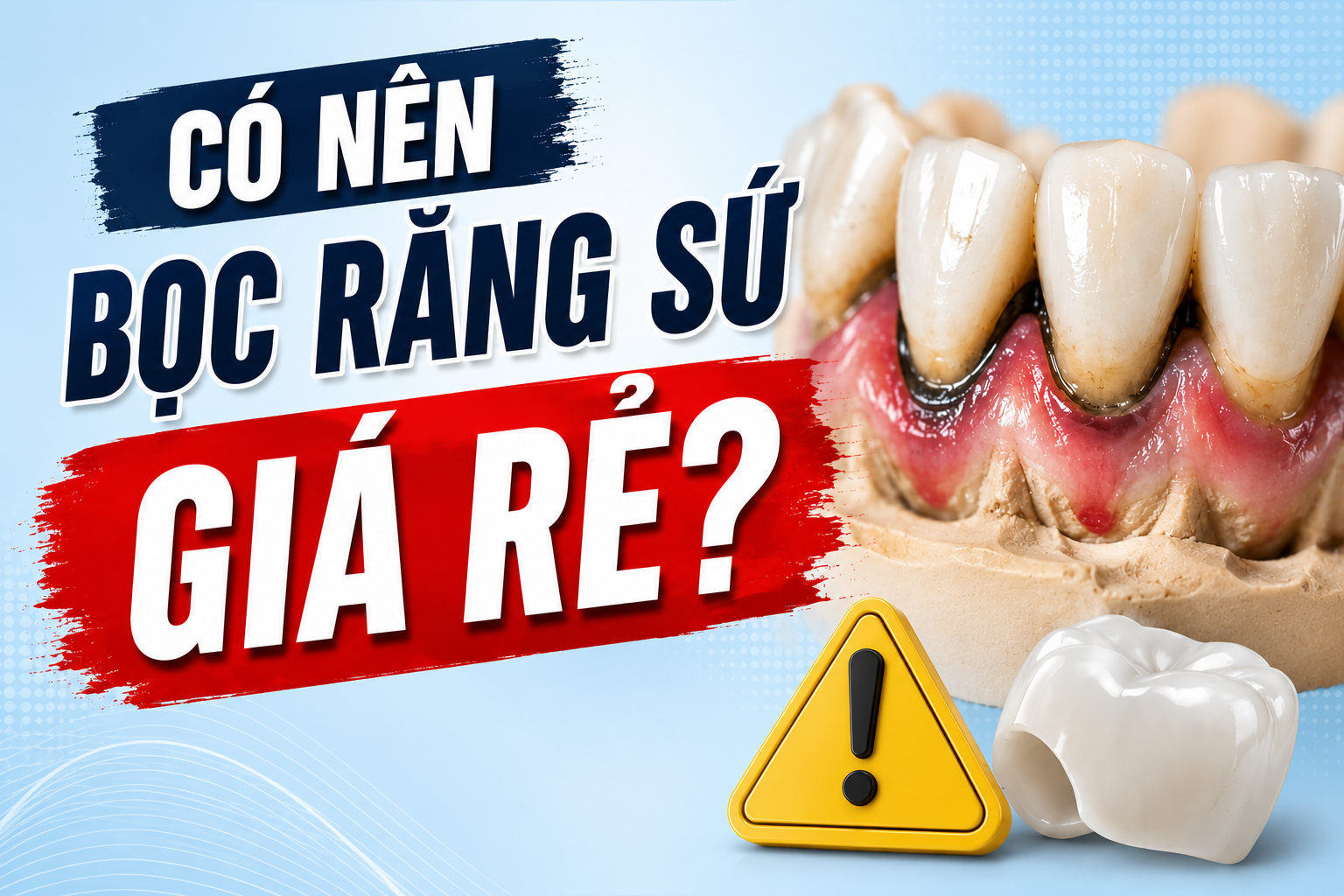
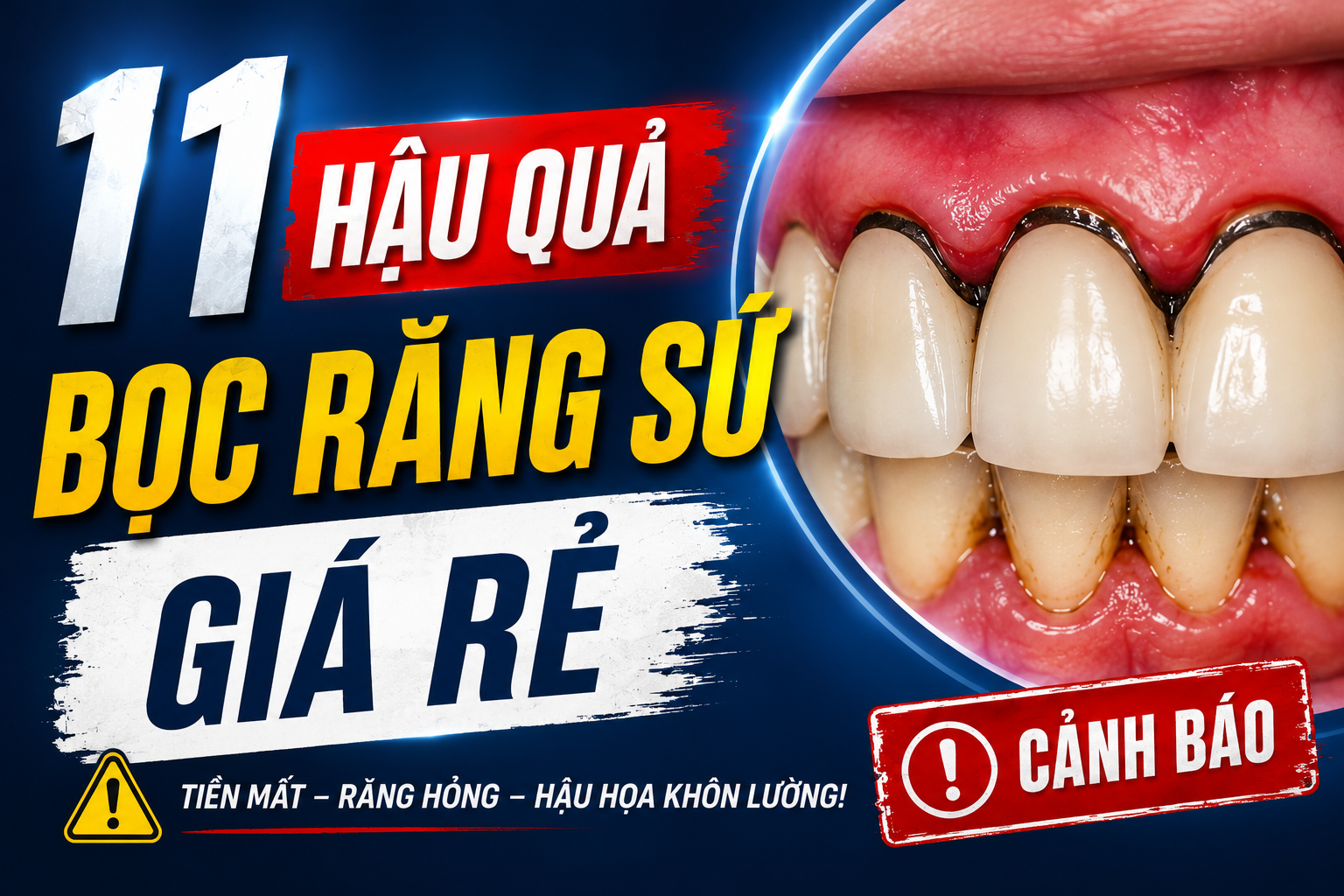
As a reputable dental system, Lac Viet Intech regularly receives and "rescues" hundreds of cases of severe complications from cheap porcelain veneers done at unlicensed beauty clinics, spas or poor-quality dental clinics.
Not every cheap clinic uses unregulated porcelain. This is simply an objective look at some bad cases that can occur, so patients have a more objective view when choosing their porcelain and clinic. In reality, many clinics do not actually perform genuine porcelain veneers at all. There are two common tricks:
Composite passed off as porcelain: they build up composite resin (the material used to fill decayed teeth) directly on the patient's teeth, harden it with a curing light and then shape it. Composite has a porous surface that easily absorbs oral fluids. After only 3–6 months, this resin turns yellow, darkens at the gum line and gives off a strong foul odor from accumulated bacteria.
Grinding teeth down and fitting poor-quality crowns: to fool patients into thinking the teeth are very durable, they quietly grind all the patient's natural teeth down into small stumps and then fit cheap crowns (lead-contaminated porcelain-fused-to-metal or under-fired porcelain) on top, while still calling it "porcelain veneers". This completely destroys the natural tooth structure of young people.
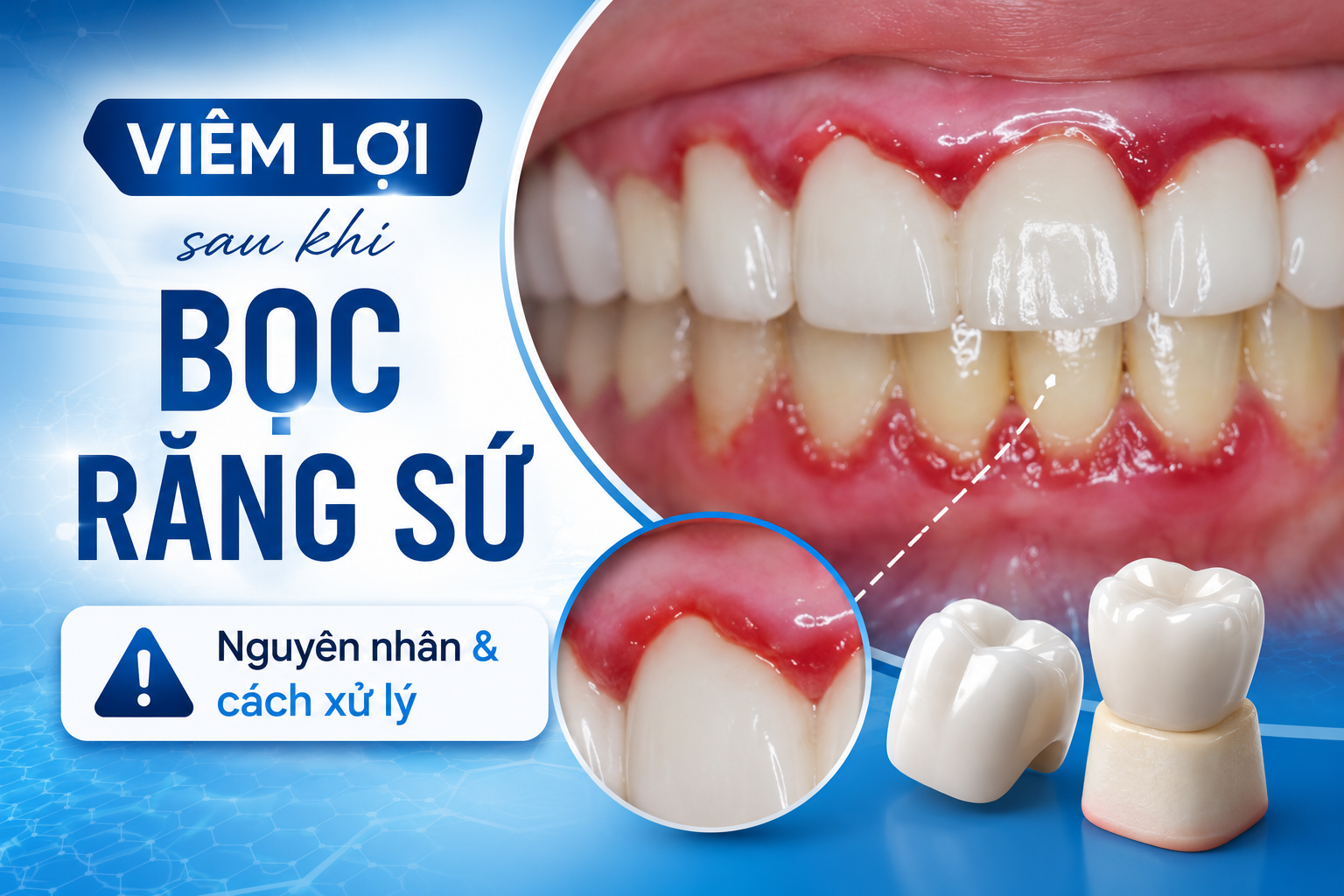
Acute gingivitis and gum necrosis: cheap veneers bonded over the gums violate the biological width of the teeth. The gums are constantly irritated, red and swollen, bleed when brushing and progress to periodontitis and bone loss around the roots.
Pulpitis and pulp death: rough tooth preparation without a proper cooling water spray generates high heat that damages the pulp inside. The teeth become extremely painful, and over time the pulp dies and forms pus pockets (abscesses) at the root tips, leading to the risk of having many teeth extracted.
Bite misalignment and temporomandibular joint pain: veneers that are too thick and do not match the bite prevent the two jaws from meeting in a biological way. When chewing, forces are unevenly distributed, tiring the jaw muscles and causing pain around the ears (the temporomandibular joint) and chronic headaches.

Overall, all complications after dental work stem from veneers that are not biocompatible. A successful treatment must achieve complete harmony between the porcelain and the natural tooth so the smile stays stable and becomes more beautiful over time.
Conversely, without compatibility, veneers become foreign objects that irritate the gum tissue, cause gingivitis and bad breath and destroy the natural teeth. So biocompatibility is a prerequisite that depends closely on the quality of the porcelain, microsurgical bonding technique and the fabrication process.
Of course, porcelains that perfectly meet these medical criteria cost more. But this is a price for porcelain veneers that is completely worthwhile for your long-term health.
In a fiercely competitive dental market, Lac Viet Intech Dental still holds a leading position in conservative cosmetic restorations thanks to its fundamental commitments:
At Lac Viet Intech, we say "NO" to letting technicians or trainee dentists work on patients' teeth. All our dentists hold practicing licenses from the Ministry of Health and have completed in-depth training in countries with advanced dentistry such as France and Korea. With a deep understanding of maxillofacial anatomy, the dentists will deliver completely safe treatment results.
Dr. Ngoc Bao shares that we always value every millimeter of our patients' natural teeth. Tooth preparation at Lac Viet Intech is done under high-magnification loupes, allowing the dentist to keep the preparation within the outermost enamel and never invade the dentin. Teeth with veneers must not only look beautiful but also chew firmly without any sensitivity.
Lac Viet Intech has invested in a full range of leading dental equipment and is among the TOP 1% of dental systems in Vietnam with comprehensive equipment. Each patient is given a separate treatment room and their own set of instruments sterilized in a software-programmed autoclave. This completely eliminates the risk of cross-infection with dangerous diseases such as hepatitis B and H. pylori.
All of a patient's rights at Lac Viet Intech are set out in a legally binding written contract. The contract clearly states the origin of the warranty card for the porcelain you choose, a commitment to no extra charges and clear warranty terms. If any problem occurs due to a technical or material defect during the warranty period, Lac Viet Intech will replace the veneers completely free of charge.

A successful veneer case must go through a strict porcelain veneer procedure of 5 closed-loop steps:
The dentist performs a clinical examination of your oral condition and orders cone beam CT X-rays to check the jawbone structure, roots and pulp. If the patient has conditions such as decay, gingivitis or tartar buildup, the dentist treats them thoroughly before any cosmetic work. The examination before veneers is completely free and does not add to the price of porcelain veneers.
The dentist uses the iTero Element 5D to scan the entire dental arch for accurate 3D data. This is then combined with portrait photos of the patient in smile design software. The patient and dentist discuss and choose the tooth shape (natural, cute bunny teeth or bold) and the desired color.

The dentist cleans the teeth and anesthetizes the treatment area (if needed for the most comfortable experience). Then ultra-fine diamond burs are used to prepare a thin layer on the tooth surface (0.2–0.3 mm). Next, digital impressions are taken and the data is sent to the lab to make the veneers. While waiting for the final veneers, the patient is fitted with temporary veneers for appearance and daily conversation.
Lab technicians use CAD/CAM technology to mill monolithic porcelain blanks according to the dentist's 3D design file. The porcelain is then fired at high temperature to reach maximum hardness, and its surface is further treated and glazed to create natural optical effects.
The dentist removes the temporaries and tries the veneers on the natural teeth to check the fit, color, shape and harmony of the bite when chewing. Only when the patient is completely satisfied does the dentist bond them permanently with a specific resin cement, light-cure them and clean away excess cement around the necks of the teeth. Once the procedure is complete, the dentist explains how to care for the teeth and books a follow-up appointment.
Whether porcelain veneers last depends not only on the dentist's technique; the patient's home care accounts for 30% of the outcome. Lac Viet Intech's experts advise:
For the first 2–3 days after veneers, avoid very hard or chewy foods and strong tearing forces with the front teeth (such as biting bones, opening bottles or biting nails). Use your back teeth to chew food into small pieces.
Keep strongly colored foods such as coffee, strong tea, tomato sauce and tobacco to a minimum. Although premium veneer porcelain does not stain, these substances can cling to the cement margins and dull the edges of the teeth over time.
Use a soft-bristled toothbrush and brush gently with vertical or circular strokes, avoiding horizontal brushing that wears the necks of the teeth and damages the gums. Brush regularly twice a day after meals.
Replace traditional bamboo toothpicks completely with dental floss or a water flosser to clean between the teeth without widening the gaps or loosening the veneers.
Use an alcohol-free antibacterial mouthwash to keep your breath fresh and your gums healthy.
Every 6 months, return to Lac Viet Intech Dental so the dentist can check the bond of your veneers, do routine scaling and check the distribution of bite forces to detect and deal with any risks early.
Answer: Porcelain veneers are a top-tier cosmetic dental solution, but this method is highly selective. Because ultra-thin veneers of 0.2–0.5 mm work by direct bonding and need a solid foundation in the natural enamel, veneers are considered the "golden indication" for the following groups:
Teeth with long-standing dullness or yellowing, or mild to moderate tetracycline/fluoride staining, where ordinary whitening is not effective.
Slightly gapped front teeth that make the smile less attractive and trap food easily. Veneers close these gaps perfectly without years of braces.
Teeth that are chipped, broken or worn at the incisal edge due to accidents, a habit of eating hard foods or age, as long as the damage does not exceed one third of the crown.
Uneven or short teeth, or teeth with enamel hypoplasia (slight pitting, lacking natural smoothness).
Teeth that are crooked or misaligned only VERY SLIGHTLY, with a fairly even arch but 1–2 teeth slightly out of line, either outward or inward.
Answer: To help patients access premium dental services without financial pressure, Lac Viet Intech offers a 0% interest installment program. We work directly with more than 20 reputable banks through credit cards or installments via finance companies. You only need to pay 30% of the treatment cost upfront, and the rest is split into payments over 6–12 months. Approval takes only 15 minutes, with no complicated proof of income required.
Answer: Premium glass ceramic is completely inert in the mouth and does not degrade or absorb fluids, so it does NOT cause bad breath. Bad breath after veneers only happens at disreputable clinics because the veneers have open margins that trap food, the technician made incorrect biological margins causing gingivitis and bleeding gums, or the clinic used cheap composite that absorbs saliva after a short time. At Lac Viet Intech, the perfect fit achieved with iTero 5D technology is committed to eliminating this risk completely.
See also: Do porcelain veneers cause bad breath? Real reviews and effective prevention
Answer: Premium porcelain veneers last an average of 15 to 20 years, or even a lifetime with good care. The bond between specialized resin cement and natural enamel is an extremely durable chemical bond that forms a single unit. So the veneers cannot fall off during normal chewing. You can eat comfortably; just avoid excessively destructive forces (such as accidental impacts or biting hard objects).


Before and after porcelain veneers
Answer: Properly placed porcelain veneers do NOT weaken natural teeth and do NOT increase the risk of decay. A veneer only replaces an extremely thin layer of enamel on the front surface. When bonded with specialized resin cement, it forms a tight seal that protects the natural tooth from acids and bacteria from food.
Teeth only become weak or decayed after veneers when the dentist over-prepares into the dentin or the veneers have open margins (creating gaps that trap food). At Lac Viet Intech, thanks to iTero 5D scanning and formally trained dentists, the fit is perfect, completely eliminating the risk of decay or sensitivity.
Answer: At Lac Viet Intech, the price of porcelain veneers is built on standards of health preservation and lasting aesthetic quality. It is an optimal all-inclusive price that gives patients access to advanced microsurgical veneer technology, genuine glass ceramic blanks from Germany/Japan and leading cosmetic restoration specialists.
We understand that a smile worth investing in must be a smile that is safe for the health of the natural teeth in the long term. That is why every procedure at Lac Viet Intech is strictly controlled and completely transparent.
The price the dentist quotes before treatment is the only all-inclusive cost and is committed in a legally binding document. Lac Viet Intech guarantees no surcharges of any kind throughout treatment (the examination, cone beam CT imaging and 3D smile design are completely free)
Porcelain veneers are not just a cosmetic service; they are a long-term investment in your health and confidence that opens up many new opportunities in life. A beautiful smile must first be a smile that is healthy right down to the enamel. Do not let cheap advertisements blur safe medical standards.
Entrust your smile to reputable dental clinics with skilled dentists and transparent technology, such as the Lac Viet Intech Dental system.
To achieve the best results, veneers must be based on imaging data and the actual bite structure of each individual. So I encourage you to visit the clinic in person for an in-depth examination. At Lac Viet Intech, your tooth structure will be comprehensively examined with cone beam CT, and you can experience 3D smile design technology (Smile Design) for yourself. This technology helps the dentist calculate the minimum amount of preparation precisely and simulate the treatment result as visually as possible.
News on the same topic

Related questions
Featured news

Sign up for consultation
Partner of Lac Viet Intech Dental Clinic